Johnny Depp — born John Christopher Depp II on June 9, 1963, in Owensboro, Kentucky — is 63 years old in 2026, and his life reads like three different careers stitched into one. He started as a guitar-playing teenager who stumbled into acting, became the oddball character actor of his generation, then turned into one of the highest-paid movie stars on the planet as Captain Jack Sparrow, before losing almost everything in public and rebuilding it again in Europe. As of November 2026, Celebrity Net Worth puts his fortune at an estimated $150 million, with other trackers placing it in a $150–180 million range.
That number only makes sense beside the one that came before it. Court filings from his 2017 lawsuit against his former business managers showed Depp earned roughly $650 million between 2003 and 2016 alone — and spent most of it. This biography follows the whole arc: the restless childhood, the Tim Burton films, the Pirates fortune, the spending and the courtroom years, and the comeback now playing out with a Cannes return, a Dior deal worth a reported $20 million, and two new films in 2026. Last updated: November 9, 2026.
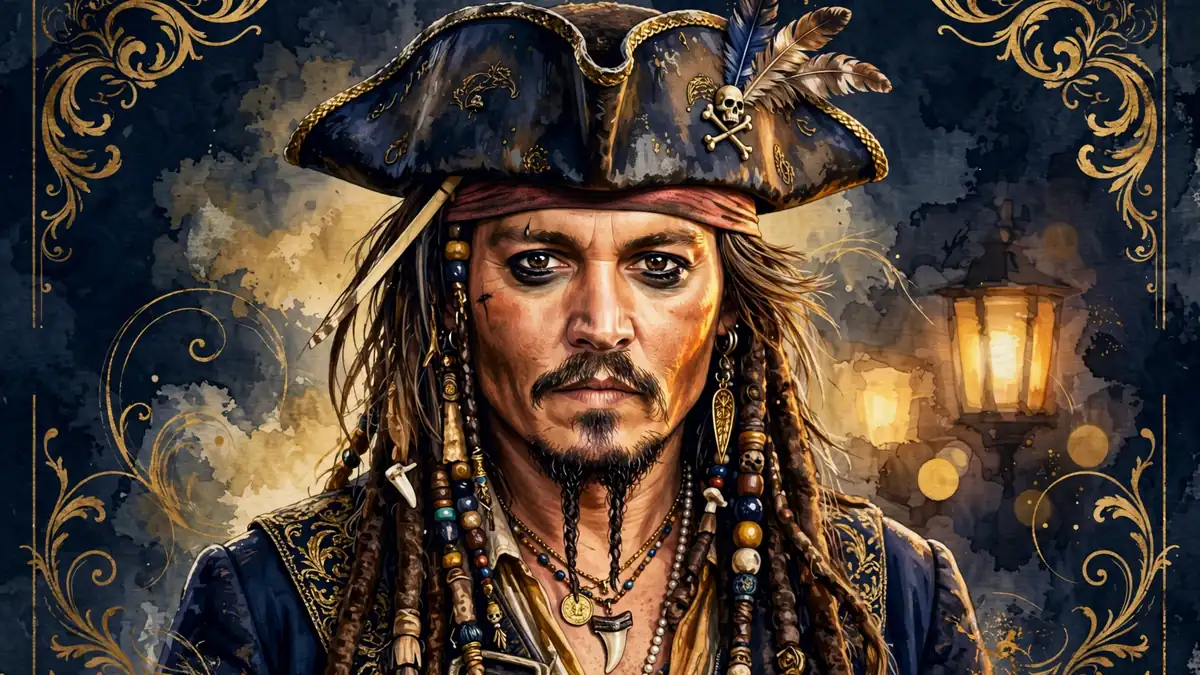
Johnny Depp Quick Facts
| Full Name | John Christopher Depp II |
|---|---|
| Date of Birth | June 9, 1963 (63 years old in 2026) |
| Birthplace | Owensboro, Kentucky, USA |
| Height | 5 feet 10 inches (1.78 m) |
| Estimated Net Worth | $150–180 million (Celebrity Net Worth anchors the range at $150 million, November 2026 snapshot) |
| Peak Career Earnings | Roughly $650 million between 2003 and 2016, per court filings in his 2017 lawsuit against his former business managers |
| Primary Income Sources | Film salaries and backend profit shares, the Dior Sauvage endorsement, art sales, music with Hollywood Vampires, royalties |
| Key Works | Pirates of the Caribbean (2003–2017), Edward Scissorhands (1990), Finding Neverland (2004), Sweeney Todd (2007), Alice in Wonderland (2010), Donnie Brasco (1997), Fear and Loathing in Las Vegas (1998) |
| Awards | 3 Academy Award nominations for Best Actor; 1 Golden Globe win (Sweeney Todd) |
| Children | Lily-Rose Depp and John Christopher Depp III, with Vanessa Paradis |
Contents
- Johnny Depp Quick Facts
- Early Life: The Restless Kid From Kentucky
- First Roles: From Horror Debut to Teen Idol
- The Tim Burton Years and the Making of a Character Actor
- Captain Jack Sparrow and the Pirates Payday
- The Money: Salaries, Dior and the $650 Million Era
- Spending, Debt and the Financial Collapse
- Houses, Islands and Art: What He Owns
- Net Worth Timeline: From Peak to Rebuild
- The Trials: London, Virginia and the Verdicts
- Personal Life: Family, Relationships and Music
- The Comeback: Cannes, Art and the 2026 Films
- Johnny Depp Biography FAQs
- Final Thoughts
- Sources and Reporting
Early Life: The Restless Kid From Kentucky
Johnny Depp was born at Lady of Mercy Hospital in Owensboro, a small city on the Ohio River in western Kentucky. His father, John Christopher Depp Sr., worked as a civil engineer; his mother, Betty Sue Palmer, worked as a waitress. The family moved constantly — more than thirty times before Depp reached his teens, by his own account and in the official biography on his website — settling for long stretches in Miramar, Florida, where he spent most of his school years. The moves were driven by his father’s work, and the boy who kept arriving as the new kid learned to watch rooms before he spoke in them. That habit, of studying people from the edge of a room, later became the core of his acting.
Music came first. At twelve, his mother bought him a guitar, and by his early teens he was playing in bands around South Florida. School never held him. He dropped out of Miramar High School at sixteen to chase music full time, joining a band called The Kids, which built a small local following and eventually moved with him to Los Angeles in search of a record deal. The band never broke through, but Los Angeles changed everything anyway. Through his first wife, makeup artist Lori Anne Allison, Depp met actor Nicolas Cage, who watched him play, liked what he saw, and told him to try acting — then introduced him to his own agent.
Depp’s parents divorced when he was fifteen, a split he has described as painful and formative. His mother, to whom he was close, died in 2016, the same year his marriage to Amber Heard collapsed — a year that now reads, in hindsight, as the start of the hardest stretch of his adult life. The Kentucky childhood matters to the story because it explains the two threads that run through everything after it: a working-class kid who never quite trusted stability, and a performer who learned early that reinvention was a survival skill.
First Roles: From Horror Debut to Teen Idol
Depp’s first film role was almost an accident of timing. In 1984, at twenty-one, he was cast as Glen Lantz in Wes Craven’s A Nightmare on Elm Street — the boyfriend who gets pulled into a bed by Freddy Krueger in one of horror cinema’s most famous death scenes. It was a small part, but Craven saw something in the unknown guitarist and gave him the job over more polished hopefuls. A year later came a bit part in Private Resort, and in 1986 a supporting role in Oliver Stone’s Platoon, where he played a young soldier in a cast full of future stars.
Television made him famous before film did. In 1987, Fox cast him as Officer Tom Hanson in 21 Jump Street, a drama about young-looking cops working undercover in high schools. The show was a hit, and Depp — handsome, brooding, and visibly uncomfortable with the attention — became a teen idol almost overnight. He hated the label and fought it, asking to be written out of episodes and taking strange, small film roles between seasons to prove he was more than a poster. The friction was real: he has said since that the fame of those years felt like a trap, and the moment the show ended in 1990, he ran toward the weirdest material he could find.
That instinct shaped the next decade. He turned down the clean-cut leading-man parts the studios offered and chose roles that let him disappear: a man with scissor blades for hands, a mentally ill young man in a small town, a cross-dressing filmmaker. The pay was smaller and the films were riskier, but the choice built the reputation that would carry him for the next thirty years — the actor who would rather be interesting than safe.
The Tim Burton Years and the Making of a Character Actor
The partnership that defined Depp’s career began in 1990, when Tim Burton cast him as the title character in Edward Scissorhands. The film — a gothic fairy tale about an unfinished artificial man with blades for hands — was a box-office success and a critical one, and it fixed Depp’s image in the public mind: pale, strange, gentle, and impossible to confuse with anyone else. He and Burton would go on to make eight films together, one of the longest actor-director partnerships in modern Hollywood.
The 1990s run that followed is the strongest stretch of Depp’s filmography. In What’s Eating Gilbert Grape (1993) he played the steady older brother to Leonardo DiCaprio’s Arnie, a performance DiCaprio later credited with teaching him how to act on camera. Ed Wood (1994) cast him as the famously terrible cult filmmaker, a role that asked him to play optimism itself. Donnie Brasco (1997), opposite Al Pacino, put him undercover in the mob and earned him some of the best reviews of his career. Fear and Loathing in Las Vegas (1998) had him playing Hunter S. Thompson — Thompson himself reportedly approved of the casting, and Depp lived at Thompson’s house in Colorado to prepare. Sleepy Hollow (1999) reunited him with Burton for a gothic horror hit, and Chocolat (2000) showed he could carry a romantic lead without losing his edge.
What those years did not do was make him rich by Hollywood standards. The films were respected and mostly profitable, but Depp was paid character-actor money, not star money. Blow (2001), in which he played cocaine trafficker George Jung, and From Hell (2001), in which he played an opium-addicted detective hunting Jack the Ripper, kept the pattern going: serious, strange, well-reviewed, and modestly paid. By 2002, at thirty-nine, Depp was one of the most admired actors in America — and, by his own later admission in court, not nearly as wealthy as people assumed. The role that changed that arrived the next year, and it arrived almost by chance.
Captain Jack Sparrow and the Pirates Payday
In 2003, Disney offered Depp the lead in Pirates of the Caribbean: The Curse of the Black Pearl, a big-budget adventure based on a theme-park ride. The studio wanted a conventional swashbuckling hero. Depp gave them something else entirely: a drunken, eyeliner-wearing, Keith Richards-inspired pirate who slurred his way through sword fights and stole every scene he was in. Disney executives were reportedly alarmed during filming — one famously asked whether the character was drunk or gay — but Burton-era Depp had learned to trust his instincts, and test audiences loved the performance.
The film earned more than $650 million worldwide, and Jack Sparrow became one of the defining screen characters of the 2000s. Depp was nominated for his first Academy Award for Best Actor for the role, in 2004 — the first time the Academy had recognized a performance that strange in a blockbuster that big. Four sequels followed: Dead Man’s Chest (2006), At World’s End (2007), On Stranger Tides (2011) and Dead Men Tell No Tales (2017). Together the five films grossed more than $4.5 billion at the worldwide box office, and the franchise turned Depp from a respected actor into a global brand.
The money followed the same curve. Celebrity Net Worth reports that Depp earned more than $300 million from the five Pirates films combined, counting salaries and backend profit participation — the share of box-office and ancillary revenue that stars of his stature negotiate on top of their fee. His pay rose sharply with each instalment as the franchise grew, and by the later films he was among the highest-paid actors in the world, commanding the kind of per-film fees that only a handful of stars ever see. The same years brought his other two Oscar nominations: for Finding Neverland (2005), in which he played Peter Pan author J.M. Barrie, and for Sweeney Todd: The Demon Barber of Fleet Street (2008), which also won him the Golden Globe for Best Actor.
Around the Pirates run, Depp stacked up the biggest commercial hits of his career. Charlie and the Chocolate Factory (2005), another Burton collaboration, cast him as Willy Wonka. Alice in Wonderland (2010) earned more than $1 billion worldwide with Depp as the Mad Hatter. He voiced the title chameleon in Rango (2011), which won the Academy Award for Best Animated Feature, and he joined the Fantastic Beasts series as the dark wizard Gellert Grindelwald in 2016, returning for the 2018 sequel. He also founded his own production company, Infinitum Nihil, in 2004, which produced several of his later films including The Rum Diary and Hugo‘s stablemate projects. For a decade, from 2003 to roughly 2013, there was no bigger movie star in the world who had come from so strange a starting point.

The Money: Salaries, Dior and the 650-Million Era
The headline number in Depp’s financial story comes from his own court case. When he sued his former business managers, The Management Group (TMG), in 2017, filings in the case showed he had earned roughly $650 million between 2003 and 2016 — the thirteen years TMG represented him. The Hollywood Reporter covered the filings at the time, and the figure has been repeated by Celebrity Net Worth, Parade and other trackers ever since. It is a gross figure, before tax, agents’ commissions, lawyers, staff and the enormous cost of the life he was living — but it is the best-documented measure of how much money passed through his hands at his peak.
Single-film paydays reported by Celebrity Net Worth and Parade give the texture behind that total. He made a reported $18 million for playing Willy Wonka in Charlie and the Chocolate Factory, $20 million for The Tourist (2010), $15 million for The Rum Diary (2011) and $7.5 million for voicing Rango. The Pirates films paid far more, because backend points — a percentage of the gross — multiplied his upfront fees as each film cleared a billion dollars or came close. That structure is why his franchise total, at more than $300 million by Celebrity Net Worth’s count, dwarfs any single salary: he was not just an employee of the franchise, he owned a piece of its success.
The second pillar of his current income is the one that never went away, even in his worst years: Dior Sauvage. Depp became the face of the men’s fragrance in 2015, fronting a campaign built around his rock-star image and his own guitar playing. When his Hollywood career stalled, Dior did not drop him — a decision that stood out sharply in an industry where brands usually run from controversy. In 2023, Dior renewed the deal on terms widely reported at around $20 million over three years, described in trade coverage as the largest men’s fragrance deal ever signed. The renewal landed at the lowest point of his film career, and it told the industry something important: whatever studios thought of him, consumers still bought what he was selling.
The third pillar is art. Depp has drawn and painted for decades, and in 2022 he released a limited-edition print collection, “Friends & Heroes,” through Castle Fine Art in London, featuring portraits of people who shaped him — including Keith Richards, Bob Dylan and Elizabeth Taylor. The collection reportedly sold out within hours, generating several million dollars. He followed it with further collections, and in 2024 he opened his first full exhibition, “A Bunch of Stuff,” in New York. For a full breakdown of his current fortune, our sister site GuideNetWorth has a dedicated look at Johnny Depp’s net worth in 2026, including his salaries and Dior deal.
The $650 million question: if Depp earned $650 million in thirteen years, why is his net worth $150 million? The short answer is that gross earnings are not wealth. After federal and state tax, agents’ commissions of around ten percent, managers’ fees, lawyers, and a lifestyle that his own former managers said cost about $2 million a month, very little of the gross was ever going to survive — and the lawsuits of 2016–2022 took another large bite. The $150 million estimate is what remains, mostly in property, art, royalties and future earnings.
Spending, Debt and the Financial Collapse
The spending is the part of the story Depp himself has barely disputed. In the TMG lawsuit, his former managers said his lifestyle cost roughly $2 million a month to maintain: private jets, a staff of dozens, wine cellars, art, guitars, and a property portfolio that at one point numbered around fourteen homes. The same filings said his properties alone cost about $75 million, and that he had spent millions on items like a $18 million yacht, the Vajoliroja, and a private island in the Bahamas. Depp’s counter was that TMG had mismanaged his money and taken unauthorised loans in his name; TMG’s counter was that no manager could have stopped a client determined to spend. The case settled in 2018, with neither side admitting fault, but the numbers in the filings had already done their damage: the world now knew the scale of both the fortune and the burn rate.
The unraveling was fast once it started. Depp has said he was told in 2016 that he owed around $100 million in unpaid taxes, a figure that became a centrepiece of the news coverage. He sold assets to raise cash: five adjoining penthouses in downtown Los Angeles went on the market in 2016 and sold over the following year, and other properties followed. The yacht was sold. Film work dried up at the same time — Disney moved away from him after the Heard allegations in 2016, and in 2020 Warner Bros. asked him to resign from the Fantastic Beasts franchise, replacing him with Mads Mikkelsen for the third film. By the turn of the decade, the actor who had earned $650 million was, by several accounts, close to broke in cash terms, living off royalties and the Dior contract while his lawyers fought on two continents.
It is worth saying plainly what the record shows and what it does not. The $650 million and the $2-million-a-month burn rate come from court filings and the managers’ own statements, reported by The Hollywood Reporter and others — they are allegations in a settled lawsuit, not an audited account. The tax figure comes from Depp’s own public statements. What is not in dispute is the direction of travel: a fortune built in thirteen years was largely gone in five, and the man who had been the biggest star in Hollywood was working in European independent films because the studios would not call.
Houses, Islands and Art: What He Owns
Even after the sell-off, Depp’s remaining property tells the story of the peak years. His best-known holding is Little Hall’s Pond Cay, a private island in the Bahamas he bought in 2004 for a reported $3.6 million — forty-five acres of white sand with its own airstrip, which he has described as his favourite place on earth. He has owned homes in Los Angeles, a house in the south of France near Saint-Tropez that he shared for years with Vanessa Paradis, and property in London. The Los Angeles penthouses are gone, sold in 2016–2017, and the French estate has been on and off the market for years, but the island and the French property remain the anchors of his real-estate picture as reported in 2026.
Beyond property, his wealth sits in the things he collects and creates. He owns a large guitar collection — he is a serious player, not a hobbyist — and his own artwork has become a genuine income stream rather than a vanity project, with print editions selling in the millions. His music work with Hollywood Vampires, the supergroup he formed in 2015 with Alice Cooper and Aerosmith’s Joe Perry, also pays: the band tours regularly, including dates in 2026, and Depp plays guitar and sings on their records. Add film royalties — Pirates alone generates streaming and licensing income every year — and the shape of the $150–180 million estimate becomes clear: it is not a bank balance, it is a portfolio of property, art, royalties, brand income and future film fees, minus the debts and legal costs of the last decade.
Net Worth Timeline: From Peak to Rebuild
Depp’s fortune has moved in three distinct phases, and laying them out year by year is the clearest way to see how a $650 million career becomes a $150 million net worth.
| Period | What Happened |
|---|---|
| 1984–2002 | Working actor’s wealth. Steady film work, modest pay, no major assets beyond a home and guitars. Net worth in the low single-digit millions by most estimates of the time. |
| 2003–2010 | The Pirates era begins. Franchise paydays and backend points push earnings into the tens of millions a year. First island purchase (2004), French estate, art collection. Fortune climbs fast. |
| 2011–2016 | Peak earnings. Roughly $650 million earned across 2003–2016 per court filings. Spending matches income: fourteen properties, yacht, island, $2 million monthly burn rate reported by former managers. |
| 2016–2018 | The fall. Divorce from Heard, TMG lawsuit, tax bill of around $100 million by Depp’s own account. LA penthouses sold, yacht sold, studio work drying up. |
| 2019–2022 | The courtroom years. UK libel loss (2020), Fantastic Beasts exit, US defamation trial win (2022). Income narrows to Dior, royalties, art and music. |
| 2023–2026 | The rebuild. Dior renewal reported at about $20 million, Jeanne du Barry at Cannes, art sales in the millions, directing Modi, and two studio films in 2026. Celebrity Net Worth holds the estimate at $150 million, with some trackers at $150–180 million. |
The honest way to read that table is that Depp’s wealth was never really $650 million — that was income, and income in Hollywood is the most heavily taxed, heavily commissioned money in the world. What he kept, after tax, fees, spending and lawsuits, is the $150–180 million range. The rebuild phase is the interesting one for anyone following his career now: the money coming in is smaller but steadier, and it comes from things he controls — his face on a fragrance bottle, his own paintings, his own band, and films he chooses rather than franchises he is hired into.
The Trials: London, Virginia and the Verdicts
No biography of Johnny Depp written in 2026 can skip the legal chapter, and it has to be told from the record, not from either side’s fans. The story starts with an opinion piece. In December 2018, Amber Heard wrote in The Washington Post about her experience as a survivor of domestic abuse, without naming Depp. Depp sued her for defamation in Virginia in 2019, saying the piece — and the public identification of him as its subject — had destroyed his career. Before that case reached a courtroom, he had already fought a different one: in 2020, he sued the British tabloid The Sun for calling him a “wife-beater.” Justice Andrew Nicol ruled against him in November 2020, finding that the paper’s claim was substantially true, and Depp was refused permission to appeal.
The Virginia trial, held in Fairfax County from April to June 2022, was televised and watched around the world. After six weeks of testimony, the jury found that Heard had defamed Depp on all three statements at issue, and awarded him $15 million — $10 million in compensatory damages and $5 million in punitive damages, the latter reduced under Virginia law to $350,000, leaving a total of $10.35 million. The same jury found that one statement by Depp’s lawyer had defamed Heard, and awarded her $2 million. Both sides appealed; in December 2022 they settled, with Heard paying Depp $1 million and both sides dropping their appeals. The trial’s effect on his career was immediate and visible: within a year he was back on a red carpet at Cannes, and within two he had a new Dior deal and new films.
Two things are worth keeping straight. First, the Virginia jury found defamation, not a finding about the underlying abuse claims as a whole — the case was narrowly about three statements, and the British court had reached the opposite conclusion two years earlier on a different question. Second, the financial cost of the whole saga, in lawyers’ fees alone across five years and two countries, ran into the tens of millions by most press estimates, and it is one of the main reasons the $650 million did not survive. The trials are also the reason his comeback story is a story at all: without them, there would have been no fall to come back from.
Personal Life: Family, Relationships and Music
Depp has been married twice. His first marriage, to Lori Anne Allison, lasted from 1983 to 1985, and it was Allison who introduced him to Nicolas Cage and, through him, to acting. His longest relationship was with French singer and actress Vanessa Paradis, whom he met in 1998. They never married, but they spent fourteen years together and had two children: Lily-Rose Depp, born in 1999, now an actress in her own right, and John Christopher Depp III — known as Jack — born in 2002. The family lived between Los Angeles and the south of France, and Depp has said the years with Paradis were the most settled of his life. They separated in 2012.
He met Amber Heard on the set of The Rum Diary in 2011. They married in February 2015 and divorced in January 2017, with Heard receiving a $7 million settlement that she pledged to donate to charity — a pledge that later became a point of dispute in the Virginia trial. Since the divorce, Depp has kept his private life largely out of the press, and his public appearances are mostly tied to work: film premieres, art exhibitions and Hollywood Vampires concerts.
Music has been the constant thread through all of it. The teenager who dropped out of school to play guitar never stopped playing. Hollywood Vampires, formed in 2015 with Alice Cooper and Joe Perry, is a working band, not a celebrity side project — they record, they tour, and Depp plays lead guitar and sings. He has also played on records by other artists, including Oasis and Marilyn Manson, and his guitar work features in the Dior Sauvage campaign. For a man whose acting career has swung between the highest highs and the lowest lows, the band is the one place where nothing about him is controversial: he is simply the guitarist.

The Comeback: Cannes, Art and the 2026 Films
The comeback began in France. Jeanne du Barry, in which Depp plays King Louis XV in his first French-speaking role, opened the Cannes Film Festival in May 2023, and the audience gave it a standing ovation that ran for several minutes. It was his first film in three years, and the choice was deliberate: a European art-house production, a long way from the Disney soundstages that had defined him, with a director, Maïwenn, who had fought to cast him. The film did solid business in France and proved the point Depp needed to prove — that audiences would still show up for him.
He followed it by stepping behind the camera. Modi: Three Days on the Wing of Madness, his second film as a director after The Brave (1997), tells the story of artist Amedeo Modigliani across three chaotic days in wartime Paris. It premiered at the San Sebastián Film Festival in September 2024, with a cast led by Riccardo Scamarcio and featuring Al Pacino and Stephen Graham, and reached cinemas in 2025. The same year he opened “A Bunch of Stuff,” his first full art exhibition, in New York, building on the print collections that had already earned him millions.
Then came the studio return. In late 2025, Paramount Pictures cast him as Ebenezer Scrooge in Ti West’s Ebenezer: A Christmas Carol, a dark, supernatural take on the Dickens classic, with a theatrical release set for November 13, 2026. Depp appeared at CinemaCon in April 2026 to present finished footage to theatre owners — his most prominent Hollywood appearance in years, and the clearest signal yet that the major studios are willing to work with him again. His other 2026 project, Day Drinker, a Lionsgate thriller directed by Marc Webb and co-starring Penélope Cruz, was filmed in 2025 and is set for release in 2026, with some trade listings placing it in early 2027. Between the two films, the art, the band and the Dior deal, Depp’s 2026 looks less like a comeback tour and more like a second career — smaller, stranger, and entirely on his own terms.
What happens next with Pirates is the question every interviewer still asks. As of November 2026, Disney has not confirmed Depp’s return to the franchise, and no sixth film with him attached has been announced. Producer Jerry Bruckheimer has said publicly that he would like to see Depp back and that the door is open, but that is not a casting announcement. The honest answer, for now, is that Jack Sparrow is on hold — and that Depp, for the first time in twenty years, does not seem to need him.
Johnny Depp Biography FAQs
How old is Johnny Depp in 2026?
Johnny Depp is 63 years old in 2026. He was born John Christopher Depp II on June 9, 1963, in Owensboro, Kentucky, which makes him 63 from June 2026 onward.
What is Johnny Depp’s net worth in 2026?
Celebrity Net Worth estimates Johnny Depp’s net worth at $150 million as of November 2026, and other trackers place it in a $150–180 million range. The figure is an estimate covering property, art, royalties, the Dior Sauvage deal and future film fees — not a bank balance. Court filings showed he earned roughly $650 million between 2003 and 2016, most of which was spent, taxed or lost to legal costs.
How many Oscar nominations does Johnny Depp have?
Johnny Depp has three Academy Award nominations for Best Actor: Pirates of the Caribbean: The Curse of the Black Pearl (2004), Finding Neverland (2005) and Sweeney Todd: The Demon Barber of Fleet Street (2008). He has never won an Oscar, but he did win the Golden Globe for Best Actor for Sweeney Todd.
Is Johnny Depp in Pirates of the Caribbean 6?
As of November 2026, no. Disney has not confirmed Johnny Depp’s return to the Pirates of the Caribbean franchise, and no sixth film with him attached has been announced. Producer Jerry Bruckheimer has said publicly he would like Depp back and the door is open, but that is not a casting announcement.
What is Johnny Depp doing in 2026?
In 2026 Depp stars as Ebenezer Scrooge in Paramount’s Ebenezer: A Christmas Carol, released November 13, 2026, and appears in the Lionsgate thriller Day Drinker with Penélope Cruz. He continues to tour with his band Hollywood Vampires, sells his artwork, and remains the face of Dior Sauvage.
Who was Johnny Depp married to?
Johnny Depp has been married twice: to makeup artist Lori Anne Allison from 1983 to 1985, and to actress Amber Heard from 2015 to 2016. His longest relationship was with French singer and actress Vanessa Paradis (1998–2012), with whom he has two children, Lily-Rose and Jack.
What happened in the Johnny Depp vs Amber Heard trial?
In June 2022, a Virginia jury found that Amber Heard had defamed Johnny Depp and awarded him $15 million, reduced under state law to $10.35 million; the same jury awarded Heard $2 million on one counterclaim. The two settled in December 2022, with Heard paying Depp $1 million. Depp had lost an earlier UK libel case against The Sun in 2020.
What is Johnny Depp’s height?
Johnny Depp is 5 feet 10 inches tall (1.78 metres). His height is often asked about because he appears shorter on screen next to some co-stars, but 5’10” is the figure given in his biographical profiles.
Final Thoughts
Johnny Depp’s biography is not really a story about money, even though the numbers are the biggest in it. It is a story about a kid from Kentucky who learned to disappear into characters, got paid more for one of them than almost anyone in history, spent it all, fought for his name in two countries, and then did the one thing nobody expected: he went back to work, in Europe, on his own terms, and let the work speak. The $150–180 million fortune he holds in 2026 is a fraction of what passed through his hands — but it is built on things that cannot be taken away by a studio or a courtroom: a fragrance deal, his own paintings, his band, and two new films with his name above the title. The comeback is not finished. If Ebenezer lands in November 2026 the way Cannes did for Jeanne du Barry, the third act of this career may be the most interesting one yet.
Sources and Reporting
Figures in this article are estimates based on public reporting, court filings and trade coverage — not audited accounts. The net-worth anchor is Celebrity Net Worth (Johnny Depp profile, snapshot November 5, 2026: $150 million), with the $150–180 million range reflecting other 2026 trackers. Career earnings of roughly $650 million (2003–2016) and the $2-million-a-month lifestyle figure come from filings in the TMG v. Depp case, as reported by The Hollywood Reporter. Single-film salaries are reported by Celebrity Net Worth and Parade. The Dior Sauvage renewal (reported at about $20 million over three years) is covered in trade press. Trial outcomes are from the Fairfax County, Virginia jury verdict of June 2022 and the UK High Court judgment of November 2020, as reported by major outlets including BBC News and CNN. Career and biographical details draw on Johnny Depp’s official website and EBSCO‘s biography research starter. Box-office totals are per Box Office Mojo reporting.
How we estimated: we anchored on Celebrity Net Worth’s $150 million figure (November 2026 snapshot) and widened it to a $150–180 million range because other 2026 trackers go higher. Gross career earnings ($650 million, 2003–2016) come from court filings, not from a net-worth tracker, and are shown separately because earnings are not wealth. No figure in this article is invented, and where sources disagree we say so rather than picking the most dramatic number.
By Celebamerica Editorial Staff. Last updated: November 9, 2026.