Cara Delevingne is a British model, actress, author and now recording artist whose career has run through three separate industries — and she has reached the top of each one. Born Cara Jocelyn Delevingne on 12 August 1992 in Hammersmith, London, she went from a child in a Vogue Italia editorial to the face of Burberry and Chanel, then to leading roles in Hollywood films and hit television, and in September 2026 she released her debut album Not Normal through Warner Records.
Her estimated net worth sits at about $50 million as of November 2026, according to Celebrity Net Worth, the figure most mainstream outlets still use. Other publishers land lower — some put her at $35 million, one at $28 million — so the honest range is $35 million to $50 million, anchored at the $50 million figure. That fortune was built in layers: peak-era modelling pay, film and television salaries, brand deals, a prosecco company she runs with her sisters, book royalties and now music. This biography traces every layer, with the numbers tied to the outlets that reported them.
By Celebamerica Editorial Staff | Last updated: 17 November 2026
Quick Facts
| Full Name | Cara Jocelyn Delevingne |
|---|---|
| Date of Birth | 12 August 1992 |
| Age (November 2026) | 34 years old |
| Birthplace | Hammersmith, London, England |
| Height | 5 ft 8 in (173 cm) |
| Professions | Model, actress, singer-songwriter, author |
| Estimated Net Worth | $35 million – $50 million; anchored at $50 million (Celebrity Net Worth) |
| Peak Income Sources | Modelling campaigns and runway, film and TV salaries, endorsements, Della Vite prosecco, books, music |
| Key Works | Burberry and Chanel campaigns; Paper Towns (2015), Suicide Squad (2016), Valerian (2017); Carnival Row (2019–2023); Only Murders in the Building (2022); novel Mirror, Mirror (2017); album Not Normal (2026) |
| Awards | Model of the Year, British Fashion Awards, 2012 and 2014 |
| Partner | Musician Minke (Leah Mason), together since 2022 |
| Family | Father Charles Hamar Delevingne, property developer; mother Pandora Anne Stevens; sisters Chloe and Poppy Delevingne |
Contents
- Quick Facts
- Early Life in Belgravia
- Family Background and Aristocratic Roots
- The Modelling Breakthrough
- Burberry, Chanel and the Campaign Years
- From the Runway to the Screen
- Television: Carnival Row and Only Murders in the Building
- Music and the Not Normal Album
- Writing Mirror, Mirror and the Della Vite Business
- The Money: How Cara Delevingne Built Her Fortune
- Net Worth Breakdown and Growth Timeline
- Assets and Lifestyle
- Personal Life and Relationships
- Sobriety and Healing
- Public Image and Advocacy
- How She Compares With Her Peers
- Frequently Asked Questions
- Bottom Line
- Sources and Reporting

Early Life in Belgravia
Cara Jocelyn Delevingne was born on 12 August 1992 in Hammersmith, London, and grew up in Belgravia, one of the most affluent neighbourhoods in the capital. Her childhood home sat in a world of gallery openings, country weekends and famous dinner guests — Madonna and Joan Collins were among the visitors her parents welcomed — but the young Cara was, by her own later accounts, more interested in television and making her sisters laugh than in the social scene around her.
She was the youngest of three daughters. Her older sisters, Chloe and Poppy, shaped much of her early life: Poppy would go on to become a model and social figure in her own right, and the three sisters remain close, later going into business together. Cara also has a paternal half-brother, Alexander Jaffe. The house was lively and, at times, chaotic. In interviews years later, Cara spoke openly about growing up fast — she has described watching her mother struggle with addiction as a child and feeling, in her own words, as if she was “parenting her parents”. That early experience would echo through her adult life in ways she only began to talk about publicly in her thirties.
School was never a comfortable fit. Cara attended Bedales School in Hampshire, the progressive boarding school known for its arts-heavy culture and relaxed rules. It was there, as a teenager, that she first met Leah Mason — the girl who would become the musician Minke and, two decades later, her partner. Bedales gave her room to be loud, funny and creative, and it also gave her her first taste of performing: school plays, music and the kind of attention that comes from being the funniest person in the room. She left school at 17 to pursue modelling full time, a decision that looked reckless to outsiders and turned out to be the making of her.
Long before Storm Management signed her, fashion had already found her once. At the age of 10, Cara appeared in an editorial shoot for Vogue Italia — a striking early credit that most working models never get in a whole career. It was a one-off at the time, not a launch, but it hinted at what was coming: a face the camera liked, and a personality that refused to sit still for it.
Family Background and Aristocratic Roots
The Delevingne name carries weight in British society, and Cara’s family tree reads like a page from a history of the London establishment. Her father, Charles Hamar Delevingne, is a property developer. Her mother, Pandora Anne Stevens, worked as a personal shopper and came from a publishing dynasty: her father, Sir Jocelyn Stevens, was a publishing executive and chairman of English Heritage, and her mother, Janie Sheffield, served as a lady-in-waiting to Princess Margaret.
The connections run further back. Through her maternal line, Cara descends from the Faudel-Phillips baronets, a family that produced two Lord Mayors of London. Her paternal grandaunt was Doris Castlerosse, a noted society figure of the interwar years. Her godmother is Dame Joan Collins, and among her 16 godparents is Sir Nicholas Coleridge, the former president of Condé Nast International and provost of Eton College. It is the kind of background that opens doors — and the kind that invites the charge of having everything handed to her, a charge Cara has spent her career answering with volume of work.
That background also came with a cost that she has refused to hide. Her mother Pandora’s struggles with substance misuse shaped Cara’s childhood, and Cara has spoken about the confusion and worry of those years with unusual candour for someone raised in a world that prizes discretion. In her novel Mirror, Mirror, the mother of the main character struggles with alcohol — a parallel Cara has acknowledged draws on her own experience. The honesty about her family has become one of the defining threads of her public life: she does not present a polished origin story, and that refusal is part of why audiences trust her.
Her father has said her first name was inspired by the in-flight magazine of the Irish airline Aer Lingus — a small, charming detail that sits oddly beside the grandeur of the rest of the family story, and one Cara herself has repeated with amusement. The name stuck, and so did the nickname energy: friends and colleagues have long described her as the loudest, funniest Delevingne in any room.
The Modelling Breakthrough
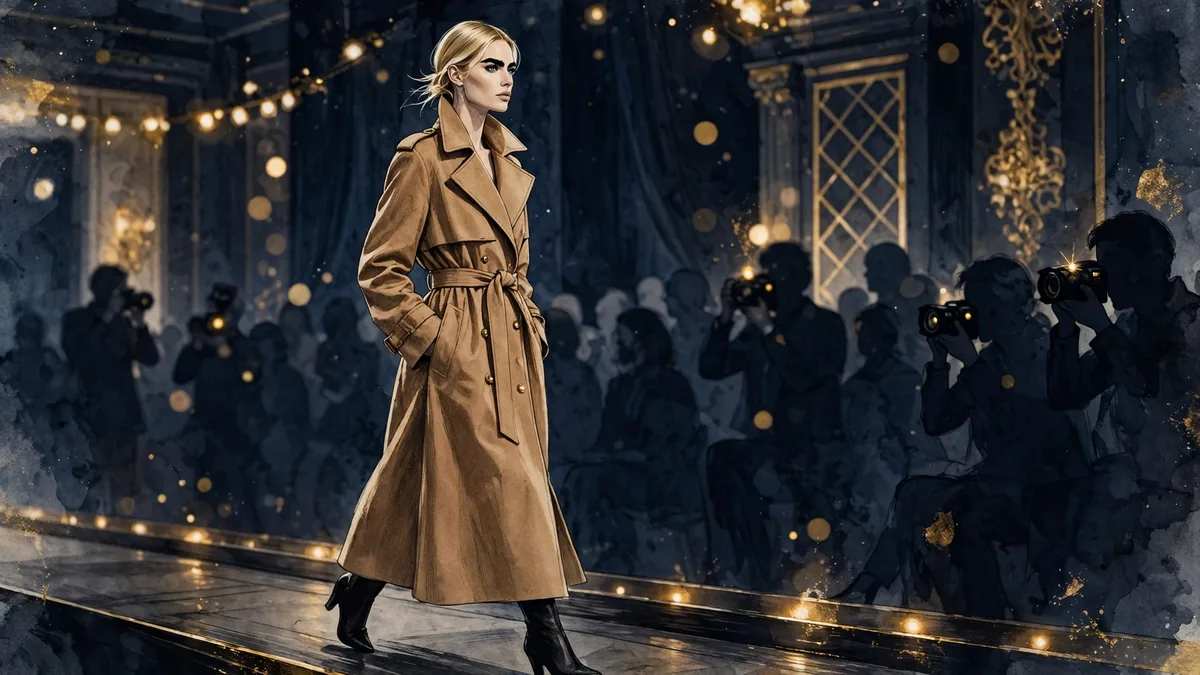
The professional story starts in 2009, when Cara was 17 and signed with Storm Model Management after being scouted by the agency’s founder, Sarah Doukas — the same scout who had discovered Kate Moss. Doukas saw something beyond a pretty face: a model who could move, joke and hold a camera’s attention. Within two years, Cara was walking the runways that matter. Her runway debut came at London Fashion Week in 2011, and the bookings piled up fast: Burberry, Chanel, Fendi, DKNY, Stella McCartney, Dolce & Gabbana and more.
What set her apart in an industry full of beautiful blank slates was her refusal to be one. Cara pulled faces on the runway, stuck her tongue out in backstage photographs, posted silly videos, and treated fashion week like a party she had been invited to rather than an exam she had to pass. The industry, which had spent years rewarding stillness, rewarded her for the opposite. By 2012 she was named Model of the Year at the British Fashion Awards, an award she won again in 2014. In between, she collected magazine covers at a pace few models match — British Vogue, Vogue Italia, Vogue Paris, i-D, Love — and became one of the most photographed faces of the decade.
The money followed the fame, and Forbes kept score. In 2014, the magazine ranked her sixth on its World’s Highest-Paid Models list, with estimated earnings of $3.5 million. A year later she had climbed to second place, earning an estimated $9 million between June 2014 and June 2015. Vogue reported in 2014 that she was making around £6,500 a day — roughly $8 a minute, as the magazine put it. By 2018, Forbes’ list put her annual earnings at around $10 million. These were not the paydays of a model doing a few shows a season; they were the paydays of a model who had become a brand in her own right, with a social media following in the tens of millions that made her worth more to a label than the photographs alone.
Her look helped. The thick dark eyebrows — her signature — became so famous that they spawned their own beauty trend, with women around the world asking salons for “the Cara”. She has joked about them for years, but they were a genuine commercial asset: instantly recognisable in a crowd of blonde models, they made her face impossible to confuse with anyone else’s. In an industry where a model’s face is the product, that kind of instant recognition is worth real money.
By 2015, though, Cara was pulling back. She became more selective about the shows she walked in, telling interviewers that the pressure of the industry and the strain of hiding parts of herself had worn her down. The retreat was not a retirement — she kept taking campaigns and covers — but it was a deliberate shift. She had decided that modelling alone would not be the whole story, and she started spending her energy on the second act she had been planning since her teens: acting.
Burberry, Chanel and the Campaign Years
If one brand defines Cara’s modelling career, it is Burberry. The British house made her one of its faces at the height of her runway fame: she fronted Burberry campaigns, walked its shows, and became the face of Burberry Beauty and its Body Tender fragrance line. The pairing made sense for both sides — a London-born model with an aristocratic background fronting the most British of luxury labels — and it gave Cara the kind of long-running, high-fee relationship that turns a good modelling career into a wealthy one. Major fragrance and beauty contracts are among the best-paid work in modelling, often running into seven figures over a multi-year term, and Burberry was the anchor of her portfolio.
Chanel was the other pillar. Karl Lagerfeld, who ran the house until his death in 2019, was an early and vocal admirer, casting Cara in shows and campaigns and treating her as one of his muses. She walked Chanel runways in Paris season after season, appeared in its eyewear and handbag campaigns, and became part of the house’s inner circle — the kind of relationship that brings not just fees but invitations, access and a permanent place in fashion history. Lagerfeld’s endorsement mattered beyond the pay cheques: when the most powerful designer in Paris calls you a muse, every other house takes notice.
Around those two anchors sat a long list of other paying work: DKNY, Fendi, Mulberry (she fronted campaigns and later collaborated on a handbag line), Zara, H&M, YSL Beauté and Rimmel, for whom she became a spokesperson in 2013. Rimmel was a different kind of deal — a mass-market cosmetics brand rather than a luxury house — and it showed the breadth of her appeal: she could sell a £7 mascara as convincingly as a £2,000 coat. That range, luxury to high street, is what kept her earnings high even as she stepped back from the runway. A model who only works for couture houses has a short shelf life; a model who works across the whole market can keep earning for years.
Her social media presence multiplied the value of all of it. By the mid-2010s Cara had tens of millions of followers across Instagram and Twitter, and brands were paying for that reach as much as for her face. She was among the first generation of models whose following was itself a line item in a contract negotiation — a model who could post a campaign image to 19 million Instagram followers on the day it launched, as one 2015 report noted, was worth more than a model who could not. That leverage helps explain why her Forbes earnings stayed high even after she cut back on shows: the audience followed her wherever she went next.
From the Runway to the Screen
Cara’s film debut came in 2012, while her modelling career was still climbing: a small role as Princess Sorokina in Joe Wright’s Anna Karenina, opposite Keira Knightley and Jude Law. It was a minor part, but it put her on a film set with a serious director and a serious cast, and she took the lesson seriously. Two years later she took a bigger swing with The Face of an Angel (2014), Michael Winterbottom’s drama inspired by the Amanda Knox case, and by 2015 she was carrying a film herself.
Paper Towns (2015), the adaptation of John Green’s bestselling novel, gave her the lead role of Margo Roth Spiegelman, the mysterious girl-next-door whose disappearance drives the story. The film took about $85 million worldwide on a modest budget and proved Cara could hold a screen, not just a photograph. Critics were kinder to her than many expected — the performance had the same restless energy that had made her a runway star, and audiences responded. It was the role that turned “model trying acting” into “actress” in the trade press.
The blockbuster came a year later. In Suicide Squad (2016), Cara played June Moone, the archaeologist possessed by the ancient sorceress Enchantress, opposite Will Smith, Margot Robbie and Jared Leto. The film was a critical punching bag and a commercial hit, taking $749.2 million worldwide according to Box Office Mojo figures cited by entertainment outlets. Cara’s role was not the biggest in the film, but it was the strangest — a shape-shifting villain with a contorted physical performance — and it showed a willingness to look odd on screen that few former models risk. The pay for a DC ensemble film of that size would have been a step up from her earlier fees, and the global exposure was worth more than the salary: after Suicide Squad, her face was known to audiences who had never opened a fashion magazine.
Her next lead was the biggest-budget film of her career. In Luc Besson’s Valerian and the City of a Thousand Planets (2017), she played Sergeant Laureline opposite Dane DeHaan, carrying a $200 million-plus science-fiction epic that took about $226 million worldwide. The film lost money for its studio and divided critics, but Cara’s performance was widely picked out as one of its strengths — tough, funny and physically committed. She followed it with smaller, more interesting work: Tulip Fever (2017), the addiction drama Her Smell (2018) opposite Elisabeth Moss, and the romantic drama Life in a Year (2020) with Jaden Smith. None of them matched the box office of her blockbusters, but together they showed a performer choosing roles for interest rather than size, and building a filmography with range instead of a single repeated note.
Acting pay in this period is rarely disclosed, and Cara’s fees have never been published. What is known is the shape of the work: lead roles in studio films, ensemble parts in blockbusters, and steady television work — the profile of an actress earning solid six- and seven-figure fees per project rather than the eight-figure paydays of the very top stars. That distinction matters for the net worth maths: her fortune was built on modelling first, and acting added to it rather than replacing it.
Television: Carnival Row and Only Murders in the Building
Television gave Cara her longest-running role and her most loyal audience. In Amazon Prime Video’s fantasy series Carnival Row (2019–2023), she played Vignette Stonemoss, a faerie war refugee, opposite Orlando Bloom. The show ran for two seasons, and Cara was its female lead throughout — a commitment of years rather than the weeks of a film shoot, with the steady pay and the streaming-era visibility that comes with a series regular role. The part asked for a lot: action scenes, heavy prosthetics and effects work, and a romance played out across a fully built fantasy world. She has spoken about the freezing conditions on the Prague set and the physical toll of the shoot, but also about how much she loved the character’s defiance — Vignette refuses to accept the place the world assigns her, a theme that clearly appealed to the actress playing her.
In 2022 she joined the cast of Hulu’s hit comedy-mystery Only Murders in the Building for its second season, playing Alice Banks, a charismatic art dealer who becomes romantically involved with Selena Gomez’s character, Mabel. The role put her in the middle of one of the most talked-about shows on television, opposite Steve Martin, Martin Short and Gomez, and it showed a lighter side: Alice is charming, slippery and funny, and Cara played her with the same mischief that had made her a runway favourite. The chemistry with Gomez was widely noted, and the season was a hit with critics and audiences alike.
She added another prestige credit in 2023–24 with American Horror Story: Delicate, playing Ivy Ehrenreich in Ryan Murphy’s long-running anthology series — a part that leaned into the show’s gothic, unsettling tone and put her alongside Emma Roberts and Kim Kardashian. And in 2024 she took on one of the great stage roles, playing Sally Bowles in the West End revival of Cabaret at the Kit Kat Club in London, singing and dancing live eight shows a week. The stage run was a gamble — musical theatre exposes every weakness a screen actor can hide — and the reviews were warm, with critics praising her commitment and her voice. It was also a rehearsal, in hindsight, for what came next: the music career she had been circling for years.
Music and the Not Normal Album
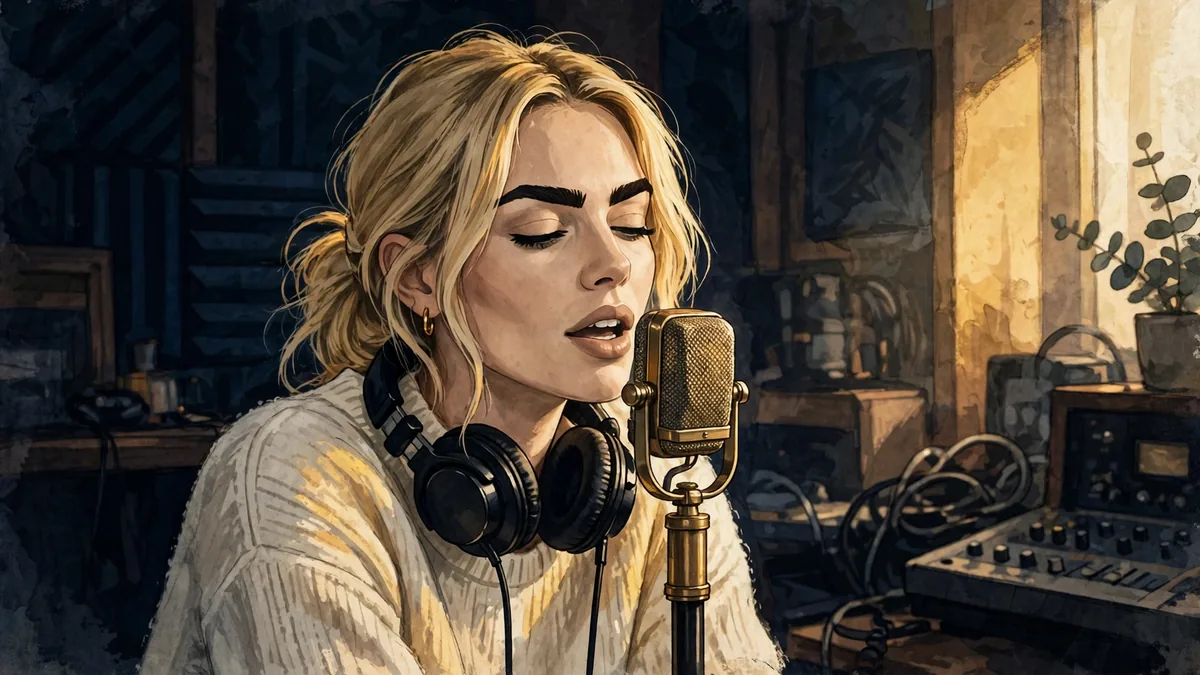
Music was never a side hobby for Cara — it was the plan she kept postponing. She had sung in films, recorded one-off tracks and talked for years about writing songs, but the debut album only arrived in 2026, and when it did, it arrived as a full statement. On 29 May 2026 she signed with Warner Records and released two interconnected songs, “I Forgot” and “Out of My Head”. In August she announced the album: Not Normal, released on 25 September 2026, a 12-track record on which she co-wrote every song and co-produced alongside BJ Burton, whose previous work includes Bon Iver and Charli XCX.
The album’s title is the thesis. “This album is a diary of the last few years of my life,” Cara said on its release, and the songs bear that out: tracks including “Lights Up”, “The Mask”, “Looking for You”, “Tip of My Tongue”, “What Love Is Like”, “Crazy, Baby” and the closing “Slow Down” move through fame, sobriety, relationships and self-acceptance, with some material dating back to her teenage years. The record also features collaborations, including work with Fiona Apple, and singles “Need It” and “Crazy, Baby” — the latter released with a music video starring Samara Weaving. Her partner Minke contributed to the record, and Cara has said the process of making it helped her develop a better relationship with herself and stay “sane and sober”.
The rollout was a proper music launch, not a celebrity vanity project. In April 2026 she announced an eleven-date debut tour that began in Berlin on 1 June and ended in Brooklyn on 26 June, and she was booked for the Primavera Sound 2026 festival line-up and the All Things Go festival in New York on the album’s release day. BroadwayWorld, OutLoud! Culture and other music outlets covered the release as a music story, noting that she co-wrote and co-produced the whole record — a level of involvement that separates a serious artist from a famous person with a microphone. Whether the album becomes a lasting second career or a single chapter, it already changes the shape of her biography: the model who became an actress has now become a recording artist too, and at 34 she is still adding new firsts.
Writing Mirror, Mirror and the Della Vite Business
Long before the album, Cara had already proved she could write. In October 2017 she published her debut novel, Mirror, Mirror, a young adult mystery co-written with British author Rowan Coleman and published by HarperCollins. The book follows a group of teenagers trying to solve the mystery of a friend’s disappearance, and it carries an LGBT theme and a story about a mother struggling with alcohol — subjects close to Cara’s own life. The novel was a genuine publishing event rather than a ghostwritten curiosity: it sold well, drew serious reviews for a first novel, and established her as an author in her own right. A second book was discussed in the years that followed, though no follow-up has been published.
The business instinct showed again in the drinks industry. With her sisters Poppy and Chloe, Cara co-founded Della Vite, a prosecco brand that launched in 2020 and has since expanded into canned spritzes and a growing retail presence in the UK and the US. The three sisters are the face of the brand — their family story is part of the pitch — and Cara’s social reach has been a real asset to it. Private companies do not publish their revenues, so Della Vite’s contribution to her net worth cannot be pinned to a number, but a drinks brand with national distribution and a celebrity founding team is a genuine asset, not a licensing deal: she owns a piece of it, and its value grows with the business.
Other ventures have come and gone around the edges: fashion collaborations, a handbag line with Mulberry, and various endorsement deals that pay for the use of her name and image. The pattern is consistent — Cara takes equity or a creative role where she can, rather than simply renting out her face for a fee. That instinct, more than any single deal, explains how a modelling fortune becomes a lasting one: the money from the peak years was put into things she owns.
The Money: How Cara Delevingne Built Her Fortune
Cara Delevingne’s wealth was built in four waves, and the order matters. The first wave was modelling, and it was the biggest. Between 2012 and 2015 she was one of the highest-paid models in the world: Forbes recorded $3.5 million in 2014 and $9 million in 2015, with around $10 million in 2018, and Vogue’s report of £6,500 a day in 2014 shows how the fees stacked up across campaigns, runway and covers. Over her peak decade, modelling alone accounts for the largest share of her fortune — the bulk of the $50 million estimate, by any honest reading of the sources.
The second wave was acting. Film and television salaries are not published, but the shape is clear: a lead role in a studio film like Paper Towns, an ensemble part in a $749 million blockbuster like Suicide Squad, a lead in a $200 million-plus production like Valerian, and a series-regular salary across two seasons of Carnival Row plus a season of Only Murders in the Building. None of these is a $20 million payday, but added together over a decade they form a serious second income stream — and unlike modelling fees, acting salaries come with residuals and backend participation that keep paying after the work ends.
The third wave was endorsements and brand work: Burberry beauty and fragrance, Chanel campaigns, Rimmel, DKNY, Fendi, Mulberry and the rest. These deals are the quiet earners of a celebrity fortune — multi-year contracts that pay whether or not the celebrity is working that month — and Cara’s were unusually broad, spanning luxury houses and high-street brands at the same time. Her social media following, in the tens of millions, was priced into those deals: brands were buying reach as well as a face.
The fourth wave is the newest and the hardest to value: books, business and music. Mirror, Mirror brought an advance and royalties; Della Vite brings equity in a growing drinks company; the Warner Records deal and the Not Normal album bring advances, streaming revenue and touring income. None of these yet matches the modelling peak in cash terms, but they matter for a different reason: they are income streams she controls, built on work she owns, and they keep her earning in years when she is not on a runway or a film set. A fortune built on one skill fades when the skill fades; a fortune built on four does not.
The anchor figure: Celebrity Net Worth puts Cara Delevingne at $50 million, and most mainstream outlets repeat that number. A handful of publishers land lower — $35 million and $28 million among them — while one outlet suggests $55 million and one outlier suggests $8–12 million, a figure no other source supports. Our range of $35 million to $50 million reflects the mainstream spread; the $50 million anchor is the figure with the widest support.
Net Worth Breakdown and Growth Timeline
No celebrity net worth figure is a bank balance — it is an estimate built from reported earnings, known deals and the value of assets, minus tax and spending that nobody outside the person can see. With that in mind, here is how the published record traces Cara’s wealth over time.
| Year | What happened |
|---|---|
| 2009 | Signs with Storm Model Management at 17; professional career begins. |
| 2011 | Runway debut at London Fashion Week; bookings with Burberry and other major houses begin. |
| 2012 | Named Model of the Year at the British Fashion Awards; film debut in Anna Karenina. |
| 2014 | Forbes ranks her 6th highest-paid model at $3.5 million; wins Model of the Year again. |
| 2015 | Forbes ranks her 2nd highest-paid model at $9 million; leads Paper Towns (about $85 million worldwide). |
| 2016 | Suicide Squad takes $749.2 million worldwide; Forbes earnings remain high. |
| 2017 | Leads Valerian (about $226 million worldwide); publishes Mirror, Mirror. |
| 2018 | Forbes lists annual earnings of around $10 million; appears in Her Smell. |
| 2019 | Leads Carnival Row on Amazon Prime Video; co-founds Della Vite prosecco with her sisters. |
| 2022 | Joins Only Murders in the Building season 2; begins relationship with Minke; enters rehab in September. |
| 2023 | Vogue cover story on sobriety and healing; American Horror Story: Delicate. |
| 2024 | Plays Sally Bowles in Cabaret in the West End; Los Angeles home damaged in a fire in March. |
| 2026 | Signs with Warner Records in May; debut tour June; album Not Normal released 25 September. |
The honest way to read that timeline is as a career that peaked early in cash terms and then spread out. The modelling years of 2014–2018 produced the biggest annual paydays — $9 million and $10 million years, by Forbes’ counting — and the wealth built then has been sustained by acting, business and music since. The $50 million anchor implies that the peak earnings were largely kept rather than spent, which fits with a career that has stayed busy for a decade and a half: there has been no long fallow period, and no public sign of the kind of spending that erases a fortune.
It is also worth saying what the figure is not. Cara Delevingne is not a billionaire, and she is not in the top tier of celebrity wealth. Her fortune is a working fortune — the product of fifteen years of high pay across several industries, not a single windfall. The range of $35 million to $50 million reflects real disagreement among publishers, and the truth is likely to sit inside it: the higher figure counts her business interests and future earnings generously, the lower figure counts only what can be documented. Readers should treat any single number, including ours, as an estimate.
Assets and Lifestyle
Cara’s most publicised asset is her Los Angeles home, which she bought in the Studio City area and filled with the eclectic, playful interiors she has shown off in magazine features — a house with a ball pit, a hidden room and a “vagina tunnel” slide, as one famous home tour put it. In March 2024 the house was badly damaged in a fire while she was in London performing in Cabaret; firefighters took hours to bring the blaze under control, and two people were treated for smoke inhalation. Cara said at the time that her heart was broken and thanked the firefighters, and the house became a reminder that even a fortune does not protect against bad luck.
Beyond the Los Angeles property, her assets are mostly private: a London base, the Della Vite stake, and the intellectual property of her books and music. She has never been a collector of cars or watches in the public sense, and her spending, as far as it is visible, goes on travel, her homes and the people around her. That relative privacy about money is itself a pattern: unlike some celebrities who document every purchase, Cara’s public image has always been built on personality rather than possessions, and her wealth is visible mainly in the freedom it buys her — the freedom to turn down modelling work, to spend years making an album, and to choose roles for interest rather than pay.
Personal Life and Relationships
Cara Delevingne’s personal life has been public since her teens, and she has handled that attention by being more open than almost any model of her generation. She has described herself as pansexual and, in 2018, said she identifies as genderfluid — statements she made in interviews rather than through publicists, and which made her one of the most visible LGBTQ+ figures in fashion. That openness has shaped her public role as much as her work has: she is routinely cited as an advocate for LGBTQ+ rights, and her candour about her own identity is part of why younger fans trust her.
Her most publicised relationships include the singer St Vincent (Annie Clark), with whom she was in a relationship in 2014–2016, and the actress Ashley Benson, her partner from 2018 to 2020. Both relationships were covered heavily in the press, and Cara has spoken about them with a mix of warmth and privacy — willing to acknowledge them, unwilling to turn them into content. She has never been married, and as of 2026 she has no children.
Her current relationship is with the musician Minke, whose real name is Leah Mason. The two first met as teenagers at Bedales School, lost touch, and reconnected years later; they began dating in 2022, during the hardest period of Cara’s life. In June 2024 they marked their second anniversary with public posts, and in October 2026 Cara marked five years since they reconnected, posting on International Lesbian Day about knowing Minke for 23 years. Minke contributed to the Not Normal album, and Cara has credited her partner’s honesty and support as a central part of her recovery — including the fact that she told Minke about her addiction from the very start of the relationship.
Family remains the anchor. She is close to her sisters Poppy and Chloe — close enough to go into business with them — and to her parents, despite the difficulties of her childhood. Her godmother Joan Collins has remained a presence in her life, and the wider family network of the Delevingne and Stevens clans still turns up at the same London events Cara attends. For all the runways and film sets, the through-line of her personal life is a small circle of people she has known since she was a teenager.
Sobriety and Healing
The hardest chapter of Cara Delevingne’s life played out in public, and she has chosen to tell it herself rather than let the photographs tell it for her. In September 2022, photographs of her looking distressed and barefoot at Van Nuys Airport in Los Angeles went viral and prompted widespread concern among fans and in the press. Within weeks she had checked herself into rehab, spending time at the Cirque Lodge treatment centre in Utah — a stay Page Six reported lasted through December 2022 and into January 2023, at a facility where a month’s treatment can cost $20,000 to $50,000.
She told the story in her own words in Vogue’s April 2023 cover story, photographed by Annie Leibovitz. She said she had reached a point where her lifestyle was “not sustainable”, that she had seen the airport photographs and found them heartbreaking, and that she had decided on her own to seek help. At the time of the interview she was four months sober and enrolled in a 12-step programme, a change from the short retreats and quick fixes she had tried before. She described the triggers honestly — the pandemic lockdown in 2020, the break-up with Ashley Benson, the death of her grandmother in spring 2022, and turning 30 that August — and she used a word she prefers to “recovery”: healing. “You don’t recover, and that’s okay,” she told Paper Magazine’s account of the interview. “I prefer ‘healing,’ because I’m constantly doing it.”
In 2026 she gave more detail still. Appearing on the Call Her Daddy podcast, she said she had been using GHB and GBL every day, that she had suffered a seizure at the Burning Man festival in 2022 after trying to stop, and that she had underestimated how hard it would be to quit without medical detox. She also said she had been honest with Minke about her addiction from the first day of their relationship — telling her partner directly that she had a problem and intended to seek help. In a separate 2026 conversation on The Louis Theroux Podcast, she spoke about Minke calling the police during an overdose, and about the support of sober people she admired. It is an unusually frank public record, and it is the reason her sobriety story is told here in her own words rather than in speculation: the details come from interviews she gave, not from rumour.
As of late 2026 she has been sober for four years, and she has said the work continues — therapy, the 12-step programme and the music. She has also said that making Not Normal helped keep her “sane and sober”, and that the album is, in part, a record of the years since rehab. The sobriety story is not a footnote to her biography; it is one of the reasons the biography matters. A reader who comes to this page for a net worth figure and leaves understanding why the last four years look the way they do has learned something no competitor’s quick profile gives them.
Public Image and Advocacy
Cara Delevingne’s public image has always been a deliberate contrast with the fashion world she came from. Where the industry prizes polish and control, she has built a career on being loud, funny and visibly imperfect: pulling faces in photographs, posting unfiltered videos, talking about her mental health and her sexuality in interviews, and refusing to pretend that a privileged background means an easy life. That contrast is not an accident — it is the product, and it is why her following has stayed loyal through every career change. Audiences who met her as a model stayed for the actress, and audiences who met her as an actress are now staying for the singer, because the personality underneath has not changed.
Her advocacy follows the same pattern: personal before political. She has spoken about mental health — including her own experience of depression from her teenage years, when antidepressants, in her words, “saved her life” — and about LGBTQ+ rights, using her platform to support young people who feel different in the way she did. She has also lent her name to environmental and social causes over the years, though she has never built a formal foundation or a charity brand around herself. The advocacy that matters most in her story is the advocacy of candour: a famous person talking plainly about addiction, therapy and sexuality does more for the people watching than a dozen polished campaigns.
That candour has a cost, and she has paid it in press coverage that would have been kinder to a quieter star. The airport photographs of 2022 were published around the world before she had a chance to explain them, and the gossip cycle that followed was, by her own account, part of what pushed her to seek help. She has not hidden from that coverage since — she has answered it, in long interviews, on her own terms. It is a riskier way to manage a public image than silence, and it is the reason her biography reads differently from the standard model-turned-actress story: the difficult parts are in it, in her words, and they make the successes easier to believe.
How She Compares With Her Peers
Cara Delevingne belongs to a generation of models who became brands, and the comparison with her peers shows how unusual her path has been. Kendall Jenner, whose biography we have profiled on this site, took the reality-television route to the top of the modelling world and stayed there, building a fortune — reported at about $60 million by Celebrity Net Worth — on runway work, campaigns and a drinks brand of her own. Cara’s fortune, anchored at $50 million by the same outlet, sits close behind, but it was built differently: less television fame, more film and now music, and a career that has repeatedly left modelling behind rather than doubling down on it.
Gigi Hadid, another of the defining models of the 2010s, followed a path closer to Cara’s in its early years — runway, campaigns, magazine covers — and has since moved into business with her cashmere label Guest in Residence, with a fortune reported at about $30 million. The two women shared runways, campaigns and magazine covers through the decade, and Gigi Hadid’s height — 5 ft 10 in — is often noted beside Cara’s 5 ft 8 in as a reminder of how little separates the top models physically and how much separates them in choices. Where Gigi built a fashion business, Cara built a film career and then a music career; where Gigi stayed close to the industry, Cara kept walking away from it.
Hailey Bieber, whose biography is also on this site, represents the third model of the group: a fortune reported at about $20 million, built on modelling and then transformed by her Rhode skincare brand. The comparison is instructive — Hailey’s wealth grew fastest when she stopped being only a model, just as Cara’s did when she stopped being only a model. The lesson of all four careers is the same: a modelling fortune is a starting point, not a destination, and the models who kept their wealth were the ones who turned fame into something they owned.
What sets Cara apart from all three is the sheer number of reinventions. Kendall Jenner has one dominant identity — model and reality star. Gigi Hadid has two — model and designer. Hailey Bieber has two — model and beauty founder. Cara Delevingne has four — model, actress, author and recording artist — and the fourth arrived at 34, an age when most models have long since retired. That is the real story of her biography: not the size of the fortune, but the fact that she keeps finding new ways to earn one. Readers who want more profiles from this generation of models can browse the rest of our Biography section for the same treatment of her contemporaries.
Frequently Asked Questions
How old is Cara Delevingne in 2026?
Cara Delevingne was born on 12 August 1992 in Hammersmith, London, so she turned 34 in August 2026. She is 34 years old as of November 2026.
What is Cara Delevingne’s net worth in 2026?
Her estimated net worth is $35 million to $50 million, anchored at $50 million according to Celebrity Net Worth, the figure most mainstream outlets use. Lower estimates of $28 million and $35 million exist, while one outlet suggests $55 million. The range reflects disagreement among publishers, and no official figure has ever been disclosed.
How tall is Cara Delevingne?
Cara Delevingne is 5 ft 8 in tall (173 cm). Her height sits comfortably within the traditional high-fashion modelling range, and her strong dark eyebrows and blonde hair made her one of the most recognisable faces of the 2010s.
Who is Cara Delevingne’s partner?
Her partner is the musician Minke, whose real name is Leah Mason. They first met as teenagers at Bedales School, reconnected years later and began dating in 2022. They marked their second anniversary in June 2024, and Minke contributed to Cara’s debut album Not Normal.
What happened to Cara Delevingne in 2022?
In September 2022, photographs of her in distress at Van Nuys Airport in Los Angeles prompted public concern, and she checked herself into rehab at the Cirque Lodge centre in Utah. She spoke about her sobriety in Vogue’s April 2023 cover story, saying she was four months sober and in a 12-step programme. She has been sober since late 2022 and has spoken about the experience in interviews in 2026.
What is Cara Delevingne’s debut album?
Her debut album is called Not Normal, released on 25 September 2026 through Warner Records. The 12-track record, co-written by Cara on every song and co-produced with BJ Burton, includes the singles “I Forgot”, “Out of My Head”, “Need It” and “Crazy, Baby”. She signed with Warner Records on 29 May 2026.
What movies and TV shows is Cara Delevingne known for?
Her best-known films are Paper Towns (2015) as Margo Roth Spiegelman, Suicide Squad (2016) as Enchantress, and Valerian and the City of a Thousand Planets (2017) as Laureline. On television she played Vignette Stonemoss in Carnival Row (2019-2023) and Alice Banks in Only Murders in the Building (2022), and appeared in American Horror Story: Delicate (2023-2024).
Did Cara Delevingne write a book?
Yes. In 2017 she published her debut young adult novel Mirror, Mirror, co-written with British author Rowan Coleman. The mystery novel carries an LGBT theme and a storyline about a mother struggling with alcohol, drawing on Cara’s own childhood experience.
Bottom Line
Cara Delevingne’s biography is the story of a woman who has refused, four times over, to be only one thing. She was a child in a Vogue Italia editorial, a teenager signed by the scout who found Kate Moss, a two-time Model of the Year, a film lead, a television regular, a novelist, a prosecco founder and, at 34, a recording artist with a debut album on Warner Records. The estimated $35 million to $50 million fortune — anchored at $50 million by Celebrity Net Worth — is the arithmetic of that refusal: peak modelling pay, film and television salaries, brand deals, a business she owns with her sisters, books and now music.
The number is less interesting than what it sits on top of. The modelling years made her rich; the years since have made her someone whose career cannot be summed up in a single job title. And the last four years, since rehab in September 2022, have added the part of the story that gives the rest its weight: a public, honest account of addiction and healing, told in her own words, that turned a difficult chapter into the foundation of her music. A reader who finishes this biography knowing her age, her height, her fortune and her album — and also knowing why the album sounds the way it does — has the full picture. That is what this page was written to give.
Sources and Reporting
How we estimated: Cara Delevingne has never disclosed her net worth, and no official figure exists. Our anchor of $50 million comes from Celebrity Net Worth, the outlet most mainstream publishers cite; the range of $35 million to $50 million reflects lower estimates of $28 million and $35 million from other publishers and a $55 million figure from one outlet. Annual modelling earnings come from Forbes’ World’s Highest-Paid Models lists ($3.5 million in 2014, $9 million in 2015, around $10 million in 2018) and Vogue’s 2014 report of £6,500 a day. Box office figures come from the figures reported for Suicide Squad ($749.2 million worldwide) and Valerian (about $226 million). Biographical facts come from Wikipedia’s profile of Delevingne, Vogue’s April 2023 cover story on her sobriety, Page Six’s reporting on her rehab stay, and 2026 interviews on the Call Her Daddy and Louis Theroux podcasts. Album details come from Warner Records’ release announcements and coverage by BroadwayWorld and OutLoud! Culture in September 2026. Where sources disagree, we show the range and name the anchor rather than picking a single number and pretending it is exact.
Sources consulted: Celebrity Net Worth, Forbes, Vogue, Wikipedia, Page Six, BroadwayWorld, Capital FM, Paper Magazine. Estimates are not private financial records and may differ from reality; figures change as new deals, sales and reporting appear.