Olamide’s net worth in 2026 is estimated at $10–15 million, anchored at $12 million. That is the figure the most independent 2026 sources agree on: Networth202 and Clacified both put him at $12 million, Hitztv gives a $10–15 million range, and NaijaBrain gives $12–15 million. He is 37 years old, born Olamide Gbenga Adedeji on March 15, 1989, in Bariga, Lagos — and the money story here is not really about one rapper’s pay cheques. It is about a label.
Most artists earn from their own records. Olamide earns from his own records and from the records of the stars he built. YBNL Nation, the label he founded in 2012, launched Lil Kesh, Adekunle Gold, Fireboy DML and Asake — four of the biggest Nigerian acts of the past decade — and its 2020 joint venture with distributor Empire means Olamide holds a stake in a catalogue far larger than anything he recorded himself. Add a Grammy nomination, a sold-out Wembley arena, a brand-new album released on November 16, 2026, and a headline show at London’s O2 Arena booked for March 25, 2027, and the $12 million anchor starts to look like a snapshot of a fortune still moving upward rather than a settled sum. This article goes source by source through the number, the label, the deals, and the one famous $20 million claim that does not belong to him at all.
By Celebamerica Editorial Staff | Last updated: November 17, 2026
| Full Name | Olamide Gbenga Adedeji |
|---|---|
| Date of Birth | March 15, 1989 (37 years old in 2026) |
| Birthplace | Bariga, Lagos State, Nigeria |
| Estimated Net Worth (2026) | $10–15 million, anchored at $12 million |
| Primary Income Sources | Music catalogue and streaming, live shows, brand endorsements, YBNL Nation label earnings |
| Key Ventures | YBNL Nation (founder, 2012); YBNL–Empire joint venture (2020) |
| Breakout Songs | Eni Duro, Durosoke, Wo, Science Student, Amapiano (with Asake) |
| Latest Album | Time & Space — released November 16, 2026 (13th studio album) |
| Biggest Live Moment | Sold-out OVO Arena Wembley, November 23, 2025; O2 Arena headline booked March 25, 2027 |
| Partner | Adebukunmi Aisha Suleiman; three children |
Table of Contents
- From Bariga to the Mic: Early Life
- The Rise: Eni Duro, Durosoke, and the YBNL Years
- YBNL Nation: The Label That Pays Twice
- Where the Money Comes From
- The Net Worth Figure, Source by Source
- The Forbes $20 Million Claim — It Belongs to Davido
- Olamidé, Time & Space, and the Road to the O2
- The Grammy Night That Changed the Math
- Houses, Cars, and What He Actually Owns
- Net Worth Growth Over the Years
- How Olamide Stacks Up Against His Peers
- Personal Life: Family, Privacy, and the Bariga Code
- Frequently Asked Questions
- Bottom Line
- Sources & Reporting
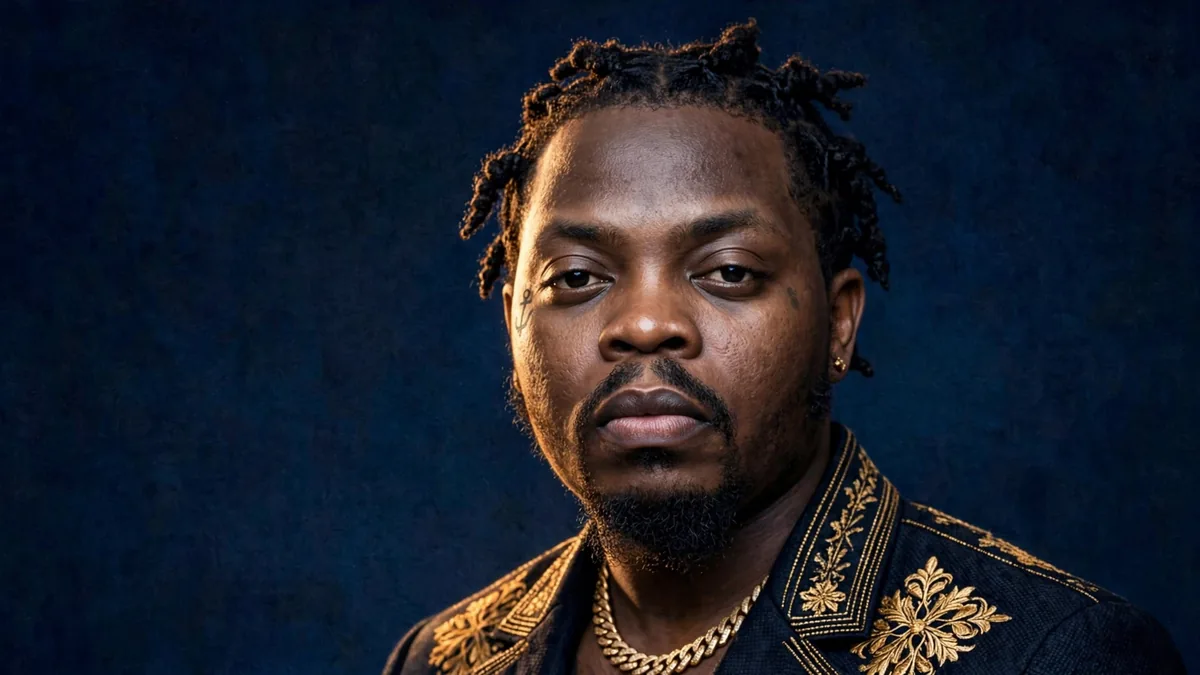
From Bariga to the Mic: Early Life
Olamide Gbenga Adedeji was born on March 15, 1989, in Bariga, a working-class neighbourhood on the Lagos mainland, to Pa Adedeji and his second wife, Ronke Osisanya Adedeji. He was the second of their three children. His younger brother, Eniola Olamilekan, later became known as DJ Enimoney, YBNL’s official DJ — the family business, in a real sense, started at home. Bariga in the 1990s and 2000s was dense, loud, Yoruba-speaking, and poor in the ways that matter to a biography: crowded housing, street markets, and a music scene that lived on street corners and in battered speakers rather than in studios. Olamide has never hidden that upbringing. He raps in Yoruba and English, often in the same verse, and the street slang of Bariga is still the spine of his writing fifteen years into his career.
School came first, in the ordinary way, and music came second — but not much second. As a teenager he was already writing rhymes and recording wherever he could get time on a microphone. The break that mattered was ID Cabasa’s Coded Tunez, the Lagos label and production house that took him on and gave his early work a professional frame. Under the management of Toni Payne he signed with Coded Tunez, and in 2011 he released his debut album, Rapsodi. It did not make him rich. It made him visible, and in the Nigerian music business of the early 2010s, visibility was the currency that bought the next deal. The full story of his height, age, and early years is covered in our separate profile of Olamide’s height and early life, and the broad sweep of his life is told in Olamide’s biography on GuideNetWorth, which follows the same Bariga-to-YBNL arc from a different angle.
What is easy to miss about the Bariga years is how much of the later business was already visible in them. Olamide was not only a rapper looking for a label. He was a rapper watching how labels worked — who kept the masters, who paid for videos, who decided which artist got pushed — and storing it away. When he left Coded Tunez, he did not go looking for another label to sign him. He built one. That decision, made in 2012, is the single most important financial fact of his life, and everything else in this article — the Empire deal, the Grammy nomination, the arena shows — flows from it.
The Rise: Eni Duro, Durosoke, and the YBNL Years
The song that changed everything was “Eni Duro”, released in 2012. It was a street record in the fullest sense — Yoruba-heavy, chant-like, built for Lagos danfo buses and street parties — and it travelled further than anyone expected. It gave Olamide a hit of his own just as he was founding YBNL, and it set the template: music rooted in the street, released on his own terms, with the label keeping the upside. The debut album under his own imprint, YBNL (2012), followed, and then a run of albums that now reads like a map of Nigerian street-pop itself: Baddest Guy Ever Liveth (2013), Street OT (2014), Eyan Mayweather (2015), The Glory (2016), Lagos Nawa (2017), Carpe Diem (2020), UY Scuti (2021), Unruly (2023), Ikigai (2024), the self-titled Olamidé (2025), and now Time & Space (2026).
Along the way came the songs that still define him. “Durosoke” (2013) and “Bobo” (2015) were nationwide street anthems. “Wo” (2017) was so big that its dance move — the “shaku shaku” — became a national craze, and the Lagos State government at one point warned against the dance’s association with internet fraud culture, a strange kind of compliment that only proved how far the song had travelled. “Science Student” (2018) did the same. These were not one-summer hits. They were records that stayed in rotation for years, and in the streaming era that kind of staying power is money: every year the catalogue earns again without Olamide recording a new note.
The other half of the rise was the shift from artist to executive in plain sight. While his own albums kept coming, Olamide was signing and developing other artists under YBNL, and the label’s hits started to outnumber his own. That is a rare position for a working rapper — most artists who start labels treat them as side projects; Olamide treated YBNL as the main project and his own career as its flagship product. The industry noticed. In 2020, Billboard named YBNL one of the gatekeepers of Nigerian music. In 2025, Billboard named Olamide one of its Global Power Players. Those are not fan votes. They are the trade press saying, in its own language, that the man from Bariga now decides who gets heard.
He also kept a foot in the live circuit that built him. His first solo UK headline show in nearly a decade came at the Eventim Apollo in 2016, a 5,039-capacity room he sold out. It would be nine years before he headlined his own London show again — the gap matters, because when he returned in November 2025, he did not come back to a theatre. He came back to an arena, and he sold that out too.
YBNL Nation: The Label That Pays Twice
YBNL Nation — the letters stand for “Yahoo Boy No Laptop” — was founded by Olamide in 2012, alongside producer Pheelz, after Olamide parted ways with ID Cabasa’s Coded Tunez. The name was a joke with a point: the street-hustle label rejected the hustle, a laptop, a studio, and a plan instead. The plan worked. Lil Kesh was the label’s first breakout, riding the “Shoki” remix with Davido and Olamide himself to national fame. Adekunle Gold followed — he had started at YBNL as the label’s graphic designer before Olamide heard him sing and put him on records; his debut album Gold (2016) turned him into one of Nigeria’s defining alternative voices. Fireboy DML signed in 2018 — by his own account, Olamide signed him through a WhatsApp message — and his debut Laughter, Tears and Goosebumps (2019) and the global hit “Peru” made him YBNL’s international anchor. Asake signed in early 2022 and delivered one of the most dominant runs in Afrobeats history: three albums in quick succession, a Grammy nomination, and arena tours of his own. Our full profile of Asake’s rise from the Lagos streets covers that run in detail, and Fireboy DML’s story from choir boy to global star shows how the same YBNL machine worked for a very different kind of artist.
The business move that turned YBNL from a good Nigerian label into a valuable asset came on February 19, 2020, when YBNL signed a distribution and publishing deal with Empire Distribution, the American independent distributor. The Native reported it at the time as a joint venture: Empire would handle global distribution for Olamide’s albums, Fireboy DML’s albums, and any new YBNL signee, while YBNL kept ownership. That structure is the heart of the money story. A distribution deal that leaves ownership with the label means the label keeps the long-term value of the catalogue while the distributor takes a fee for reach. When Asake’s records passed two billion streams and Fireboy’s catalogue passed 800 million, the cheques did not only go to the artists. A share of every stream, every sync, every licensing deal on YBNL releases flows back to the house Olamide built.
It is worth saying plainly what YBNL is not. It is not a major-label imprint, and Olamide is not an employee of Empire. He is the founder, owner, and executive head of an independent label that uses Empire’s pipes. That independence is why Alux, in its November 2026 ranking of Nigeria’s richest musicians, valued most of Olamide’s $20 million estimate in the label itself — “valued against that distribution deal and its roster, plus his own catalogue”. Even if you take the lower $12 million anchor, the logic is the same: a large part of the fortune is not cash in a bank account but equity in a working music company. That is also why the figure is so hard to pin down. Nobody files public accounts for YBNL. There is no share price. The value is whatever a buyer would pay for the catalogue and the roster, and that number moves every time a YBNL artist has a hit.

The roster has thinned since the peak years — Asake has moved on to his own Giran Republic setup, Adekunle Gold and Lil Kesh are long gone — and Olamide has said he prefers to keep the active roster small, typically Olamide himself, Fireboy DML, and a handful of newer acts such as Jayboi, with DJ Enimoney as the label’s official DJ. That is a deliberate choice, not a decline. A small roster means focused spending, personal mentorship, and no bidding wars for attention inside the house. The label’s tenth anniversary in 2022 was marked by a Spotify mini-documentary, a sign of how far a label founded in a Bariga bedroom had travelled. The alumni list — Lil Kesh, Adekunle Gold, Fireboy DML, Asake, plus producers Pheelz and Young Jonn, who both passed through YBNL — is the strongest argument in Nigerian music that Olamide’s real skill was never only rapping. It was spotting talent early and giving it room.
Where the Money Comes From
Olamide’s income arrives through four channels, and they do not carry equal weight. The biggest is YBNL itself: his share of label earnings from the catalogue, from distribution through Empire, and from the artist-development deals that made the label. The second is his own music — streaming royalties from a thirteen-album catalogue, plus the long tail of songs like “Wo” and “Durosoke” that still earn years after release. The third is live performance. The fourth is endorsements. None of these is publicly audited, so every number below is a reported figure with its source named, not a fact from a filing.
Live performance is the most visible earner. Clacified, in its 2026 profile, reports that Olamide charges in the region of 30 to 50 million naira per performance — roughly $20,000 to $31,000 at recent exchange rates — and Nigerian Queries, on a page updated in August 2026, puts his older per-show range far lower, at 3 to 5 million naira, which reads as a stale figure from an earlier era. The higher number fits the artist he is now: a man who sold out a 12,500-capacity London arena in November 2025 and is booked into a 20,000-capacity room in March 2027. Arena fees are not published, and this article will not invent one, but the direction is clear — his fee has risen with the rooms.
Endorsements have been steady since the start. On July 17, 2013, Olamide became the first Nigerian to sign an endorsement deal with Cîroc, the vodka brand — a deal reported at the time as worth 30 million naira. He has since held deals with Guinness (reported at 80 million naira), Glo, Sterling Bank, and Itel Mobile. The individual values are old, reported in naira, and impossible to update honestly without new reporting, so they are recorded here as history, not as current income. What matters for 2026 is the pattern: four major brands across drink, telecom, banking, and phones, over more than a decade, with Cîroc still the deal other Nigerian artists measure themselves against.
Streaming is the quiet earner. Olamide’s own lifetime streams are estimated in the hundreds of millions — one 2025 analysis put his own catalogue at 300 to 500 million lifetime plays — but the more important number is the label’s: Fireboy DML’s catalogue past 800 million streams and Asake’s 2022–2023 run past two billion, all distributed through the YBNL–Empire pipeline. Streaming pays fractions of a cent per play, so the arithmetic only works at scale, and YBNL now operates at scale. The same logic applies to publishing: Olamide writes or co-writes much of what he releases, and as a songwriter and executive producer on YBNL releases he holds publishing shares that pay whenever the songs are played, covered, or licensed. No public figure exists for his publishing income, and this article does not guess one.
The one-line version: Olamide gets paid four ways — his own records, other people’s records on his label, the stage, and brands. The label is the only one of the four that can keep growing while he sleeps, and it is the reason his fortune looks more like a small music company than a rapper’s bank balance.
The Net Worth Figure, Source by Source
Here is the honest picture: there is no official figure for Olamide’s wealth. He has never published accounts, and no Forbes-style audit exists. What exists is a cluster of independent estimates published in 2026, and they agree far more than they disagree. The table below lists them with their dates, so the reader can see the adjudication rather than take it on trust.
| Source | Figure (2026) | Note |
|---|---|---|
| Networth202 | $12 million | Single-figure estimate, 2026 |
| Clacified (updated July 2026) | $12 million | Also reports 30–50 million naira per show |
| Self.NG (richest African musicians, 2026) | $12 million | Ranked 15th among African musicians |
| Hitztv (updated June 2026) | $10–15 million | Biography profile, age 37 in 2026 |
| NaijaBrain (April 2026) | $12–15 million | Biography profile |
| ThrillNG (updated October 2026) | $7–15 million | Ranked 6th among Nigeria’s richest musicians |
| BuzzNigeria | $12.5 million | Biography profile |
| Creebhills (2026) | $14 million | Biography profile |
| Pipu (January 2026) | $12–18 million | Biography profile |
| FestaTown (September 2025) | $15–20 million | Biography profile |
| Self Naija (November 2026) | $15–25 million | Biography profile, updated November 4, 2026 |
| Alux (November 2026) | $20 million | Ranked 5th among Nigeria’s richest musicians; values YBNL itself |
| ZedUrbanLink (2026) | $25–32 million | Low-tier list; far above the rest of the field |
| Nigerian Queries (updated August 2026) | $2.5 million | Stale outlier, far below the rest of the field |
| ThrillNG biography | $4.5–9.5 million | Low outlier from the same outlet that lists $7–15 million elsewhere |
The cluster is plain to see. Eight of the sixteen entries sit at $12 million or inside $10–15 million. The middle of the field — Hitztv, NaijaBrain, Networth202, Clacified, Self.NG — converges on $12 million as the single number and $10–15 million as the range. That is why this article anchors at $12 million. The higher figures are not ignored: Alux’s $20 million, published in November 2026, is the most recent serious estimate, and it is built on a stated method — valuing YBNL against the Empire deal and the roster — rather than on a copied number. It is the best case for the high end, and it is reported here as exactly that. ZedUrbanLink’s $25–32 million, by contrast, comes from a low-tier list that pairs the figure with unverified claims about jets and property, and it sits so far above every other estimate that it cannot anchor anything. At the other end, Nigerian Queries’ $2.5 million and ThrillNG’s own biography-page $4.5–9.5 million are stale or internally inconsistent — ThrillNG’s ranking page, updated in October 2026, says $7–15 million — and they are recorded here only so the reader knows they were seen and set aside, not missed.
Two older data points help explain why the range exists at all. In 2023, published estimates for Olamide ranged from $10.5 million (SocialMate) to $14 million (KenInfo) to $15 million (InformationNGr, citing Forbes). The 2026 cluster has barely moved from that 2023 band, which is itself informative: Olamide’s wealth has grown steadily rather than spiking, because it is built on a catalogue and a label rather than on one viral year. The Alux $20 million is the outlier with a method, and if YBNL’s catalogue keeps appreciating — a new album in November 2026, an O2 headline in March 2027 — the anchor may well move toward it. For now, $10–15 million anchored at $12 million is the figure the evidence supports, and this article will not present $20 million, $25 million, or $32 million as the headline.
The Forbes 20 Million Claim — It Belongs to Davido
One claim about Olamide deserves its own section, because it is repeated so often that it has started to look true. Several list pages state, in various words, that Forbes reported Olamide would earn $20 million or more in 2023. That is not what Forbes reported. The projection belonged to Davido.
In June 2023, Forbes projected that Davido — David Adeleke — would earn over $20 million in 2023 from brand partnerships, merchandise sales, and tour performances. Billionaires Africa reported the projection on June 29, 2023, and Face2Face Africa carried the same story, both naming Davido throughout. Davido had just headlined the Forbes 30 Under 30 Africa Summit in Gaborone, and the $20 million was a forward-looking earnings projection for him, not a net worth figure and not a statement about anyone else. Somewhere in the retelling, the number drifted across to Olamide — helped, no doubt, by the fact that the two men are the same generation, move in the same circles, and have collaborated, including on the “Shoki” remix that helped launch Lil Kesh. Our profile of Davido at 33 covers his own numbers separately, and the $20 million sits there, where it belongs.
Olamide’s own published 2023 estimates tell a different story: $10.5 million (SocialMate), $14 million (KenInfo), $15 million (InformationNGr, citing Forbes’ richest-musicians list). None of them is $20 million. The correction matters beyond pedantry, because it is the clearest example in this whole topic of how a real number, attached to the wrong name, becomes a false fact through repetition. This article does not use the Forbes $20 million figure for Olamide anywhere — not in the headline, not in the growth table, not in the FAQs — and any page that does is repeating an error, not reporting a source.
Olamidé, Time & Space, and the Road to the O2
The last eighteen months have been the busiest of Olamide’s career, and they are the reason this article is dated November 2026 rather than any earlier year. On June 19, 2025, he released Olamidé, his self-titled eleventh studio album, through YBNL Nation and Empire Distribution. Seventeen tracks, with guest appearances from Wizkid (twice, on “Kai!” and “Billionaires Club”), Asake, Seyi Vibez, Young Jonn, Darkoo, Popcaan, BOJ, and — in the album’s most talked-about credit — Dr. Dre. “Kai!”, the lead single with Wizkid, peaked at number 9 on the Nigeria Top 100. The album reached number 1 on the TurnTable Nigerian Albums chart and number 6 on Billboard’s World Albums chart. It was a statement record: a 36-year-old rapper, fourteen years into his career, making his biggest, most star-filled album yet instead of coasting on the catalogue.
Five months later came the live statement. On November 23, 2025, Olamide sold out the 12,500-capacity OVO Arena Wembley in London, becoming the first African rapper to sell out that room. Guests included Asake, Seyi Vibez, Bella Shmurda, and Lil Kesh — a reunion of the YBNL family on a London stage — and the show ran to roughly fifty songs across two decades of hits. He was handed a sold-out plaque on the night. It was his first solo UK headline show since the Eventim Apollo in 2016, and the nine-year gap made the scale of the return land harder: he had left London as a theatre act and come back as an arena act.

The next step was announced almost immediately. On October 19, 2026, Olamide confirmed he would headline London’s O2 Arena on March 25, 2027 — a 20,000-capacity room, presented by Hera Touring with YBNL Entertainment, with general ticket sales opening on October 23, 2026. He becomes the sixth Nigerian artist to headline the venue, joining Wizkid, Davido, Burna Boy, Asake, and Rema. The step up from 12,500 to 20,000 seats in sixteen months is the clearest commercial signal in this whole story: promoters do not book a room that size unless the last room sold out, and the last room did.
Between the two arena announcements came the album. Time & Space, Olamide’s thirteenth studio album, was released on Monday, November 16, 2026 — the day before this article was written — through YBNL Nation and Empire. Ten tracks, about 33 minutes, produced across the album by BlaiseBeatz with co-production from Eskeez and D.C.J, and exactly one guest: fast-rising singer FOLA, on “Jaiye”. The lead single, “Burukutu”, arrived on October 20, 2026, with a TG Omori-directed video, and the cover art and tracklist were unveiled on November 11. The contrast with Olamidé is deliberate and worth noting: seventeen tracks and thirteen guests last year, ten tracks and one guest this year. A short, focused record, carried almost entirely by Olamide himself, released four months before the biggest show of his life. The tracklist runs Elohim, Skoskola, Say Less, Burukutu, Alujon, Mbiri, Jaiye, Oshey, Ring, and Jogor. It is too early to judge its commercial performance — it has been out for a day — but its timing is not an accident. Albums sell tickets, and the O2 is in March.
The Grammy Night That Changed the Math
On November 10, 2023, the Recording Academy announced the nominees for the 66th Grammy Awards, and Olamide’s name was on the list for the first time: Best African Music Performance, for “Amapiano” with Asake, in the category’s first year. He became the first Nigerian rapper ever nominated for a Grammy. The ceremony took place on February 4, 2024, at the Crypto.com Arena in Los Angeles. Tyla won the category for “Water”. Olamide did not take home a statue, and this article will not pretend otherwise — but the nomination did something a win could not have done better: it put a Yoruba street rapper from Bariga on the same ballot as the biggest Afrobeats stars on earth, and it did so for a song released on his own label, with his own signee.
The commercial value of a Grammy nomination is hard to price and easy to overstate, so here is the careful version. A nomination raises booking fees, because promoters can advertise a Grammy-nominated artist. It raises sync and licensing interest, because music supervisors search nomination lists. And it raises the value of the catalogue, because a Grammy-nominated record is a more durable asset than an un-nominated one. None of that shows up as a line item in any public account, and this article does not assign it a dollar figure. What it does show up as is the Wembley sell-out a year later and the O2 booking after that — the kind of rooms that open for artists the industry has formally recognised. The nomination was also a personal landmark: Olamide had been making music for twelve years before the Academy noticed, and the recognition arrived not for a solo record but for a collaboration with an artist he had developed himself. That is the YBNL story in miniature.
For scale, the other Nigerian nominees that year tell the same story of a scene arriving together: Davido earned his first three nominations, Burna Boy earned four, Ayra Starr earned her first. Our profile of Burna Boy at 35 covers the artist who has gone furthest on that path, and the comparison is instructive — Burna Boy’s fortune is far larger, built on global touring at a scale Olamide has only just reached. The gap between them is the gap between a Grammy winner with years of arena touring and a Grammy nominee with one arena sell-out behind him. The O2 show in March 2027 is Olamide’s chance to start closing it.
Houses, Cars, and What He Actually Owns
This is the section where most net worth articles go wrong, so it will be short and careful. There is no public record — no property filing, no company account, no verified interview — that prices Olamide’s house or his cars. Several biography pages report that he owns a home in Lekki, the wealthy Lagos district, and ZedUrbanLink’s 2026 list claims multiple Lekki mansions plus a Lamborghini and a Mercedes G-Wagon fleet. Those claims are unverified, and this article repeats them only as claims from a low-tier list, not as facts. What can be said with confidence is narrower: Olamide lives in Lagos, keeps his family life private, and does not post the kind of property tours that would let anyone price his home. He is photographed with luxury cars at events, as almost every Nigerian star is, and photographs are not ownership records.
What he verifiably owns is more interesting than a car list anyway. He owns YBNL Nation, outright, as its founder. He owns his masters on the YBNL catalogue, under the Empire distribution structure described above. He owns his publishing as a songwriter. Those are the assets that generate income every month, and they are the assets a buyer would pay for. A house in Lekki, whatever it is worth, is a place to live. YBNL is a business. Readers looking for a garage inventory will be disappointed by this section, and that is deliberate: inventing a fleet of named cars with invented prices would make the article more entertaining and less true, and the trade is not worth making.
Net Worth Growth Over the Years
No public filing tracks Olamide’s wealth year by year, so the timeline below is built from the published estimates of the sources named in the adjudication table. It shows the direction of travel, not an audited balance sheet. Figures are the published estimates for each year, and the notes explain what moved them.
| Year | Published estimate | What was happening |
|---|---|---|
| 2012–2013 | Under $1 million (implied) | “Eni Duro” breaks through; YBNL founded; first Cîroc deal, July 2013 |
| 2015–2017 | $3–5 million (retrospective lists) | “Bobo”, “Wo”, and the shaku shaku craze; Lil Kesh and Adekunle Gold break out on YBNL |
| 2020 | $7–10 million (contemporary lists) | YBNL–Empire joint venture, February 2020; Fireboy DML’s global rise |
| 2023 | $10.5–15 million | Asake’s peak YBNL run; “Amapiano” Grammy nomination announced November 2023; $10.5M (SocialMate), $14M (KenInfo), $15M (InformationNGr) |
| 2025 | $12 million | Olamidé album, June 2025; Billboard Global Power Player; Wembley sell-out, November 2025 |
| 2026 | $10–15 million, anchored $12 million | Time & Space, November 16, 2026; O2 Arena headline booked for March 25, 2027; Alux high estimate $20 million |
The shape of that table is the point. There is no single year in which Olamide’s fortune doubled, because there is no single year in which he sold a company or signed a nine-figure deal. The growth is steady: a hit, a label, a distribution deal, a Grammy nomination, an arena. Each step added a little, and the steps compounded. The 2026 anchor sits in the same band as the 2023 estimates, and that stability is itself a finding — it suggests the $12 million figure is a floor built on a real catalogue and a real label, not a spike built on one good year. If the O2 show sells out and Time & Space performs, the next update to this article may need a higher anchor. Today, the evidence supports $12 million.
How Olamide Stacks Up Against His Peers
Net worth figures only mean something in comparison, so here is Olamide against the Nigerian artists he is most often ranked with. Every figure below is a published estimate with its source, and the methods differ — Alux values labels, other lists count only personal wealth — so the table is a guide to scale, not a league table with a single rulebook.
| Artist | Published 2026 estimate | Source |
|---|---|---|
| Wizkid | $50 million | Alux, November 2026 — richest musician in Nigeria |
| Davido | $38–50 million (2023 lists) | InformationNGr ($38M) and SocialMate ($50M), 2023 |
| Burna Boy | $22–30 million (2023–2026 lists) | Published estimates vary widely; Grammy winner, global touring |
| Olamide | $10–15 million, anchored $12 million | This article — Networth202, Clacified, Hitztv, NaijaBrain |
| Asake | $8–12 million | GuideNetWorth, Asake net worth profile |
| Fireboy DML | $3 million | GuideNetWorth, Fireboy DML biography profile |
Two things stand out. First, Olamide sits below the three global touring giants — Wizkid, Davido, and Burna Boy — and the gap is explained by touring scale: those three have spent years playing arenas and stadiums around the world, while Olamide’s arena career began in earnest in November 2025. Second, he sits above his own signees. Asake, the biggest star YBNL ever produced, is estimated at $8–12 million as an individual artist; Olamide, who holds the label share as well as his own catalogue, is estimated higher. That is the economics of ownership in one comparison: the man who built the machine is worth more than any single product of it. The full story of the biggest of those peers is told in Wizkid’s biography, and the contrast between Wizkid’s $50 million and Olamide’s $12 million is the contrast between a global pop star and a label boss who is still, in November 2026, playing catch-up on the live circuit. The O2 show is the next step in closing that gap. Readers who want the wider Nigerian picture can browse the rest of our Net Worth profiles, where the same method — named sources, ranges on conflict — is applied to every artist.
Personal Life: Family, Privacy, and the Bariga Code
Olamide’s personal life is the part of this story he guards most closely, and the reporting reflects that. His long-time partner is Adebukunmi Aisha Suleiman, whom he has been with since before his rise to fame — Daily Trust dates the relationship to 2011, and Legit.ng reports she was with him before he was famous. He proposed to her publicly on Snapchat on March 8, 2018, her birthday and International Women’s Day, and said at the time that they were planning a wedding. Several outlets call her his wife, and Wikipedia lists her as his spouse, but he has not shared wedding photos or a confirmed wedding date, and this article will not invent one. BuzzNigeria lists a 2014 marriage date; ThrillNG, which has reported on the family in the most detail, notes that no wedding date has been confirmed. The honest statement is that they are long-term partners with three children, and that Olamide treats the formal details as private.
The children are Batifeori Maximilliano, born in 2015; Tunrepin Myles, born in Maryland, USA, on July 1, 2019, whose birth Olamide announced on Instagram; and a daughter, Moririfunoluwa Celine. He posts about them rarely, and almost always on birthdays. That restraint is part of a wider pattern: for a man with tens of millions of followers across platforms, Olamide gives strikingly little of himself away. There are no reality-show appearances, no tell-all interviews about his home life, and no public feuds that have lasted beyond a news cycle. The Bariga code, if that is the right name for it, is simple — let the music and the label do the talking, and keep the family out of the frame. It has served him well for fifteen years, and there is no sign he intends to change it now that the rooms are getting bigger.
Frequently Asked Questions
What is Olamide’s net worth in 2026?
Olamide’s net worth in 2026 is estimated at $10–15 million, anchored at $12 million. Networth202 and Clacified both put him at $12 million, Hitztv gives $10–15 million and NaijaBrain gives $12–15 million. Wider lists go higher, up to $20 million (Alux, November 2026) and $25–32 million (ZedUrbanLink), but those sit well above the cluster of independent 2026 estimates, so $12 million is the figure this article anchors on.
How old is Olamide?
Olamide is 37 years old in 2026. He was born Olamide Gbenga Adedeji on March 15, 1989, in Bariga, Lagos, Nigeria, and turned 37 in March 2026.
How did Olamide make his money?
Four streams feed it: his own music catalogue and streaming, live shows and festival fees, brand endorsements led by Ciroc, Guinness, Glo and Sterling Bank, and YBNL Nation, the label he founded in 2012. The label is the biggest piece — YBNL launched Lil Kesh, Adekunle Gold, Fireboy DML and Asake, and its 2020 joint venture with distributor Empire gives Olamide a share of a catalogue far larger than his own records.
What is YBNL Nation, and who did Olamide sign to it?
YBNL Nation — short for Yahoo Boy No Laptop — is the independent record label Olamide founded in 2012 after leaving ID Cabasa’s Coded Tunez. Its breakout signings were Lil Kesh, Adekunle Gold, Fireboy DML and Asake. In February 2020 YBNL signed a distribution and publishing deal with Empire Distribution, which carries YBNL releases to a global audience.
Did Olamide earn $20 million in 2023?
No — that figure belongs to Davido, not Olamide. Forbes projected in 2023 that Davido would earn over $20 million that year from brand deals, merchandise and touring, and several outlets repeated the number. It has since been attached to Olamide on some list pages by mistake. Olamide’s own published 2023 estimates sat between $10.5 million and $15 million.
Has Olamide won a Grammy?
No. Olamide has one Grammy nomination: Best African Music Performance at the 66th Grammy Awards in February 2024, for ‘Amapiano’ with Asake. He was the first Nigerian rapper ever nominated for a Grammy. Tyla won the category for ‘Water’.
What is Olamide’s new album Time & Space?
Time & Space is Olamide’s 13th studio album, released on November 16, 2026, through YBNL Nation and Empire. It has ten tracks, runs about 33 minutes, was produced across the album by BlaiseBeatz, and carries exactly one guest — fast-rising singer FOLA on ‘Jaiye’. The lead single ‘Burukutu’ came out on October 20, 2026.
When is Olamide playing the O2 Arena?
Olamide headlines London’s O2 Arena on March 25, 2027 — his first headline show at the 20,000-capacity venue and the biggest booking of his career. It follows his sold-out show at the 12,500-capacity OVO Arena Wembley on November 23, 2025, where he became the first African rapper to sell out that room.
Bottom Line
Olamide’s net worth in 2026 is $10–15 million, anchored at $12 million — the figure the most independent sources agree on, from Networth202 and Clacified at $12 million to Hitztv at $10–15 million and NaijaBrain at $12–15 million. The higher numbers in circulation, up to $20 million from Alux and $25–32 million from a low-tier list, are reported in this article and set aside with reasons, not hidden. The $20 million Forbes projection belongs to Davido, not Olamide, and this article is one of the few pages on the subject that says so plainly.
The number itself is the smaller part of the story. The larger part is what the number is made of: a thirteen-album catalogue, a label that launched four of Nigeria’s biggest stars, a joint venture with Empire that turns other people’s hits into his income, a Grammy nomination, and an arena run that went from a sold-out Wembley in November 2025 to a booked O2 in March 2027. Olamide got rich the slow way — by owning the machine instead of renting a place on it — and the machine is still running. If the O2 sells out, the next version of this article will have a higher anchor. For November 2026, $12 million is the honest figure.
Sources & Reporting
How we estimated: There is no public filing for Olamide’s wealth, so this estimate is built from named published sources, all dated November 17, 2026 or earlier. The anchor is the cluster of independent 2026 estimates that converge on $12 million (Networth202, Clacified, Self.NG) inside a $10–15 million range (Hitztv, NaijaBrain, ThrillNG). Higher estimates (Alux $20 million, November 2026; Self Naija $15–25 million) and lower outliers (Nigerian Queries $2.5 million; ThrillNG biography $4.5–9.5 million) are reported with their reasons for sitting outside the anchor. Figures in naira are converted at recent rates and labelled as approximate. Estimates of private wealth may differ from reality; this article reports what the sources say and shows its working.
Named sources consulted: Clacified, Alux, ThrillNG, Hitztv, NaijaBrain, Forbes, Billboard, Grammy.com, Wikipedia, YBNL Nation, BellaNaija, Pulse Nigeria, Face2Face Africa, OkayAfrica. Career facts were checked against at least two independent sources wherever possible; where sources disagreed (the $20 million Forbes figure, the wedding date, the low net worth outliers), the disagreement is stated in the text rather than smoothed over.