Last updated: November 21, 2026 · By Celebamerica Editorial Staff
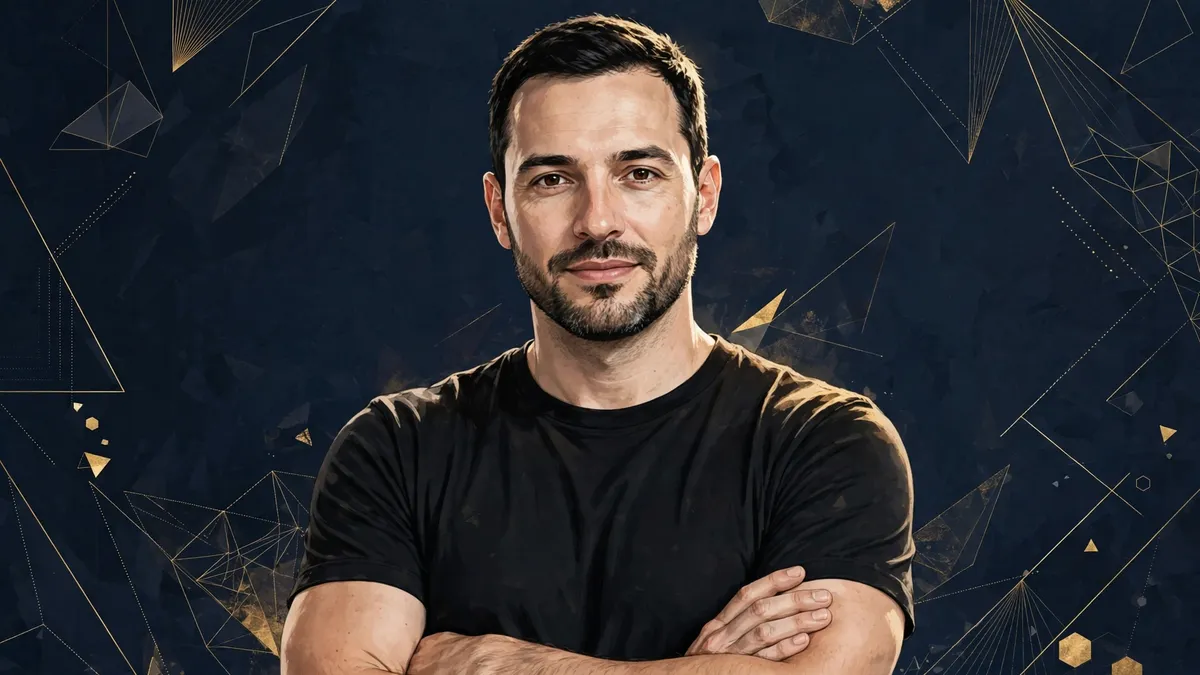
Alex Hormozi is an American entrepreneur, investor, and author born on August 18, 1988, in Towson, Maryland. This Alex Hormozi biography traces his rise from a broke gym owner sleeping on a gym floor in 2016 to the co-founder of Acquisition.com, the author of three of the fastest-selling business books of the decade, and a co-owner of Skool. As of November 2026, his net worth is most credibly estimated at $100 million to $220 million, anchored by his own public breakdown of roughly $200 million — about $95 million in liquid assets and $100 million or more in illiquid equity — which he shared on the Hampton Moneywise podcast. The full story covers his Iranian-American upbringing, Vanderbilt years, the gym gamble that nearly wiped him out, the licensing model that became Gym Launch, the $46.2 million exit in 2021, the Acquisition.com portfolio, and the Guinness World Record book launch of August 2025.
What makes Hormozi different from most wealthy founders is how much of his own math he has put on the record. He has talked openly about the cash he took out of his companies, the valuation of the 2021 sale, and the split between money he can reach in weeks and equity that would take months to unwind. That openness is also why the numbers in this profile come with named sources and honest ranges: his companies are private, no audited accounts exist, and outside estimates run from $100 million to $350 million depending on how Skool and the Acquisition.com portfolio are valued. The $200 million figure he stated himself is the anchor; everything else is reported around it.
Alex Hormozi: Quick Facts
| Full Name | Alex Hormozi |
|---|---|
| Date of Birth | August 18, 1988 (Towson, Maryland, United States) — see the birth-year note below; a few secondary pages list 1989 or 1992, but his official bio and the strongest sources give 1988 |
| Age | 38 years old (as of November 2026) |
| Height | About 6 feet 1 inch (reported) |
| Heritage | First-generation Iranian-American; son of an Iranian immigrant physician |
| Education | Vanderbilt University — B.S. in Human & Organizational Development, Corporate Strategy; graduated magna cum laude in three years |
| Estimated Net Worth | $100 million – $220 million as of November 2026 (self-reported breakdown ≈ $200 million: ~$95 million liquid, $100 million+ illiquid equity) |
| Primary Income Sources | Acquisition.com portfolio equity, the 2021 Gym Launch / Prestige Labs exit, Skool co-ownership, book royalties from the $100M series, content revenue |
| Key Ventures | United Fitness, Gym Launch, Prestige Labs, ALAN, Acquisition.com, Skool (co-owner) |
| Books | $100M Offers (2021), $100M Leads (2023), $100M Money Models (August 2025 — Guinness World Record, 2,917,443 copies in one day) |
| Spouse | Leila Hormozi — married 2017, co-founder and CEO of Acquisition.com |
| Residence | Las Vegas, Nevada (reported) |
Table of Contents
- Alex Hormozi: Quick Facts
- Early Life and Family Background
- Education at Vanderbilt University
- Consulting Years and the Gym Gamble
- United Fitness: The Turnaround That Nearly Broke Him
- Gym Launch and the Licensing Model
- Prestige Labs and ALAN
- The 2021 Exit: A 46.2 Million Dollar Valuation
- Acquisition.com: The Holding Company
- Skool: Co-Ownership of a Community Platform
- The Books: Offers, Leads, and Money Models
- The Content Engine and Free Education Model
- Alex Hormozi Net Worth in 2026
- Career Timeline
- Real Estate and Lifestyle
- Personal Life: Leila Hormozi and Family
- How Hormozi Compares to His Peers
- Controversies and Criticism
- Frequently Asked Questions
- Bottom Line
- Sources and Reporting
Early Life and Family Background
Alex Hormozi was born on August 18, 1988, in Towson, Maryland, a suburb of Baltimore. He is the only child of an Iranian father who fled Iran during the revolution, passed through Paris, and eventually built a new life in the United States as a physician. His father’s story — leaving everything behind, retraining, and rebuilding from nothing — runs through almost everything Hormozi says about work. He has described a childhood shaped by immigrant expectation: school mattered, effort mattered, and comfort was never the goal.
He attended the Gilman School in Baltimore, a private college-preparatory school, before heading to Vanderbilt University. The details of his teenage years are thin in the public record — Hormozi rarely talks about his childhood beyond his father’s influence — and this profile does not fill gaps with guesswork. What is on the record is the pattern that followed him: he picked a hard path, compressed it, and moved on to the next one faster than anyone expected.
One date in this section deserves a note of its own, because readers will find conflicting numbers. A few secondary biography pages list Hormozi’s birth year as 1989, and at least one lists 1992. His official biography on Acquisition.com, the company he co-founded, gives August 18, 1988, and that date is backed by Toolshero and by the long-form profiles that have fact-checked his age against his own timeline — he was 26 when he started the Gym Launch licensing model, 31 at the 2021 sale, and 34 when he became co-owner of Skool, all of which line up with a 1988 birth. The 1989 and 1992 dates appear on pages that do not cite a primary source, and no primary source supports them. This profile anchors on August 18, 1988.
Education at Vanderbilt University
Hormozi studied at Vanderbilt University in Nashville, Tennessee, where he majored in Human & Organizational Development with a focus on corporate strategy. He graduated magna cum laude — and he did it in three years instead of four, partly to save on tuition. That detail matters because it is the first visible sign of the operating style that later defined his companies: find the shortest honest route to the outcome, cut the waste, and reinvest the savings.
Vanderbilt also gave him his first taste of structured business thinking. The Human & Organizational Development program sits at the intersection of management, psychology, and systems design — how people behave inside organizations and how those organizations can be built to perform. It is hard to miss the line from that degree to Gym Launch, which was, at its core, a system for changing how gym owners behaved: how they priced, how they sold, how they kept members. He did not study gyms. He studied organizations, and then he applied it to gyms.
After graduating, Hormozi spent about two years working as a management consultant. The firm is not named in the public profiles of his career, and this profile will not invent one. What the record does show is that the consulting years left him restless. He was advising other people on how to run their businesses while wanting one of his own, and in 2013 he walked away from the safe path to open a gym.
Consulting Years and the Gym Gamble
The decision to leave consulting for a gym in Huntington Beach, California, looked reckless from the outside. Hormozi had a degree from a good school, a corporate job, and no background in fitness. What he had was a conviction that small gyms were badly run businesses — most of them sold memberships and hoped members never showed up — and that a gym run like a real business, with real sales and marketing, could make serious money.
He opened his first gym, United Fitness, in Huntington Beach in 2013. The early months were a grind of the kind he now describes in detail on his podcast and in his books: long days on the floor, selling memberships himself, learning that a great workout product means nothing if nobody walks through the door. The gym did grow. Over roughly three years he expanded to five locations — some profiles say six, and the difference of one location between his own company’s timeline and outside profiles is noted here rather than smoothed over.
Then it fell apart. The expansion was funded with debt and held together by Hormozi’s own hours, and when the model cracked, it cracked everywhere at once. By late 2016 he had run his bank balance down to about a thousand dollars. He has talked openly about sleeping on the floor of a gym he was trying to save. It is the lowest point in his story, and it is also the hinge: everything that came after — the licensing model, the books, the holding company — was built from the lessons of that collapse.
United Fitness: The Turnaround That Nearly Broke Him
United Fitness was not a chain built on venture money or a famous name. It was a local gym business in Southern California, and its growth came from Hormozi doing the unglamorous work himself: standing at the front desk, calling leads, running promotions, and testing what actually got people to join and stay. The five locations he built were proof the model could work. The collapse that followed was proof it could not work on his hours alone.
The story Hormozi tells about this period is specific, and the specifics are what make it useful. He had taken on leases and debt to expand. When one location struggled, the others had to carry it. He was the sales team, the manager, and the troubleshooter, and there were not enough hours in his week to be all three across five gyms. The bank balance fell to about $1,000. He slept on a gym floor. He has said plainly that he was close to losing everything, and that the experience taught him the difference between a business and a job that owns you.
What saved him was not a rescue or a loan. It was a change in the model. Instead of trying to save the gyms by working harder inside them, he started teaching other gym owners the system he had built — the pricing, the sales process, the marketing — and charging for it. That pivot, made as a last resort, became Gym Launch.

Gym Launch and the Licensing Model
Gym Launch began at age 26 as a licensing business. Rather than owning more gyms, Hormozi licensed his turnaround system — the offers, the sales scripts, the marketing playbooks — to gym owners who were stuck in the same place he had been. The model was simple and, for the fitness industry, unusual: instead of selling a franchise, he sold a system and a result.
It worked at a scale that surprised even him. Gym Launch went on to license its system to more than 5,000 gyms worldwide, according to the profiles of his career. The business made money by charging gym owners for the playbook and, in many cases, for hands-on help installing it. For owners drowning in the same problems Hormozi had just survived — empty classes, churn, no sales process — a proven system was worth paying for, and Hormozi had the one credential that mattered: he had lived the problem.
Gym Launch also changed Hormozi’s own economics. A licensing business does not need a new lease for every new customer, and it does not cap out at the number of hours its founder can work. That was the lesson of United Fitness applied in reverse. The gym chain had nearly broken him because it scaled his hours; Gym Launch worked because it scaled his knowledge. It is the same idea that later shaped his books — write the system down once, give it away or sell it at scale — and the same idea behind Acquisition.com, which scales other people’s businesses with the same playbooks.
The numbers Gym Launch produced are part of the public record through the 2021 sale, covered in the exit section below. What is worth saying here is that Gym Launch was never a side project. It was the business that turned Hormozi from a gym owner into an entrepreneur with a repeatable method, and the method is what buyers paid for in 2021.
Prestige Labs and ALAN
While Gym Launch was growing, Hormozi and Leila built two more businesses on top of the same customer base. In 2019 they co-founded Prestige Labs, a sports nutrition and supplement company aimed at gym owners and their members — a natural extension, since Gym Launch already had the attention of thousands of gyms. A supplement brand sold through gyms Hormozi already served was a short step from a licensing business, and it gave the couple a product business alongside the services business.
In 2020 Hormozi launched ALAN, software that automated lead generation for brick-and-mortar businesses. ALAN reached a reported $1.4 million in monthly recurring revenue within six months, according to YesPress’s profile of his career — a figure that comes from secondary reporting rather than a company filing, and is flagged as such here. The idea behind ALAN was the same as Gym Launch: small local businesses lose money on the gap between a lead and a sale, and software that closes that gap is worth paying for every month.
Prestige Labs and ALAN matter to this biography for two reasons. First, they show Hormozi was already thinking in portfolios before Acquisition.com existed — a licensing business, a product business, and a software business, all serving the same kind of customer. Second, they were part of the 2021 exit. When American Pacific Group bought in, it bought 66% of Gym Launch and Prestige Labs together, and ALAN was sold separately the same year.
The 2021 Exit: A 46.2 Million Dollar Valuation
The turning point in Hormozi’s wealth came in 2021, when he was 31. He and Leila sold a 66% stake in Gym Launch and Prestige Labs to American Pacific Group in an all-cash deal at a $46.2 million valuation, and sold 75% of ALAN to a strategic buyer in an all-stock deal the same year. His own company’s timeline states the $46.2 million figure plainly, and Hormozi himself has repeated it in video descriptions of his career, including the detail that the family office was started with the $42 million in distributions he had already taken plus the cash from the exit.
Two things about the deal are often misunderstood, and both are worth getting right. First, $46.2 million was the valuation of the stake sold, not the cash Hormozi personally banked — he kept a minority stake in the businesses, and the cash he received was a share of that valuation plus the distributions he had taken along the way. Second, the deal did not make him a billionaire or anything close to it. It made him a wealthy man with a war chest, and what he did with the war chest — starting Acquisition.com instead of retiring or starting another gym — is what turned a good exit into a much larger fortune.
The exit also explains the shape of his later wealth. Unlike a founder who sells everything and starts over, Hormozi kept equity, kept the lessons, and kept the audience he had built while selling. The buyers got the businesses; he kept the system, the brand, and the cash to deploy it again at a larger scale.
The exit in one line: at 31, Hormozi sold most of Gym Launch and Prestige Labs at a $46.2 million valuation and most of ALAN in a separate all-stock deal — then used the proceeds, plus $42 million in earlier distributions, to start a holding company instead of another single business.
Acquisition.com: The Holding Company
Acquisition.com is the company Alex and Leila Hormozi started in 2020 — the same year as ALAN — to invest in and scale other people’s businesses. It is a family office, not a venture fund: it invests the Hormozis’ own money, takes equity stakes, and then works inside the portfolio companies on customer acquisition and monetization. Leila is the co-founder and CEO; Alex is the founder and managing partner, and the architect of the portfolio.
The model is Gym Launch grown up. Instead of licensing a playbook to gym owners for a fee, Acquisition.com takes an ownership stake — between 20% and 100%, according to Hormozi’s own descriptions — and then installs the same kind of systems: better offers, better lead generation, better pricing, better retention. The portfolio has grown to 10 companies by Hormozi’s own count in his video descriptions, with combined annual revenue above $250 million, while other profiles put the count at 16 or more active companies generating over $200 million a year combined. The two counts differ because the portfolio keeps changing and because “active companies” and “portfolio companies” are counted differently in different sources; the honest statement is that the portfolio is in the low-to-mid teens of companies doing hundreds of millions in combined annual revenue.
Acquisition.com is also where most of Hormozi’s net worth now sits. His own breakdown — roughly $95 million liquid and $100 million-plus in illiquid equity — points to the portfolio as the biggest single bucket. That is why outside estimates of his wealth swing so widely: nobody outside the family office can see the portfolio’s books, so valuing it means guessing at revenue multiples and ownership percentages. The $200 million anchor comes from Hormozi himself; the $350 million high-end estimate from Matt Haycox leans heavily on a large Skool valuation; the $100 million low end assumes the portfolio is worth far less. All three are estimates. Only the self-reported breakdown is a statement from the man himself.
Skool: Co-Ownership of a Community Platform
Hormozi became a co-owner of Skool, the online community and courses platform founded by Sam Ovens, when he was 34, according to his official bio; press coverage of the deal dates to 2024. Skool lets creators build paid communities and run courses in one place, and it was a natural fit for Hormozi: his whole business is teaching, and Skool is where much of that teaching now lives.
The Skool deal is also the single biggest source of disagreement in Hormozi’s net worth estimates. When he came in as co-owner, Skool had between 3 and 5 million users, according to YesPress’s profile; within under a year of his involvement, the platform crossed 15 million users. That growth is real and well documented. What is not public is the size of Hormozi’s stake or Skool’s valuation, so outlets fill the gap with very different assumptions. Matt Haycox’s $350 million estimate credits his Skool stake at roughly $150 million — his largest single position. More cautious profiles value it far lower. Until Skool raises money at a public valuation or sells, the honest answer is that the stake is valuable, growing fast, and impossible to price precisely from outside.
What is not in doubt is the direction. Skool’s user growth after Hormozi’s arrival — from a few million to more than 15 million — is the clearest public evidence that the Acquisition.com playbook works when it is pointed at a business with a product people already want. It is also why Skool, rather than any single book or exit, is the asset most likely to decide where Hormozi’s net worth lands in the next few years.
The Books: Offers, Leads, and Money Models
Hormozi has written three books, and together they are the clearest record of his method. $100M Offers (2021) is about making offers so good people feel foolish saying no. $100M Leads (2023) is about getting strangers to want what you sell. $100M Money Models (August 2025) is about structuring a business so one customer funds the next. Each book sells at cost or is given away free — the books are marketing for the method, not the business itself — and each has sold more than a million copies, according to his firm, except the third, which sold far more.
The third book is the one that made headlines. On August 16, 2025, Hormozi launched $100M Money Models with a marathon livestream event in Las Vegas. Guinness World Records recorded 2,917,443 copies sold in a single day, making it the fastest-selling non-fiction book on record — more than double the previous record held by Prince Harry’s Spare, which moved about 1.4 million copies in its first day. Launch reporting put the wider weekend total at about 3.6 million copies and revenue at roughly $106 million, but those broader figures come from launch coverage, not from Guinness; the verified record is the single-day total of 2,917,443 copies.
The launch itself is worth understanding because it shows how Hormozi’s whole machine fits together. He spent a reported $4 million marketing the launch and made $7 million in pre-sales before the book was even released — the pre-launch was cash-flow positive, pulling in almost two dollars for every dollar spent. The book was also available free, and still sold millions of paid copies in the first weekend. That is the Hormozi model in miniature: give the knowledge away, charge for the implementation, and let the audience do the distribution.

The Content Engine and Free Education Model
Alongside the books, Hormozi built one of the largest business-education followings online — tens of millions of followers across YouTube, Instagram, and TikTok — by giving his frameworks away for free. The short videos, the long podcast episodes, the free books: all of it is the same system, packaged at different lengths. He has said the goal is to make real business education accessible to everyone, and the business logic is just as plain: free content builds the audience, the audience builds the portfolio companies, and the portfolio companies pay for the content.
The model has a cost that rarely gets mentioned. Hormozi’s content is unusually transparent about money — he has stated his own net worth breakdown, his exit valuation, and his portfolio’s revenue on the record — and that transparency invites exactly the kind of scrutiny this profile applies to his numbers. When a founder tells you his own figures, the figures can be checked, argued with, and revised. That is a feature, not a flaw: it is why this profile can anchor on his $200 million self-report instead of guessing from the outside like most net worth pages must.
There is also a simpler reason the content works. Most business advice online is either theory from people who have never run a business or hype from people selling a lifestyle. Hormozi’s material is specific — pricing tables, sales scripts, offer structures — and it comes from a man who slept on a gym floor and then sold the company that came out of it. The audience can tell the difference, and the follower counts show it.
Alex Hormozi Net Worth in 2026
Alex Hormozi’s net worth is estimated at $100 million to $220 million as of November 2026, with his own self-reported figure of roughly $200 million as the anchor. He broke the number down himself on the Hampton Moneywise podcast: about $95 million in liquid, tradable assets — money he said he could reach within thirty to sixty days — and $100 million or more in illiquid equity, mostly in Acquisition.com and its portfolio, which would take six to twelve months to unwind. He added the caveat himself: equity values move every day, so any single number is a snapshot, not a fact carved in stone.
The range around that anchor is wide because the private pieces are genuinely hard to price. CEO.wiki’s 2025 estimate put him at $100 million to $200 million. WealthySpeak’s 2026 profile put the range at $150 million to $220 million, again with the self-reported $200 million at the center. Wortharo’s 2026 profile also lands near $200 million on the strength of the self-disclosure, while noting public estimates run from $100 million to $350 million. Matt Haycox’s mid-2026 valuation goes furthest, at about $350 million, driven mainly by a large assumed value for the Skool stake. GuideNetWorth’s own profile of Hormozi puts him at $100 million to $220 million on the same self-reported breakdown. The spread is not a sign that someone is lying; it is a sign that private equity is hard to value from outside, and that Skool’s true worth is the swing factor.
| Wealth bucket | Estimate and source |
|---|---|
| Liquid assets | ~$95 million — Hormozi’s own statement on the Hampton Moneywise podcast (cash and tradable assets he could reach in 30–60 days) |
| Illiquid equity | $100 million or more — Hormozi’s own statement (Acquisition.com portfolio equity, Skool stake, book business) |
| Total, self-reported | ~$200 million — Hormozi’s own breakdown, 2026 |
| Total, independent range | $100 million – $220 million — CEO.wiki (2025), WealthySpeak (2026), Wortharo (2026); GuideNetWorth $100M–$220M |
| Total, high-end estimate | ~$350 million — Matt Haycox (mid-2026), driven by a ~$150 million assumed Skool stake; treat as an outlier valuation, not an anchor |
| 2021 exit cash | $46.2 million valuation on the 66% Gym Launch / Prestige Labs stake sold to American Pacific Group, plus $42 million in earlier distributions (Hormozi’s own account; Acquisition.com) |
How the money was made, in order, is straightforward: first the gyms, then the licensing business, then the exit, then the holding company. The gyms produced cash and a system. Gym Launch turned the system into a licensing business serving 5,000-plus gyms. The 2021 exit converted that into tens of millions in cash and distributions. Acquisition.com turned the cash into equity in a portfolio of companies doing hundreds of millions in combined annual revenue. The books and the content feed the portfolio with attention and deal flow. None of it depends on a single asset, which is why the range is more honest than any single number.
Career Timeline
| Year | Milestone |
|---|---|
| 1988 | Born August 18 in Towson, Maryland, to an Iranian immigrant physician father |
| 2007–2010 | Vanderbilt University — B.S. Human & Organizational Development, magna cum laude in three years |
| 2011–2013 | Works as a management consultant for about two years |
| 2013 | Opens first gym, United Fitness, in Huntington Beach; expands to five locations over about three years |
| 2016 | Gym business collapses; bank balance falls to about $1,000; starts licensing his turnaround system — Gym Launch begins at age 26 |
| 2019 | Co-founds Prestige Labs, a sports nutrition company, with Leila |
| 2020 | Launches ALAN software; co-founds Acquisition.com with Leila |
| 2021 | Sells 66% of Gym Launch and Prestige Labs at a $46.2M valuation to American Pacific Group; sells 75% of ALAN; publishes $100M Offers |
| 2022–2024 | Becomes co-owner of Skool (age 34 per his official bio; press coverage of the deal dates to 2024); Skool grows from 3–5 million users to 15 million-plus |
| 2023 | Publishes $100M Leads |
| August 2025 | Publishes $100M Money Models — 2,917,443 copies in one day, a Guinness World Record for fastest-selling non-fiction book |
| May 2026 | Alex and Leila announce they are expecting their first child |
| November 2026 | Net worth estimated at $100M–$220M, anchored by his self-reported ~$200M breakdown |
Real Estate and Lifestyle
Hormozi lives in Las Vegas, Nevada, where Acquisition.com is headquartered. Beyond that, the public record on his homes and cars is thin — he does not show off property or vehicles the way many wealthy founders do, and this profile will not invent a garage or a house list to fill the gap. Matt Haycox’s mid-2026 valuation credits him with about $25 million in real estate, including a Las Vegas home, but that is that outlet’s own estimate, built on assumptions about the portfolio rather than on recorded sales, and it is flagged as such here rather than stated as fact.
What is visible is a deliberately plain lifestyle. He wears the same black t-shirt in almost every video, works from a plain office, and talks about money as a tool for buying back time rather than as a scoreboard. The contrast with the fortune is the point: the man who sells business education for a living dresses like a gym owner because, in a real sense, he still is one — the gym was the first business, and the uniform never changed.
Personal Life: Leila Hormozi and Family
Alex Hormozi married Leila Hormozi in 2017. Leila is not a supporting character in this story; she is the co-founder and CEO of Acquisition.com, and the partnership is the operating core of the whole enterprise. Hormozi has said he asked her to join the business early on, she said yes, and the division of labor settled into something simple: he is the architect of the portfolio, she runs it. Prestige Labs was co-founded by both of them in 2019, and Acquisition.com was co-founded by both in 2020.
In May 2026, Alex and Leila announced they were expecting their first child, as reported by People magazine. For readers who want the age, family, and net-worth angles of his story in one place, our sister site’s profile covers Alex Hormozi’s age, net worth, wife, and career in detail.
The couple keep their private life mostly out of the content machine. Leila appears in the business material because she runs the business; the rest stays private. There is no public record of a previous marriage, and this profile does not speculate about one.
How Hormozi Compares to His Peers
Hormozi sits in a group of founders who turned teaching into wealth, but the shape of his fortune is different from theirs. Mark Cuban built his money on a software sale and then became an investor on television; his path from founder to investor rhymes with Hormozi’s, and the scale of his fortune is far larger, as our profile of Mark Cuban’s net worth shows. Tim Ferriss built a career on a single book about working less and then on a podcast about high performers; his model — one book, one audience, many products — is the closest parallel to Hormozi’s $100M series, and his story is told in our Tim Ferriss biography. MrBeast turned free content into a business empire of a different kind, built on scale and spectacle rather than on systems for small businesses, as our MrBeast biography covers. And Warren Buffett is the original model for what Acquisition.com is trying to be — a holding company that buys good businesses and lets them run — though Buffett’s fortune and time horizon are on a different plane, as our profile of Warren Buffett’s net worth makes clear.
The comparison that matters most is the one with his own past self. The gym owner of 2016 was broke, exhausted, and one bad month from losing everything. The founder of 2026 owns pieces of more than a dozen companies, holds a Guinness World Record, and can give his best material away for free because the portfolio pays for it. The difference is not talent — it is the model: stop selling hours, start selling systems, then own the systems.
Readers who enjoy founder stories can find more entrepreneur profiles in our biography section, which covers business builders, creators, and investors in the same long-form style.
Controversies and Criticism
There is no well-sourced record of lawsuits, scandals, or legal trouble involving Alex Hormozi, and this profile does not invent one. The criticism that does follow him is of a different kind, and it is worth stating plainly because it bears on the numbers in this article.
The main criticism is about verifiability. Hormozi’s wealth is real, but it is private, and the biggest pieces — the Acquisition.com portfolio and the Skool stake — cannot be checked from outside. Critics note that his self-reported $200 million breakdown is still his own word, not an audit, and that the $350 million estimates in circulation lean on a Skool valuation nobody has published. That is a fair criticism, and it is why this profile anchors on his own statement, shows the full range, and labels the high end as an outlier rather than presenting any single figure as settled.
A second, softer criticism is about the business-education industry itself: that selling systems for success is easy when you already have an audience, and that the students who buy the playbook will not all get the author’s outcome. Hormozi’s answer, built into the model, is that the books are free or at cost — the knowledge is not the product. Readers can weigh that for themselves. What is not in dispute is the record: a real gym business, a real licensing business serving thousands of gyms, a real exit at a stated valuation, and a real book record verified by Guinness.
Frequently Asked Questions
How old is Alex Hormozi?
Alex Hormozi is 38 years old as of November 2026. He was born on August 18, 1988, in Towson, Maryland. A few secondary pages list 1989 or 1992, but his official Acquisition.com bio and the strongest sources give August 18, 1988.
What is Alex Hormozi’s net worth in 2026?
Alex Hormozi’s net worth is estimated at $100 million to $220 million as of November 2026. The anchor is his own public breakdown of roughly $200 million — about $95 million in liquid assets and $100 million or more in illiquid equity — shared on the Hampton Moneywise podcast. One high-end estimate puts him near $350 million, driven by a large assumed Skool valuation.
How did Alex Hormozi make his money?
He made his first money in gyms, then built Gym Launch, a licensing business that sold his gym-turnaround system to more than 5,000 gyms. In 2021 he sold a 66% stake in Gym Launch and Prestige Labs at a $46.2 million valuation. He then co-founded Acquisition.com, a holding company that takes equity in other businesses, and became a co-owner of Skool. Book royalties from the $100M series and content revenue add to it.
Who is Alex Hormozi’s wife?
Alex Hormozi’s wife is Leila Hormozi. They married in 2017, and Leila is his business partner and the co-founder and CEO of Acquisition.com. They co-founded Prestige Labs together in 2019 and Acquisition.com in 2020. In May 2026 they announced they were expecting their first child.
What is Acquisition.com?
Acquisition.com is the holding company and family office Alex and Leila Hormozi started in 2020. It invests their own money in profitable, founder-led businesses, takes ownership stakes of 20% to 100%, and scales those companies with Hormozi’s playbooks on offers, leads, and pricing. Its portfolio holds more than a dozen companies with hundreds of millions in combined annual revenue.
What books has Alex Hormozi written?
Alex Hormozi has written three books: $100M Offers (2021), $100M Leads (2023), and $100M Money Models (August 2025). The third set a Guinness World Record as the fastest-selling non-fiction book, with 2,917,443 copies sold in a single day. The first two have each sold more than a million copies, according to his firm.
Did Alex Hormozi go to college?
Yes. Alex Hormozi studied at Vanderbilt University, where he majored in Human & Organizational Development with a focus on corporate strategy. He graduated magna cum laude in three years instead of four. After graduating he worked as a management consultant for about two years before opening his first gym in 2013.
Is Alex Hormozi a billionaire?
No. Alex Hormozi is not a billionaire. His net worth is estimated at $100 million to $220 million as of November 2026, anchored by his own self-reported figure of roughly $200 million. The high-end estimate of about $350 million still falls well short of a billion dollars.
Bottom Line
Alex Hormozi’s biography is a story about models, not luck. He went broke running gyms the hard way, then turned the fix into a licensing business, sold it at a $46.2 million valuation, and used the proceeds to buy pieces of other people’s businesses instead of starting another one of his own. The books and the free content are the same system written down and given away. The net worth — $100 million to $220 million by the honest range, about $200 million by his own account — is the residue of that system compounding for a decade. The birth year is 1988, the record is real, and the fortune is private but unusually well documented for a founder who has put his own numbers on the record. Whatever Skool is worth when it is finally priced, the arc is already settled: the gym owner who slept on the floor became the man who owns the floor.
Sources and Reporting
This profile was researched from live reporting and the subject’s own published record in November 2026. Money figures are estimates built from public reporting and self-disclosure, not audited financial statements, and they will move as private valuations change.
- Acquisition.com — Alex Hormozi’s official biography, company timeline, and the Guinness World Record note for $100M Money Models (2,917,443 copies in one day, August 2025)
- Guinness World Records — fastest-selling non-fiction book record, $100M Money Models, August 2025
- Toolshero — Alex Hormozi biography, birth date August 18, 1988, and the $100M Money Models record
- Wortharo — Alex Hormozi net worth 2026 profile, self-reported $200 million breakdown, $46.2 million Gym Launch sale
- WealthySpeak — Alex Hormozi net worth 2026 profile, $150 million to $220 million range, Hampton Moneywise podcast disclosure
- Matt Haycox — Alex Hormozi net worth wealth blueprint, mid-2026 ~$350 million valuation and Skool stake estimate
- CEO.wiki — Alex Hormozi net worth estimate, $100 million to $200 million (2025)
- YesPress — Alex Hormozi founder profile, ALAN revenue reporting, Skool user growth
- People — Alex and Leila Hormozi first-child announcement, May 2026 (as cited in GuideNetWorth reporting)
- GuideNetWorth — Alex Hormozi age, net worth, wife, and career profile (sister site)
How we estimated: the headline range of $100 million to $220 million is anchored by Hormozi’s own public breakdown of roughly $200 million (about $95 million liquid, $100 million-plus illiquid equity), shared on the Hampton Moneywise podcast and reported by Wortharo and WealthySpeak in 2026. Independent estimates cluster inside that band — CEO.wiki at $100 million to $200 million (2025), WealthySpeak at $150 million to $220 million (2026) — while Matt Haycox’s mid-2026 estimate of about $350 million sits above it on the strength of a large assumed Skool valuation and is treated here as a high-end outlier. The 2021 exit figure ($46.2 million valuation, 66% of Gym Launch and Prestige Labs) comes from Hormozi’s own company record. Where sources disagree — the birth year (1988 anchored; 1989 and 1992 appear on secondary pages), the gym count (five per his company’s timeline, six in some profiles), the portfolio count (10 per Hormozi, 16-plus in some profiles) — this article says so and names the sources. Net worth figures for private individuals are estimates, not audited statements.