Last updated: November 19, 2026 | By Celebamerica Editorial Staff
Ryan Lochte is one of the most decorated swimmers in Olympic history, a 12-time Olympic medalist whose career swung from the top of the podium to a scandal that cost him millions, and then to a quiet coaching job in Missouri that pays about $30,000 a year. As of November 2026, Ryan Lochte’s net worth is estimated at $300,000, according to Celebrity Net Worth, a figure echoed by PlayersBio and Distractify in 2026 reporting.
That number tells only part of the story. At his peak after the London 2012 Olympics, Lochte was earning well over $1 million a year from endorsements alone. A single night in Rio in 2016 wiped out most of that income overnight, and in the decade since he has sold nine of his twelve Olympic medals, gone through a divorce, and started over as an assistant college swim coach. This biography traces the full arc: the Rochester kid who became the second-most decorated swimmer in Olympic history, the money he made, the money he lost, and where he stands now.
Quick Facts: Ryan Lochte
| Full Name | Ryan Steven Lochte |
|---|---|
| Date of Birth | August 3, 1984 |
| Birthplace | Rochester, New York, USA |
| Age | 42 (as of November 2026) |
| Height | 6 feet 2 inches (1.88 m) |
| Estimated Net Worth | $300,000 (Celebrity Net Worth, 2026) |
| Olympic Medals | 12 — 6 gold, 3 silver, 3 bronze (Athens 2004, Beijing 2008, London 2012, Rio 2016) |
| College | University of Florida (sport management, 2007); 7 NCAA titles, 24-time All-American |
| Peak Income Sources | Endorsements (Speedo, Gillette, Gatorade, Ralph Lauren, Nissan, AT&T), reality TV, appearances |
| Current Role | Assistant swimming coach, Missouri State University (from August 2026) |
| Marital Status | Divorcing Kayla Rae Reid (married 2018; divorce filed March 2025); three children |
Table of Contents
- Early Life and Family: A Pool Kid from Rochester
- College Years at the University of Florida
- Olympic Rise: Athens, Beijing, London and Rio
- The Money: Endorsements, Earnings and the Peak Years
- Rio 2016: The Night That Changed Everything
- The USADA Suspension and the Long Road Back
- Medal Sales and Financial Reality
- Personal Life: Marriage, Divorce and Family
- Missouri State: The Coaching Chapter
- Ryan Lochte Net Worth in 2026: The Honest Breakdown
- How Lochte Compares with His Olympic Peers
- What Is Next for Ryan Lochte
- Frequently Asked Questions
- Final Thoughts
- Sources and Reporting
Early Life and Family: A Pool Kid from Rochester
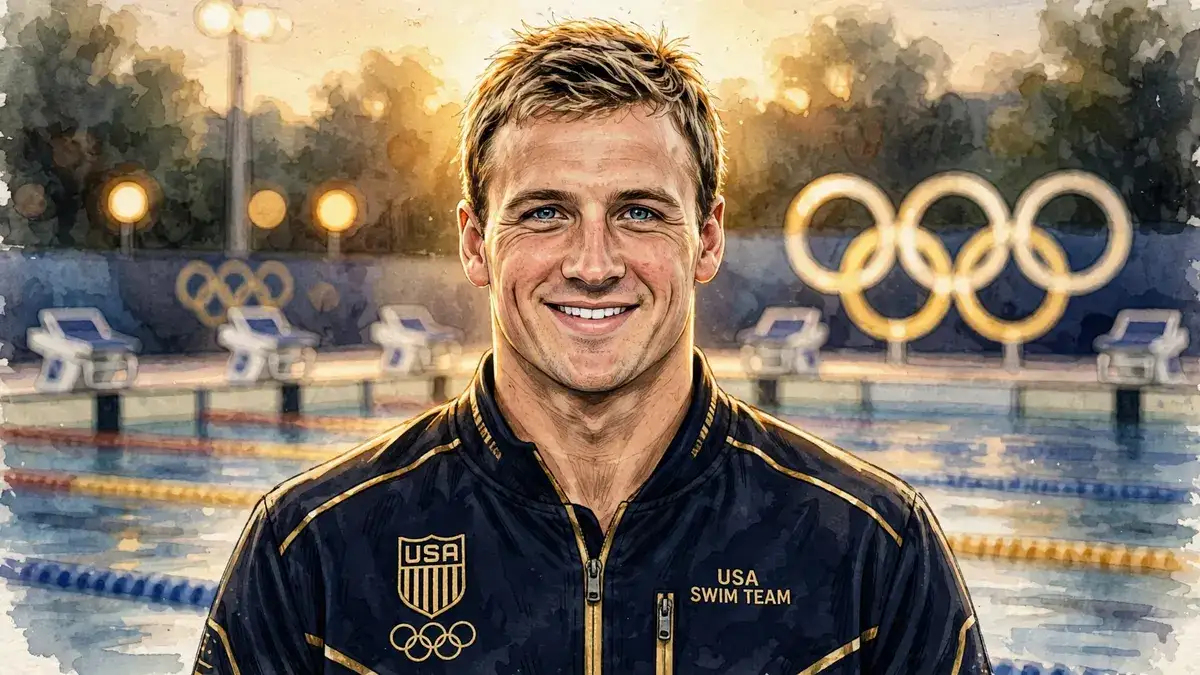
Ryan Steven Lochte was born on August 3, 1984, in Rochester, New York, to Steven R. Lochte and Ileana “Ike” Lochte. Swimming was not a hobby in the Lochte house; it was the family business. His father was a swim coach, and Ryan was in the water from the age of five. The family later moved to Daytona Beach, Florida, where his father coached and Ryan trained under him, learning the sport in the unglamorous daily grind of early-morning practices that would shape the next two decades of his life.
The move to Florida mattered. Daytona Beach put Lochte in the middle of one of the strongest youth swimming cultures in the United States, and by his teenage years he was already marked as a swimmer with unusual range. He was not a specialist in a single stroke. He could swim backstroke, freestyle and individual medley at an elite level, a versatility that would later let him collect medals across more events than almost any swimmer of his generation.
What set the young Lochte apart, according to coaches who watched him develop, was not raw speed alone but a feel for the water that is hard to teach. He was a natural in the individual medley, the event that demands competence in all four strokes, and it was in the medley that he would eventually set a world record. His mother, Ileana, who was born in Cuba, became a familiar figure at his meets, and her emotional interview in Rio in 2016 would, years later, become part of the story of his downfall. The family thread runs through his whole biography: a coach father, a devoted mother, and a kid who grew up inside the sport before he ever chose it.
Lochte has often said that the moment he knew swimming was his path came when he watched Pablo Morales win the 100-meter butterfly at the 1992 Barcelona Olympics. He was eight years old. The spark stayed with him through high school in Florida, where he swam for Spruce Creek High School in Port Orange, and into the recruiting process that would take him to one of the great college programs in the country.
College Years at the University of Florida
Lochte swam for the University of Florida under head coach Gregg Troy, one of the most respected college coaches in American swimming. The Gators program gave him structure, world-class training partners and a stage where his range could show. By the time he graduated in 2007 with a degree in sport management, his college record read like a hall-of-fame case on its own: a 24-time All-American, a seven-time NCAA champion, a seven-time SEC champion and a two-time NCAA Swimmer of the Year.
College was also where Lochte learned to handle the long grind of a swimming season — the double sessions, the weight room, the taper before championship meets. The individual medley and the 200-meter backstroke became his signature college events, and his NCAA titles in them announced him as a swimmer who could win at the highest level in more than one discipline. That range is rare. Most elite swimmers build a career around one stroke and one distance. Lochte built his around being good at almost everything in the pool.
The Florida years also built the friendship and rivalry that would define his public image: his rivalry with Michael Phelps. Phelps was the face of American swimming, the standard everyone else was measured against, and Lochte was the swimmer most often standing on the podium next to him. The two pushed each other for more than a decade, and their head-to-head races in the 200-meter individual medley became one of the great duels in the sport. Readers who want the other side of that rivalry can read our Michael Phelps biography, which covers how Phelps built the career Lochte spent his life chasing.
While still at Florida, Lochte made his first Olympic team. He was 19 when he went to Athens in 2004, and the teenager who had grown up in his father’s pool in Daytona Beach came home with two medals. College had done its job: it had turned a talented kid into a professional-grade athlete ready for the world stage.
Olympic Rise: Athens, Beijing, London and Rio
Lochte competed at four Olympic Games — Athens 2004, Beijing 2008, London 2012 and Rio 2016 — and won medals at all four, a span of twelve years at the top of the sport. His final tally of 12 Olympic medals (six gold, three silver, three bronze) makes him the second-most decorated swimmer in Olympic history, behind only Michael Phelps. Across all international competition he won around 90 medals, a haul that puts him among the most decorated swimmers ever, in any era.
Athens 2004 was the breakthrough. At 19, Lochte won gold in the 4×200-meter freestyle relay and silver in the 200-meter individual medley. The relay gold announced the arrival of a new generation of American swimmers, and the medley silver showed that Lochte could compete individually with the best in the world. He left Greece with two medals and a reputation as a swimmer to watch.
Beijing 2008 was the confirmation. Lochte won gold in the 200-meter backstroke and in the 4×200-meter freestyle relay, and took bronze in both the 200-meter and 400-meter individual medleys. The 200 backstroke gold was his first individual Olympic title, and it came in a race where he beat the field with the kind of closing speed that became his trademark. He left Beijing with four medals and, at 24, was firmly established as one of the best swimmers on the planet.
London 2012 was the peak. Lochte won five medals in London — gold in the 400-meter individual medley and the 4×200-meter freestyle relay, silver in the 200-meter individual medley and the 4×100-meter freestyle relay, and bronze in the 200-meter backstroke. The 400 medley gold, won on the first night of swimming, set the tone for the Games and made him the early star of the meet. London was also the high-water mark of his earning power: the gold medals, the television exposure and the personality that came with them turned him into a marketable star in a way no swimmer other than Phelps had managed.
Rio 2016 was the end of the Olympic road, and it ended with a sixth career gold in the 4×200-meter freestyle relay. Lochte swam the anchor leg of the preliminary relay, earning the medal, and at 32 he had completed a twelve-year Olympic career with medals at every Games he entered. He also held, at the time, the world record in the 200-meter individual medley (long course), a mark that underlined his standing as the greatest medley swimmer of his era. What happened in Rio after the swimming finished would overshadow all of it, and it is covered in its own section below.

The numbers only tell part of the Olympic story. Lochte’s career also included 18 gold medals at the World Championships (long course) and 21 at the short-course Worlds, plus Pan Pacific and Pan American titles. His medal record across all competitions — 54 gold, 22 silver and 14 bronze in major international meets, per his career record — is the kind of haul that only a handful of swimmers in history have matched. He was, by any honest measure, one of the greats of the sport. The tragedy of his biography is not that he fell short in the pool. It is that the fall came everywhere else.
The Money: Endorsements, Earnings and the Peak Years
Swimming does not pay like football or basketball. There are no nine-figure contracts, no signing bonuses, no shoe deals worth tens of millions a year. A swimmer’s income comes from a patchwork: national-team stipends from USA Swimming, prize money from meets, appearance fees, and — for the few who break through to mainstream fame — endorsements. Lochte broke through, and for a short window around the London Olympics he was one of the best-paid swimmers in the world.
At his peak, Lochte was earning well over $1 million a year from sponsorships, endorsements and appearances, according to EssentiallySports’ 2026 reporting on his finances. His sponsor roster at the height of his fame included Speedo, Gillette, Gatorade, Ralph Lauren, Nissan and AT&T — a mix of swim-specific brands and mainstream American companies that saw in him a clean-cut, camera-friendly Olympic star. Speedo was the anchor deal, the swimwear sponsor every elite swimmer wants, and Ralph Lauren put him in the orbit of fashion and lifestyle marketing that few swimmers ever reach.
The money did not stop at endorsements. In 2013, the E! network gave Lochte his own reality show, What Would Ryan Lochte Do?, which followed his life in Los Angeles and tried to turn his laid-back persona into television. The show ran for a single season, but it paid, and it kept his name in front of audiences between Olympic cycles — the hardest thing for a swimmer to do, since the sport only commands mass attention once every four years. He later appeared on Dancing with the Stars in 2016 and on The Celebrity Apprentice, and he built a living from swim camps, clinics, speaking engagements and appearances around the country.
He also launched his own ventures. Lochte signed an endorsement with an Italian shoe company and ran his own swim camp, trading on his name and his Olympic pedigree to teach the next generation. None of these ventures became a business empire — Lochte was never a businessman in the way some athletes become — but together with the endorsements they produced a comfortable income through the early 2010s. He bought a home in Gainesville, Florida, in 2006 for around $375,000 and sold it in 2012, a modest property by celebrity standards and a sign that even at his peak, Lochte’s lifestyle was far from the mansions and car collections associated with richer sports.
The honest picture of Lochte’s peak wealth is that he was rich by normal standards and modestly comfortable by celebrity standards. He earned well, spent freely, and did not build the kind of investment base that would protect him when the endorsements stopped. That gap between income and security is the thread that runs through the rest of this biography: when the money stopped coming in, there was not much underneath it.
The peak, in one line: Around the London 2012 Olympics, Lochte was earning well over $1 million a year from endorsements and appearances (EssentiallySports, 2026). By 2019 he told Alex Rodriguez his savings had fallen to about $20,000 and he was living paycheck to paycheck. The distance between those two facts is the story of his finances.
Rio 2016: The Night That Changed Everything
On the night of August 14, 2016, after the swimming competition in Rio had ended, Lochte and three teammates — Gunnar Bentz, Jack Conger and Jimmy Feigen — went out to celebrate. What happened next became one of the most damaging scandals in Olympic history. Lochte told reporters, including in an interview with Billy Bush, that the group had been robbed at gunpoint by men posing as police after their taxi was pulled over. The story spread around the world within hours: an American Olympic hero, held up at gunpoint in Rio.
It was not true. Surveillance footage from a gas station in the Barra da Tijuca neighborhood showed a different scene: the swimmers had stopped at the station, vandalized a bathroom — tearing down a sign and breaking a door — and been confronted by armed security guards, who demanded payment for the damage. There was no robbery. Brazilian police chief Fernando Veloso called Lochte’s account false, and within days the story had collapsed completely.
The consequences were immediate and severe. Brazilian prosecutors charged Lochte with filing a false robbery report, a charge carrying a maximum sentence of 18 months; the case was dismissed in 2017. In the United States, USA Swimming and the U.S. Olympic Committee suspended Lochte for 10 months, a ban that cost him the 2017 World Championships in Budapest. His teammates received suspensions of their own, and Feigen paid an $11,000 fine to resolve his part in the affair.
The financial damage was worse than the sporting damage. Speedo, Ralph Lauren and his other major sponsors dropped him within days, and Celebrity Net Worth reported that he lost an estimated $1 million in endorsements almost immediately. Forbes estimated at the time that the incident likely cost Lochte $5 million to $10 million in future earnings potential — the deals that would have come in the years after Rio, the appearances, the campaigns that never happened. His longtime agency, CAA, parted ways with him. A swimmer whose income depended almost entirely on his public image had destroyed that image in a single night, and the market responded the way markets do.
Lochte apologized in an NBC interview, saying he had been drinking and had embellished the story. He has since spoken openly about the incident, including in a tell-all book announced in December 2025, and about the alcohol issues that surrounded that period of his life. The apology did not restore the sponsors. In the years after Rio, the endorsement income that had once topped $1 million a year effectively went to zero, and it never came back.
The USADA Suspension and the Long Road Back
If Rio was the first blow, the second came two years later, and it was self-inflicted in a different way. In 2018, Lochte posted a photo on Instagram of himself receiving an intravenous infusion of vitamin B12. The substance itself was not banned. The problem was the method: under anti-doping rules, intravenous infusions of more than 100 milliliters in a 12-hour period are prohibited unless medically justified, and Lochte’s infusion exceeded that limit. The U.S. Anti-Doping Agency (USADA) suspended him for 14 months.
The suspension was, in Lochte’s own account, the result of ignorance rather than cheating — he had not realized the IV rule applied to a vitamin drip — but the rules do not distinguish between intent and outcome, and the ban stood. It kept him out of competition through most of 2019 and derailed his attempt to qualify for a fifth Olympic Games. He did make one last push for the Tokyo Olympics, competing at the U.S. Olympic Trials in Omaha in June 2021, but at 36 he fell short of the team, and he retired from competitive swimming soon after.
The years between Rio and retirement were the hardest of his life, by his own account. He entered a rehabilitation clinic for alcohol addiction, a step he has discussed publicly since. He tried to rebuild his income through swim clinics, speaking engagements and appearances, but the market for a disgraced former star is thin, and the money was a fraction of what it had been. The 14-month suspension also cost him the last competitive years in which he might have rebuilt his reputation in the pool — the one place where he had always been able to answer his critics.
There is a temptation to frame this period as a simple story of a fall from grace. It is more complicated than that. Lochte’s mistakes were real and well documented, and he has not hidden from them. But the structure of a swimmer’s career made the fall harder: unlike a team-sport athlete with a guaranteed contract, Lochte had no salary to fall back on, no union, no guaranteed income. When the sponsors left, the income stopped the same week. That is the financial reality of Olympic sport, and Lochte’s biography is one of the clearest illustrations of it.
Medal Sales and Financial Reality
Few images capture Lochte’s financial story as starkly as the sale of his Olympic medals. In 2022, he sold six of his silver and bronze Olympic medals for $166,000. Then, in 2026, he auctioned three more — the three gold medals he had won in the 4×200-meter freestyle relay at Athens 2004, Beijing 2008 and Rio 2016 — through Goldin Auctions, bringing in $385,520. In total, he has sold nine of his twelve Olympic medals for nearly $550,000.
Lochte has said the decision was not really about money. In interviews in 2026, he said he was “financially A-OK to support me and my entire Brady Bunch family,” and framed the sales as a way of letting the medals go to collectors who would value them, while he moved on to the next chapter of his life. That may be true, and it is worth reporting his own words. It is also true that the sales came at a time when court papers tied to his divorce showed real financial strain: more than $167,000 in medical expenses, and unpaid IRS taxes reported at nearly $99,000, including a $99,696.09 IRS lien for 2021 and 2022, alongside a homeowners association lien and total debts of about $270,000, according to court documents reported by Us Weekly and Distractify.
Both things can be true at once. A man can be proud of his career, ready to let go of the physical medals, and also under genuine financial pressure. The medal sales are the most concrete evidence of how far Lochte’s finances had travelled from the London peak: the same medals that once symbolized a million-dollar-a-year endorsement career were sold, piece by piece, for a total of roughly $550,000 — and even that figure, spread across two sales four years apart, is less than a single year of his peak endorsement income.
By 2019, Lochte had already admitted publicly that his savings had dwindled to about $20,000 and that he was living paycheck to paycheck. That admission, made to Alex Rodriguez, came three years after Rio and a year after the USADA suspension, and it remains the most candid statement any major athlete has made about the financial cost of a scandal. The medal sales, the divorce filings and the tax lien are the paper trail that followed.
Personal Life: Marriage, Divorce and Family
Lochte met Kayla Rae Reid, a former Playboy Playmate of the Month, through Instagram during the 2016 Rio Olympics. They became engaged in October 2016 and were married in a small at-home civil ceremony in January 2018. The couple had three children together: their son Caiden Zane, born on June 8, 2017, and two daughters, Liv and Georgia. For several years after Rio, the family was the center of Lochte’s public image — the swimmer turned family man, rebuilding his life in Gainesville, Florida.
In March 2025, Kayla filed for divorce in Florida, with court documents describing the marriage as “irretrievably broken.” The divorce brought Lochte’s finances into public view in a way nothing else had. Court papers reported by Us Weekly and Distractify showed about $270,000 in debts, including the IRS lien of $99,696.09 for unpaid taxes from 2021 and 2022, more than $167,000 in medical expenses, and a homeowners association lien. The filings also showed the strain of a long-distance parenting arrangement: Lochte’s new coaching job in Missouri is roughly a 15-hour drive from Gainesville, where his children live.
Kayla has raised concerns publicly, through TMZ, about the emotional well-being and stability of the children under a long-distance schedule. Lochte has said he will be back every month to see his kids, and that he plans to visit on breaks, holidays and during summers — and that he will spend his coaching salary doing so. It is a plain statement, and it says more about where his life is now than any net-worth figure can.
Lochte has since begun a new relationship. He started dating Molly Gillihan, and the couple moved in together in January 2026, according to EssentiallySports. The relationship is part of the same fresh start as the coaching job: a new home, a new partner, a new professional identity, all built at the same time as the old life was being wound up in court.
Missouri State: The Coaching Chapter
In May 2026, Lochte’s life took a turn nobody in swimming had predicted. On May 10, 2026, Missouri State University announced that Lochte would join its swimming and diving staff as an assistant coach for both the men’s and women’s teams, working under head coach Dave Collins in Springfield, Missouri. The role was expected to begin later in the summer, with his formal hiring pending approval by the university’s Board of Governors at its June meeting.
The contract, obtained by Front Office Sports, is the detail that made the story travel around the world. Lochte agreed to a 10-month contract running from August 2026 through June 2027, paying an estimated $30,000 a year — about $34.10 an hour. The deal includes small performance bonuses: $750 if the men’s or women’s team wins or shares a Missouri Valley Conference championship, $500 for each swimmer who qualifies individually for the NCAA Championships, and $500 for each relay team that reaches the NCAA Championships. The NCAA coaching portion of the job is technically part-time.
The reaction was immediate and, in many corners of the internet, unkind. Fans did the math — twelve Olympic medals, six of them gold, and a job paying $34 an hour — and concluded that Lochte must be broke. The jokes wrote themselves. But the story is more interesting than the punchline. According to reporting in May 2026, the job came about after a chance meeting in a parking lot in Gainesville, Florida, where Lochte struck up a conversation that led, improbably, to a college coaching position. He took it, and he has spoken about the role with evident seriousness, saying that pouring his experience back into young swimmers is something he takes seriously.

There is a real case to be made that the Missouri State job is the smartest move of Lochte’s post-swimming life. Coaching gives him something his post-Rio years lacked: a fixed role, a daily structure, a team, and a legitimate professional identity that does not depend on his fame. It also gives him a path back into the sport on terms he can control. College coaching is a career, not a gig, and a 12-time Olympic medalist with a coaching pedigree — his father was a coach, and he grew up inside the profession — has something genuine to offer young swimmers. The $30,000 salary is small, but it is a starting salary in a new career, not the final word on it.
The job also fits the pattern of Lochte’s life since Rio: a slow, unglamorous rebuild, one small step at a time, without the spotlight. He is not trying to be a television star again. He is standing on a pool deck in Springfield, Missouri, with a stopwatch, teaching college kids how to swim faster. For a man who once earned more than $1 million a year from his name alone, that is either a humbling comedown or a genuine fresh start. The honest answer is probably both.
Ryan Lochte Net Worth in 2026: The Honest Breakdown
So what is Ryan Lochte worth in 2026? The short answer, anchored to the most widely cited source, is $300,000. Celebrity Net Worth lists Lochte’s net worth at $300,000, and that figure is echoed by PlayersBio, which puts him at $300,000 as of 2026, and by Distractify, which also cites Celebrity Net Worth at $300,000. Three independent outlets converging on the same number in 2026 gives it real weight.
That figure needs context, because other numbers circulate online. Some low-quality biography sites list Lochte at $3 million, and at least one speculative site has suggested $5 million to $10 million. Neither figure holds up against the paper trail: the $20,000 savings admission in 2019, the $270,000 in debts shown in the 2025 divorce filings, the $99,696 IRS lien, and the sale of nine Olympic medals for a total of about $550,000. A man worth $3 million does not sell his Olympic gold medals. The $300,000 estimate is the one that fits the documented facts, and it is the one we anchor to.
It is worth being precise about what a net-worth estimate is. Nobody outside Lochte’s accountant knows his exact bank balance, his debts, or the value of his assets. Celebrity Net Worth and similar outlets build their figures from public records, reported income, known assets and liabilities, and the kind of reporting described in this article. The number is an estimate, not a bank statement, and it will move as his circumstances change. What the estimate does capture, reliably, is the scale of the change: from a peak-earning Olympic star to a man whose wealth is now measured in hundreds of thousands, not millions.
| Year / Period | Financial picture |
|---|---|
| 2004–2008 | Early career: USA Swimming stipends, modest endorsements, first Olympic medals. Income rising but small by celebrity standards. |
| 2012–2013 | Peak: well over $1 million a year from endorsements (Speedo, Gillette, Gatorade, Ralph Lauren, Nissan, AT&T) plus the E! reality show. |
| 2016 | Rio scandal: about $1 million in endorsements lost within days; Forbes estimated $5–10 million in lost future earnings. |
| 2018–2019 | USADA suspension; savings down to about $20,000 by 2019; living paycheck to paycheck. |
| 2022 | Six silver and bronze Olympic medals sold for $166,000. |
| 2025 | Divorce filed; court papers show about $270,000 in debts, including a $99,696 IRS lien. |
| 2026 | Three gold relay medals sold for $385,520; Missouri State coaching job at about $30,000 a year; net worth estimated at $300,000. |
Where does the money come from now? The honest answer is: not much, and not from the sources that once made him rich. The Missouri State contract pays about $30,000 a year for ten months. Swim camps, clinics and speaking engagements add income, but at a scale far below his peak. The medal sales brought in about $550,000 across 2022 and 2026, but that money is a one-time windfall, not a recurring income, and three of the nine medals sold were gold. There are no major endorsements left to speak of. The $300,000 estimate reflects a man living on a coach’s salary and the tail end of a famous career, not a man with a fortune.
How Lochte Compares with His Olympic Peers
Lochte’s story reads differently when set against the swimmers and Olympians he shared the podium with. The comparison is not about who was faster — Lochte’s 12 medals settle that argument in his favor against almost anyone — but about what happened after the swimming stopped. Our biography section covers the careers of the athletes below, and the contrasts are instructive.
Michael Phelps, the swimmer Lochte spent his career chasing, retired with 28 Olympic medals and a fortune reported in the tens of millions, built on endorsements that survived his retirement and on business ventures that kept paying. Phelps also had public struggles, including a DUI arrest and depression, but his earning power never collapsed the way Lochte’s did, because his brand was bigger and his sponsors stayed. The rivalry that defined both men’s careers ended with a wide gap in what each man carried out of the sport.
Katie Ledecky, the most decorated female swimmer in Olympic history, has built her post-collegiate career on a different model: steady, disciplined, and anchored to the sport itself, with endorsements that reflect sustained excellence rather than a single peak. Our Katie Ledecky net worth profile covers how a swimmer can convert Olympic success into lasting financial security without the boom-and-bust pattern of Lochte’s career.
Simone Biles, the most decorated gymnast in history, offers a third model: a career built on dominance, a personal brand strong enough to survive a public stand at the Tokyo Olympics, and endorsements that kept growing after it. Our Simone Biles net worth profile shows what happens when an athlete’s market value is tied to something deeper than a clean image — in Biles’s case, to her status as the greatest of all time in her sport and to a public willing to stand behind her.
The lesson from all three comparisons is the same. In Olympic sport, the medals are only the beginning. What an athlete earns after retirement depends on the brand they build, the choices they make, and the luck they have. Lochte had the medals. He lost the brand in a single night in Rio, and he has spent the decade since trying to build a life that does not depend on it.
What Is Next for Ryan Lochte
The most concrete answer is the pool deck at Missouri State. His contract runs through June 2027, and the job gives him a year to prove himself as a coach, to learn the profession from the other side of the lane rope, and to decide whether coaching is a career or a stopgap. If he is good at it — and there is every reason to think a 12-time Olympic medalist who grew up in a coach’s household might be — the $30,000 starting salary is only the beginning. College coaching salaries rise with success, and a coach with Lochte’s pedigree who can recruit and develop talent will not stay at the bottom of the pay scale for long.
The second thread is the tell-all book he announced on December 9, 2025. A memoir from Lochte, covering the Rio scandal, the suspensions, the divorce and the rebuild, would be the first time he has told the whole story in his own words and at length. Books by disgraced athletes are a crowded market, and the advance and sales are unknowable in advance, but the book is also a chance to control the narrative of his own life — something he has not had since the night in Rio.
The third thread is the simplest: his children. Three kids, a divorce in progress, and a job 15 hours from home add up to a life that will be shaped, for the next few years at least, by the logistics of parenting across a long distance and the economics of a $30,000 salary. Lochte has said he will spend that salary travelling back to see his kids every month. Whatever else the next chapter holds, that is the commitment he has made in public, and it is the one that will matter most to the people closest to him.
Frequently Asked Questions
How many Olympic medals did Ryan Lochte win?
Ryan Lochte won 12 Olympic medals across four Games: six gold, three silver and three bronze. He competed at Athens 2004, Beijing 2008, London 2012 and Rio 2016, winning medals at every Games. That total makes him the second-most decorated swimmer in Olympic history, behind only Michael Phelps.
What is Ryan Lochte’s net worth in 2026?
Ryan Lochte’s net worth is estimated at $300,000 as of 2026, according to Celebrity Net Worth, with PlayersBio and Distractify reporting the same figure. The estimate reflects his lost endorsements after the Rio 2016 scandal, his 2019 admission that his savings had fallen to about $20,000, debts of around $270,000 shown in his 2025 divorce filings, and his current income as an assistant swim coach at Missouri State University.
Why did Ryan Lochte sell his Olympic medals?
Lochte has sold nine of his twelve Olympic medals. In 2022 he sold six silver and bronze medals for $166,000, and in 2026 he auctioned three gold relay medals through Goldin Auctions for $385,520, bringing the total to nearly $550,000. Lochte has said the decision was not really about money and that he was “financially A-OK,” but the sales came during a period of documented financial strain, including a $99,696 IRS lien and divorce proceedings.
What happened to Ryan Lochte at the Rio 2016 Olympics?
After the swimming ended in Rio, Lochte claimed he and three teammates had been robbed at gunpoint. Surveillance footage showed instead that the swimmers had vandalized a gas station bathroom and been confronted by security guards. Brazilian authorities called his account false, prosecutors charged him with filing a false robbery report (dismissed in 2017), and USA Swimming suspended him for 10 months. He lost his major sponsors, including Speedo and Ralph Lauren, within days.
How much does Ryan Lochte earn as a coach at Missouri State?
According to Front Office Sports, Lochte’s contract at Missouri State University pays an estimated $30,000 a year, or about $34.10 an hour, on a 10-month contract running from August 2026 through June 2027. He can also earn bonuses of $750 for a Missouri Valley Conference championship and $500 for each swimmer or relay team that qualifies for the NCAA Championships. He works as an assistant coach under head coach Dave Collins.
Is Ryan Lochte married?
Ryan Lochte married Kayla Rae Reid, a former Playboy Playmate of the Month, in a civil ceremony in January 2018. The couple have three children together. In March 2025, Kayla filed for divorce in Florida, with court documents describing the marriage as “irretrievably broken.” Lochte has since begun dating Molly Gillihan, and the couple moved in together in January 2026.
Why was Ryan Lochte suspended by USADA in 2018?
In 2018, the U.S. Anti-Doping Agency suspended Lochte for 14 months after he posted a photo on Instagram of himself receiving an intravenous infusion of vitamin B12. The vitamin itself was not banned, but anti-doping rules prohibit IV infusions of more than 100 milliliters in a 12-hour period, and Lochte’s infusion exceeded that limit. The suspension derailed his attempt to qualify for a fifth Olympic Games.
How tall is Ryan Lochte and where is he from?
Ryan Lochte is 6 feet 2 inches tall (1.88 m) and weighs around 194 pounds. He was born on August 3, 1984, in Rochester, New York, and raised in Daytona Beach, Florida, where his father was a swim coach. He swam for the University of Florida, graduating in 2007 with a degree in sport management.
Final Thoughts
Ryan Lochte’s biography is the story of a swimmer who had almost everything in the pool and lost almost everything outside it. Twelve Olympic medals, six of them gold, a world record, and a place as the second-most decorated swimmer in Olympic history — those facts are permanent, and no scandal can take them away. The money, the sponsors, the television career and the comfortable life that went with them are gone, sold off medal by medal, and the man who once earned more than a million dollars a year from his name now earns $34 an hour coaching college swimmers in Missouri.
That is not a tragedy, or at least not only a tragedy. It is also a story about consequences, honestly faced, and about a rebuild that is happening in public, one small step at a time. The coaching job, the new relationship, the tell-all book, the monthly trips back to see his children — these are the pieces of a second act, and they are being built by a man who knows exactly what it costs to lose everything. If Lochte’s story has a lesson, it is that talent is not a plan, and that the distance between a million-dollar year and a $30,000 salary can be a single bad night. The next chapter is his to write, and for the first time in a decade, he is writing it on a pool deck, with a stopwatch in his hand.
Sources and Reporting
This article was researched from live reporting and public records in November 2026. Figures are attributed to their sources in the text. Key sources include Celebrity Net Worth (net worth estimate of $300,000), EssentiallySports (peak endorsement earnings, medal sales and the Missouri State hiring), Distractify (Missouri State salary details and divorce filings), Front Office Sports (Missouri State contract terms), A&E (the Rio 2016 incident and its aftermath), PlayersBio (career record and 2026 net worth), and Wikipedia (Olympic medal record and career statistics).
How we estimated: Lochte’s net worth is anchored to Celebrity Net Worth’s $300,000 figure, corroborated by PlayersBio and Distractify in 2026. Higher figures circulating online ($3 million and above) are inconsistent with the documented record — the 2019 savings admission, the 2025 divorce filings showing about $270,000 in debts, and the sale of nine Olympic medals — and are not used here. Where sources disagree, we report the range and say which source anchors the figure. Net worth estimates are based on public information and may differ from private reality; no figure in this article is presented as a verified bank balance.