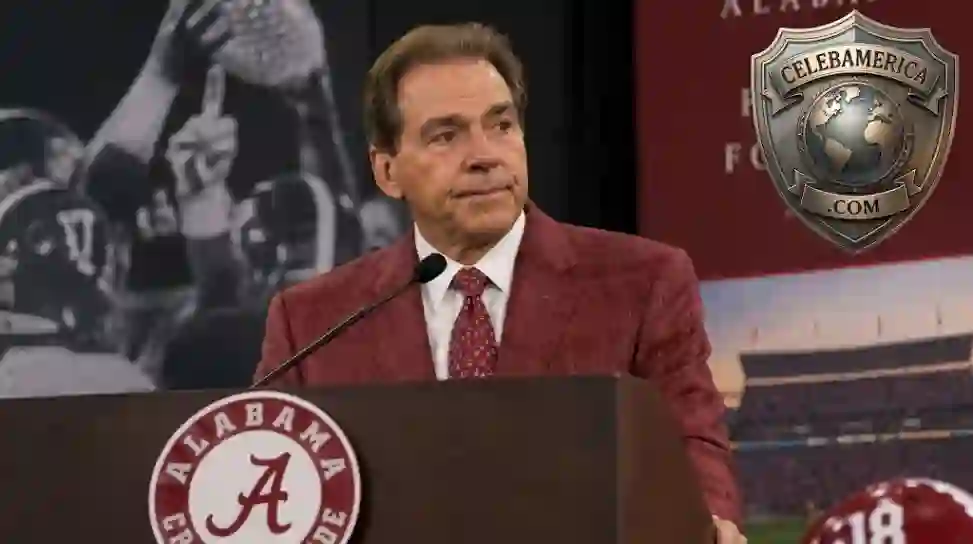
More than twenty years after his final game on the Tiger Stadium sidelines, Nick Saban’s LSU legacy remains one of the most powerful gravitational forces in college football. Even following his official retirement from coaching in January 2024 and his transition to the broadcast desk on ESPN’s College GameDay, Saban’s name resurfaces in Baton Rouge whenever the Tigers reach a crossroads.
Why does a coach who won six national championships at archrival Alabama still cast such a massive shadow over LSU? The answer lies in how Saban transformed LSU from an underperforming sleeping giant into an elite national powerhouse, the bitter rivalry that followed his return to the SEC, and his enduring influence over every coaching transition in Baton Rouge.
Quick Glance: Nick Saban at LSU vs. Alabama
| Category | LSU Tigers (2000–2004) | Alabama Crimson Tide (2007–2023) |
|---|---|---|
| Overall Record | 48–16 (.750) | 201–29 (.874) |
| National Championships | 1 (2003 BCS National Title) | 6 (2009, 2011, 2012, 2015, 2017, 2020) |
| SEC Championships | 2 (2001, 2003) | 9 (2009, 2012, 2014–16, 2018, 2020–21, 2023) |
| Bowl Record | 3–2 (Sugar Bowl, Peach Bowl) | 16–7 (including CFP games) |
| Historic Significance | Ended a 45-year national title drought | Greatest modern dynasty in college football |
1. The Turnaround: How Saban Awoke a Sleeping Giant
To understand why LSU fans and historians remain tethered to Saban, one must recall the state of the program before his arrival in November 1999. Throughout the late 1980s and 1990s, LSU suffered through eight losing seasons in an 11-year span. Despite residing in one of the country’s most fertile high school recruiting territories, the Tigers routinely watched premier in-state talent leave Louisiana.
Saban instituted what later became world-famous as The Process. He demanded complete organizational alignment, revolutionized the program’s strength and conditioning infrastructure, and erected an impenetrable recruiting wall around the state under the motto “Lock the Border.”
The turnaround was immediate:
- 2000: Finished 8–4 with a victory over Georgia Tech in the Peach Bowl.
- 2001: Upset second-ranked Tennessee 31–20 to capture LSU’s first outright SEC Championship in 15 years, followed by a Sugar Bowl victory over Illinois.
- 2003: Led LSU to a 13–1 record, defeating Oklahoma 21–14 in the Sugar Bowl to win the BCS National Championship—the school’s first national crown since 1958.
According to official historical records documented by LSU Athletics, Saban concluded his five-year Baton Rouge tenure with a 48–16 record, leaving behind the championship blueprint that every succeeding coach would inherit.
2. The Departure, The Dolphins, and The Bitter Rivalry
Saban departed LSU following the 2004 season to take the head coaching job with the NFL’s Miami Dolphins. When his two-season professional experiment concluded with a 15–17 mark, Saban made the fateful decision in January 2007 to return to collegiate coaching—not at LSU, but at SEC West rival Alabama.
That move transformed admiration into intense sporting rivalry. For the next 17 seasons, Saban stood as the primary obstacle between LSU and national supremacy. Epic matchups—most notably the defensive clash dubbed the “Game of the Century” in November 2011 and the BCS National Championship Game rematch two months later—cemented Saban as both the architect of modern LSU expectations and its greatest antagonist.
Every LSU head coach who followed—Les Miles, Ed Orgeron, and Brian Kelly—won or contended under the constant standard set by Saban. Even when LSU captured national championships under Miles (2007) and Orgeron (2019), both rosters were built on structural recruiting advantages and expectations originally implemented by Saban.
3. Why Saban’s Name Follows LSU Post-Retirement
When Saban officially announced his retirement on January 10, 2024, college football assumed the shadow would fade. Instead, his name continues to hover over Baton Rouge for several reasons:
The 2025 Coaching Carousel Speculation
During moments of pressure in Baton Rouge, prominent voices frequently evoke Saban’s legacy. Speculation peaked in late 2025 when LSU basketball legend Shaquille O’Neal publicly voiced enthusiasm about the prospect of LSU pursuing Saban. While university officials clarified that Saban was happily retired and not a candidate, the viral firestorm demonstrated the emotional hold Saban’s name retains over the fan base.
The Lane Kiffin Connection
When LSU pursued and finalized the hire of former Ole Miss head coach Lane Kiffin in late 2025, Saban was once again central to the narrative. Kiffin had revitalized his coaching career as Saban’s offensive coordinator at Alabama from 2014 to 2016. In public remarks following his hire, Kiffin confirmed that he sought Saban’s counsel when evaluating the unique culture, expectations, and high-pressure environment of the LSU job.
Authoritative Analysis on ESPN College GameDay
In his post-coaching career as a featured analyst on ESPN’s College GameDay, Saban frequently provides unvarnished, firsthand insight into Death Valley. Having stood on both the home and visiting sidelines on Saturday nights in Tiger Stadium, his commentary on LSU’s roster construction, defense, and playoff viability carries more weight with viewers than that of any conventional broadcaster.
Nick Saban’s Post-Retirement Life & Business Empire
Outside the broadcast booth, Saban enjoys life primarily from his homes in Tuscaloosa, Alabama, and Jupiter Island, Florida, along with a seasonal retreat on Lake Burton in northern Georgia. Alongside his wife, Terry, Saban oversees an extensive business portfolio through the Dream Motor Group, which owns luxury automotive dealerships across the Southeast, including premier Mercedes-Benz and Ferrari franchises.
With an estimated net worth comfortably exceeding $70 million built through decades of record-setting coaching contracts, endorsement partnerships, and dealership equity, Saban remains entirely removed from any financial urge to return to coaching. His involvement in the sport remains strictly analytical and advisory.
Frequently Asked Questions
Did Nick Saban win a national championship at LSU?
Yes. Nick Saban won the 2003 BCS National Championship with LSU after defeating the Oklahoma Sooners 21–14 in the 2004 Sugar Bowl. It was LSU’s first national championship in 45 years.
What was Nick Saban’s record at LSU?
Saban compiled an overall record of 48–16 (.750) over five seasons (2000–2004) at LSU, including two SEC Championships (2001 and 2003) and two 10-win seasons.
Did Nick Saban return to coach LSU after retiring from Alabama?
No. Nick Saban retired from coaching on January 10, 2024, and transitioned into media work as an analyst for ESPN’s College GameDay. Speculative rumors linking him back to LSU were casual commentary rather than active university negotiations.
Why did Nick Saban leave LSU in 2004?
Saban left LSU in December 2004 to pursue head coaching opportunities in the NFL, accepting an offer from the Miami Dolphins, where he coached for two seasons before taking the Alabama job in 2007.
Final Thoughts
Nick Saban’s LSU era represents the origin story of modern SEC football dominance. While Alabama became the peak of his legendary dynasty, Baton Rouge remains where Saban proved his blueprint could resurrect an iconic brand. As long as LSU competes at the highest level of college football, Nick Saban will remain the benchmark against which every Tiger triumph and transition is measured.