By Celebamerica Editorial Staff | Last updated: November 19, 2026
Morgan Freeman biography 2026 starts with a fact that still surprises people who only know the voice: he was 50 years old before Hollywood gave him a film role big enough to change his life. Born June 1, 1937, in Memphis, Tennessee, Freeman is 89 in November 2026, an Academy Award winner for Million Dollar Baby, the narrator of The Shawshank Redemption and The Dinosaurs, and a man whose estimated net worth sits at $250 million, according to Celebrity Net Worth, with its figure last updated September 16, 2026. Parade, reporting on January 2, 2026, cited the same $250 million estimate.
That headline number is only one part of the story. Freeman spent four years in the United States Air Force, a decade on stage in New York, six years on the children’s show The Electric Company, and then built a film career that ran from Street Smart in 1987 to Now You See Me: Now You Don’t in 2025 and a Netflix nature series in 2026. He founded a production company, co-owns a blues club in Clarksdale, Mississippi, keeps bees on a 124-acre farm, and still takes new roles at an age when most actors retired decades ago. This biography follows the whole arc — the Mississippi childhood, the slow climb, the money, the family, the 2018 allegations, and the work he is still doing now — with every figure tied to a named source and ranges shown where sources disagree.
| Full Name | Morgan Porterfield Freeman Jr. |
|---|---|
| Date of Birth | June 1, 1937 (age 89 in November 2026) |
| Birthplace | Memphis, Tennessee, United States |
| Occupations | Actor, producer, narrator, director |
| Years Active | 1964–present |
| Estimated Net Worth | $250 million, according to Celebrity Net Worth (updated September 16, 2026); other published estimates range from about $178 million to $285 million |
| Headline Career Value | One Academy Award win from five nominations; Golden Globe winner; Kennedy Center Honor 2008; AFI Life Achievement Award 2011; Screen Actors Guild Life Achievement Award 2018 |
| Peak Income Sources | Film salaries reported at $5 million to $10 million per film at his peak, narration and voice work, producing through Revelations Entertainment, residuals |
| Key Works | Street Smart (1987), Driving Miss Daisy (1989), Glory (1989), The Shawshank Redemption (1994), Se7en (1995), Million Dollar Baby (2004), the Dark Knight trilogy, Invictus (2009), The Dinosaurs (2026) |
| Key Ventures | Revelations Entertainment (co-founded 1996 with Lori McCreary); Ground Zero Blues Club, Clarksdale, Mississippi (opened 2001); 124-acre farm and bee sanctuary near Charleston, Mississippi |
| Spouse and Family | Married Jeanette Bradshaw (1967–1979) and Myrna Colley-Lee (1984–2010); four children, including actor Alfonso Freeman |
Table of Contents
- Early Life in Mississippi: Memphis, Charleston and Greenwood
- The Air Force Years and the Move to New York
- The Electric Company: Television Fame in the 1970s
- Street Smart to Shawshank: The Breakthrough Years
- Million Dollar Baby and the Oscar Win
- The Dark Knight, Bruce Almighty and the Blockbuster Years
- The Voice: Narration, Documentaries and Commercials
- Revelations Entertainment and Producing
- The Money: Net Worth, Salaries and the Divorce Settlement
- Mississippi Businesses: Ground Zero, the Ranch and the Bees
- Personal Life: Marriages, Children and Family
- The 2018 Allegations and Freeman’s Response
- Still Working at 89: 2025 and 2026
- Legacy: Why Morgan Freeman Still Matters
- Frequently Asked Questions
- Final Thoughts
- Sources and How We Estimated
Early Life in Mississippi: Memphis, Charleston and Greenwood
Morgan Porterfield Freeman Jr. was born on June 1, 1937, in Memphis, Tennessee, the youngest of five children. His mother, Mamie Edna Revere Freeman, was a teacher. His father, Morgan Porterfield Freeman, worked as a barber and died of cirrhosis in 1961, when his son was 23. The family lived inside the world of the Jim Crow South, and the Great Migration shaped where they went next: as a baby, Freeman was sent to live with his paternal grandmother in Charleston, a small cotton town on the edge of the Mississippi Delta, and he spent his first six years there.
After his grandmother died, Freeman moved with his mother between Greenwood, Mississippi, Gary, Indiana, and Chicago, before the family settled back in Greenwood. He has told the story many times of how acting found him early. He played the lead in a school play at nine. At twelve, he was made to enter a drama competition as punishment for pulling a girl’s chair out from under her — and he won. The prize was not the point. The stage gave a quiet boy from a working-class Black family a place where his calm, measured way of speaking carried weight.
Greenwood gave him more than a stage. He attended Broad Street High School there, won a statewide drama contest, and graduated in 1955. A partial drama scholarship to Jackson State University was on the table. Freeman turned it down. He had a different plan in mind, one that had nothing to do with acting: he wanted to fly. That choice took him out of Mississippi and into uniform, and it delayed his acting career by years — a delay that, in hindsight, became part of his story rather than a detour from it.
The Delta never left him. Decades later, after fame and money, Freeman returned to the same ground, buying land beside his mother’s home in Charleston and building a life there. The boy who left Greenwood at 18 came back as one of the most recognisable actors in the world, and he chose to live where his story started. That return is not a footnote to this biography; it explains the blues club, the farm, the bees, and the way Freeman talks about home.
The Air Force Years and the Move to New York
Freeman enlisted in the United States Air Force in 1955, straight out of high school, and served until 1959 as a radar technician. Britannica records the stint as 1955–59 and notes that it proved disappointing: the young man who dreamed of being a fighter pilot found himself tracking aircraft on radar screens instead of flying them. He was honourably discharged with the rank of Airman 1st Class, according to TV Insider’s biography, and he walked away from the military with a clear sense of what he did not want — and a renewed pull toward the stage.
The years after the Air Force were restless. Freeman moved to Los Angeles to study theatre arts, then travelled between the coasts, taking stage work where he could find it. He appeared as a dancer at the 1962 World’s Fair. In 1964 he moved to New York, the city where a serious stage career could actually be built, and the work came slowly: small parts, off-Broadway rooms, and the kind of apprenticeship that teaches an actor how to hold a stage without shouting.
His formal stage debut came in 1967 in an off-Broadway production of The Nigger Lovers, a play about the Freedom Riders of the Civil Rights movement. Later that same year he made his Broadway debut in an all-Black production of Hello, Dolly!. Those two credits in one year tell you something about the range Freeman was building: political theatre one month, a big commercial musical the next. He was 30, with no film career to speak of, and he was learning the craft the long way — night after night, in front of live audiences, where there is nowhere to hide a weak performance.
The stage years also taught him patience, and patience became his signature as a performer. Watch Freeman in any of his great film roles and you will see the same quality: he does not rush a line, he does not reach for effect, and he lets silence do work that other actors fill with noise. That style was not a gift of fame. It was built in theatres in the 1960s, in front of audiences who had paid to be there, over a decade when almost nobody outside New York knew his name.
The Electric Company: Television Fame in the 1970s
Freeman rose to national fame in the 1970s through a children’s television series, The Electric Company, which ran on PBS from 1971 to 1977. He played several characters, most memorably Easy Reader, a hip, smooth-talking figure who made reading look cool to a generation of children. For viewers who grew up in that decade, Freeman was a familiar face in their living rooms years before he was a film star.
The show mattered for two reasons. First, it gave Freeman steady work and a national audience at a time when serious film roles for Black actors were still scarce. Second, it showed a side of him that his later dramatic roles rarely used: playfulness. Easy Reader was funny, musical, and loose — a reminder that the man who would become famous for gravitas could also make children laugh. The work was not prestigious in the way a Broadway credit is prestigious, but it paid, it lasted six years, and it kept him visible while the film industry caught up with him.
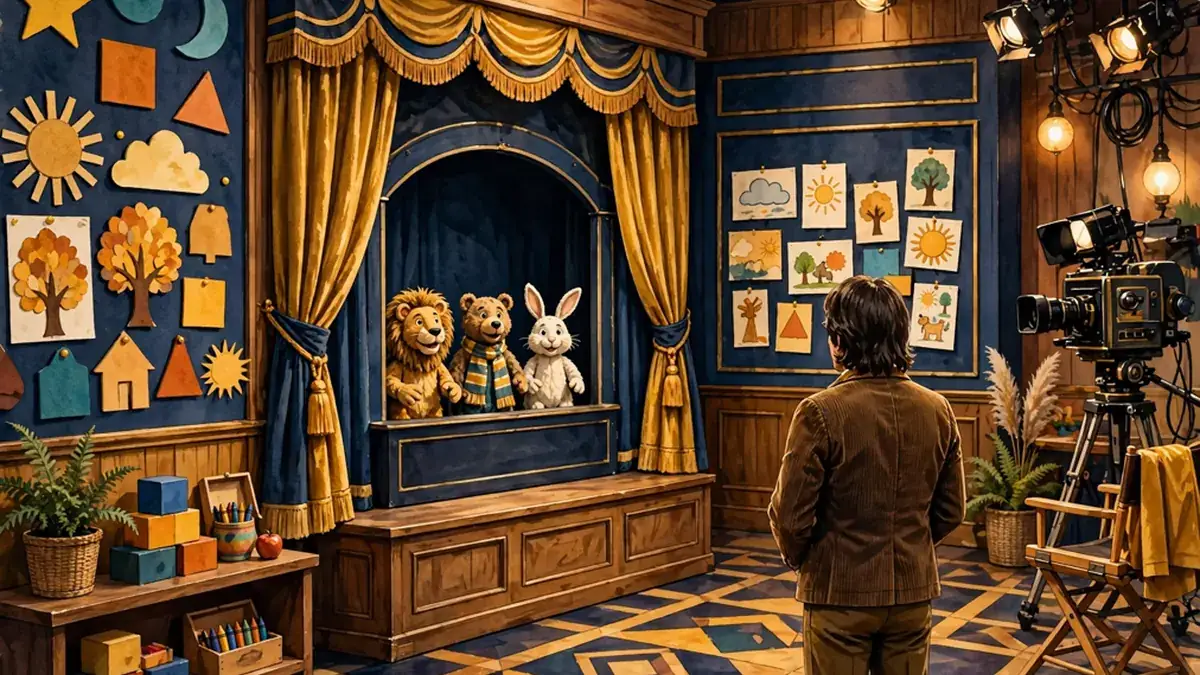
Television in the 1970s also gave Freeman something the stage could not: a voice that millions of people learned to recognise. The deep, unhurried voice that would later narrate documentaries and sell products was already there, shaped by years of stage work and sharpened by television, where a line has to land the first time. When people say Freeman has one of the most trusted voices in America, they are describing a quality that was already fully formed by the time The Electric Company ended.
By the late 1970s Freeman was in his early forties, a working actor with a long stage record and a beloved television role, but still without the film breakthrough that defines a movie career. Most actors in that position either give up or settle. Freeman did neither. He kept working, kept auditioning, and kept waiting for a film role that would show what he could do. The wait lasted until he was nearly 50 — and when the role finally came, it was not a hero. It was a hustler.
Street Smart to Shawshank: The Breakthrough Years
Street Smart arrived in 1987, when Freeman was 50. He played Fast Black, a dangerous Times Square hustler, and the performance earned him his first Academy Award nomination, for Best Supporting Actor. It was a startling debut for a man who had spent more than twenty years acting: he was not introduced to film audiences as a wise elder or a gentle narrator, but as a man who could be menacing and tender in the same scene. The nomination told Hollywood what New York theatre audiences already knew — this actor could do anything.
Two years later came the role that made him a household name. Freeman had already played Hoke Colburn on stage in Driving Miss Daisy, and he re-created the part on screen in 1989, opposite Jessica Tandy. The film won the Academy Award for Best Picture, and Freeman earned his first Best Actor nomination. Hoke is a chauffeur in Atlanta over 25 years, a man of quiet dignity who watches the world change around him, and Freeman played him without a trace of sentimentality. The performance set the template for the roles that followed: men who endure, observe, and say less than they know.
The same year, 1989, Freeman appeared in Glory, the Civil War drama about the 54th Massachusetts Infantry, alongside Denzel Washington. The film won three Academy Awards, and Freeman’s turn as Sergeant Major John Rawlins — a steady, moral centre in a story about sacrifice — added another layer to his reputation. Two films in one year, both about American history, both built on restraint rather than noise, and both still watched and taught today. Readers who want the money side of the Denzel Washington story can find it in our profile of Denzel Washington’s net worth, which follows a parallel climb from stage work to Oscar-winning film stardom.
The early 1990s kept the run going. Freeman played Azeem in Robin Hood: Prince of Thieves (1991) and Ned Logan in Clint Eastwood’s Unforgiven (1992), a western that won Best Picture. Then, in 1994, came the film that would define him for millions of people: The Shawshank Redemption. Freeman played Ellis Boyd “Red” Redding, the prison lifer who narrates the story of Andy Dufresne, played by Tim Robbins. The film was not a hit on release — it grossed only about $28 million in its first theatrical run before a re-release and years of home-video success pushed its worldwide total to roughly $58 million, according to Box Office Mojo figures cited in later reporting — but it became one of the most loved films ever made, topping audience polls for decades. Freeman earned his second Best Actor nomination for it.
What made Red work was the narration. Freeman’s voice carries the whole film: wry, weary, and finally hopeful. The famous closing lines about hope being a good thing land because the voice delivering them has earned the right to say them. Shawshank also changed Freeman’s earning power. Reports of what he was paid for the film differ widely — some put it as low as about $300,000, others at $2 million to $2.5 million — and that spread is worth stating plainly, because no contract has ever been published. What is not in doubt is that the film’s long life through television, video, and streaming has paid residuals for decades; co-star Bob Gunton told the Wall Street Journal in 2014 that the film was still earning him “a very substantial income” twenty years on, and Freeman, as its narrator and co-lead, has shared in that long tail.
Se7en followed in 1995, with Freeman as Detective William Somerset, a weary cop on his last case, opposite Brad Pitt’s biography subject, who played his young, hot-headed partner. The film was a box-office hit and a critical success, and it showed Freeman could anchor a dark, modern thriller as easily as a period drama. By the mid-1990s, at an age when most leading men were fading, Freeman was at the centre of American film — and he stayed there.
Million Dollar Baby and the Oscar Win
Freeman’s fifth decade in acting brought the award that had eluded him. In Clint Eastwood’s Million Dollar Baby (2004), he played Eddie “Scrap-Iron” Dupris, a former boxer who runs a gym and narrates the story of Maggie Fitzgerald, a waitress who wants to fight. The role is quiet, wounded, and funny by turns, and Freeman plays it with the ease of a man who has nothing left to prove. He won the Academy Award for Best Supporting Actor at the ceremony in 2005 — his first win, after nominations for Street Smart, Driving Miss Daisy, The Shawshank Redemption, and, later, Invictus.
The win mattered beyond the trophy. Freeman was 67, and the Oscar confirmed what the previous eighteen years had shown: a late start is not a failed start. Eastwood, who directed him in Unforgiven, Million Dollar Baby, and Invictus, became one of the most important collaborators of Freeman’s career. The two men share a style — spare, patient, allergic to excess — and their films together are among the best work either of them has done.
Invictus (2009) gave Freeman his fifth Oscar nomination, for playing Nelson Mandela in the story of South Africa’s 1995 Rugby World Cup. Playing Mandela is a test no actor can pass by imitation alone; it needs authority without caricature, and Freeman brought the same quality he had brought to Red and Hoke — the sense of a man who has seen a great deal and chooses his words with care. He did not win that year, but the nomination, twenty-two years after his first, underlined a career that had never depended on a single peak.
The Oscar record: five nominations — Street Smart (1987, supporting), Driving Miss Daisy (1989, lead), The Shawshank Redemption (1994, lead), Million Dollar Baby (2004, supporting, won), Invictus (2009, lead). He also won a Golden Globe for Driving Miss Daisy, the Cecil B. DeMille Award in 2012, the Kennedy Center Honor in 2008, the AFI Life Achievement Award in 2011, the Screen Actors Guild Life Achievement Award in 2018, and the National Medal of Arts from President Barack Obama in 2016.
The Dark Knight, Bruce Almighty and the Blockbuster Years
Freeman’s late career is also a blockbuster career. In Bruce Almighty (2003) he played God, opposite Jim Carrey’s net worth subject, who played the Buffalo anchorman given divine powers for a week. The film grossed close to $484 million worldwide, according to contemporary box-office reporting, and Freeman’s calm, amused God became one of the most quoted performances of his career. He returned to the role in Evan Almighty (2007).
Christopher Nolan’s Dark Knight trilogy cast him as Lucius Fox, the head of research and development at Wayne Enterprises, from Batman Begins (2005) through The Dark Knight (2008) and The Dark Knight Rises (2012). Fox is the man who builds Batman’s tools and asks the moral questions about them, and Freeman played him as the trilogy’s conscience — wry, loyal, and unwilling to be impressed by wealth. The three films grossed more than $2.4 billion combined worldwide, and Freeman’s reported pay for the later films in the series reached about $7 million, according to salary round-ups published in 2024 and 2025 — a figure that should be read as a reported estimate, not a confirmed contract.
The franchise work kept coming: Now You See Me (2013) and its sequel cast him as Thaddeus Bradley, the magic debunker, a role he returned to in Now You See Me: Now You Don’t in 2025. The Has Fallen series — Olympus Has Fallen, London Has Fallen, Angel Has Fallen — put him at the centre of action films that together grossed around $500 million. The Bucket List (2007), with Jack Nicholson, Wanted (2008), Red (2010), Lucy (2014), and Going in Style (2017) filled out a filmography that is unusually broad: prestige drama, superhero films, action, comedy, and heist movies, all in the same decade.
Across his whole career, tracker estimates put the combined worldwide box office of Freeman’s films at more than $4.5 billion, with some estimates reaching about $5 billion. The exact total depends on which films are counted and how re-releases are treated, so treat the figure as an order of magnitude rather than a precise sum. The point it supports is simpler: Freeman is one of the most bankable supporting and co-leading actors of the last forty years, and his name on a poster has sold tickets in every genre Hollywood makes.
The Voice: Narration, Documentaries and Commercials
If Freeman’s face is famous, his voice is more famous still. It has become shorthand for authority, warmth, and trust — the voice people joke about wanting to narrate their own lives. That reputation was built deliberately, through decades of narration work that paid well and kept him working between films.
The best-known narration credit is March of the Penguins (2005), the French nature documentary that became a surprise hit in English, with Freeman’s voice guiding audiences across the Antarctic. He hosted and narrated Through the Wormhole, the Science Channel series that ran from 2010 to 2017, exploring the universe’s biggest questions. He narrated Life on Our Planet for Netflix in 2023, and returned to the same team for The Dinosaurs, the four-part Netflix series executive-produced by Steven Spielberg that premiered on March 6, 2026, with Freeman narrating the rise and fall of the dinosaurs across 165 million years.
Commercial voice work has been just as steady. Freeman has voiced campaigns for Visa, Turkish Airlines, and other major brands. A Forbes-reported range cited in 2026 profiles put his Visa voiceover work at $1 million to $2 million, and one lower-quality round-up has claimed a Turkish Airlines deal worth far more — that larger claim has no named source behind it and should not be repeated as fact. What the record does support is narrower and still impressive: Freeman’s voice is one of the most hired in advertising, and voice work has been a major income stream alongside his film fees for more than twenty years.
The voice also carries a lesson about how Freeman built his fortune. He did not depend on one paycheque. Film fees, narration fees, commercial work, producing, and residuals all stacked up over six decades, and the voice work kept paying even when he was not on screen. That mix — many medium-sized income streams, none of them dependent on staying young — is why a man who started late could still build a fortune most actors never reach.
Revelations Entertainment and Producing
In 1996 Freeman co-founded Revelations Entertainment with producer Lori McCreary, a company built to make films and television with a social conscience and a historical reach. Some profiles date the founding to 1997; the earlier year is the one Wikipedia and Britannica use, and this article follows it. The company’s best-known production is the CBS political drama Madam Secretary, which ran from 2014 to 2019 with Téa Leoni as the Secretary of State. Freeman also served as an executive producer on Invictus, the film in which he played Mandela, earning a reported fee of more than $10 million for his combined acting and producing role on that project, according to salary reporting from the period.
Revelations matters to this biography because it shows Freeman thinking like an owner rather than an employee. An actor waits for the phone to ring. A producer chooses what gets made. Freeman has done both for nearly thirty years, and the company has given him a share of the upside when its projects succeed, not just a fee for showing up. It also gave him a platform for the stories he cares about: history, science, and the American experience, told with the same patience he brings to his acting.
He also directed once, and it is worth remembering. Bopha! (1993), his directorial debut, is an anti-apartheid drama set in South Africa, starring Danny Glover. It was not a commercial hit, but it showed Freeman’s range behind the camera and his willingness to spend his own standing on a story that mattered to him rather than one that would pay best. He has not directed a feature since, and that single credit reads as a statement: he tried it, he did it well, and he chose to put his energy back into acting and producing.
The Money: Net Worth, Salaries and the Divorce Settlement
As of November 2026, Morgan Freeman’s net worth is estimated at $250 million, according to Celebrity Net Worth, whose figure was last updated on September 16, 2026. Parade, reporting on January 2, 2026, cited the same $250 million estimate. That is the anchored figure for this article: the most-cited, most recently updated estimate from a named source. It is an estimate, not an audited balance sheet — Freeman has never published his finances, and no public filing reveals his full assets and liabilities.
Other published estimates show why a range is honest here. A modelled breakdown by NetWorthExplained put the figure at about $177.7 million in 2026, built film by film from disclosed salaries and then adjusted for fees, taxes, and spending — a method the site itself grades as mostly modelled rather than mostly documented. At the other end, WealthyPeeps has published a $285 million estimate. A fair reading, then, is a range of roughly $178 million to $285 million, anchored at $250 million by Celebrity Net Worth. For the full year-by-year earnings picture, including the film fees and the divorce settlement in more detail, see our profile of Morgan Freeman’s net worth in 2026, which covers the money side of his career in depth.
| Money question | What the sources say |
|---|---|
| Estimated net worth (2026) | $250 million — Celebrity Net Worth, updated September 16, 2026; Parade, January 2, 2026, agrees |
| Published range | About $178 million (NetWorthExplained, modelled) to $285 million (WealthyPeeps) |
| Peak film fee | $5 million to $10 million per film, according to salary round-ups; about $10 million per film is the figure most often cited for major studio roles |
| Shawshank pay | Reports differ widely, from about $300,000 to about $2.5 million; no contract has been published |
| Combined box office of his films | More than $4.5 billion worldwide, per tracker estimates; some estimates reach about $5 billion |
| Divorce settlement (2010) | Widely reported at $100 million to $200 million in cash and real estate; the Associated Press noted the case was filed under seal and completed without trial, with no amount disclosed |
| Voice work | Forbes-reported range of $1 million to $2 million for Visa voiceover work, cited in 2026 profiles |
The film fees are the largest single stream. At his peak Freeman earned $5 million to $10 million per film, and the $10 million figure is the one most often cited for major studio roles. Salary round-ups put his pay for The Dark Knight Rises at about $7 million and his combined acting and executive-producer fee for Invictus at more than $10 million. Those are reported figures, not confirmed contracts, and they should be read as the going rate for an actor of his standing rather than as audited pay slips. The pattern they show is clear enough: Freeman’s fees rose through the 1990s, peaked in the 2000s, and stayed high because he kept working in films that made money.
The divorce settlement is the largest single subtraction from his fortune, and it is also the least certain number in this article. When Freeman’s second marriage ended in 2010, Celebrity Net Worth and Parade both reported a settlement of $100 million to $200 million in real estate and cash paid to Myrna Colley-Lee, who had at one point sought as much as $400 million. But a careful 2026 profile noted that the Associated Press account of the divorce says the case was filed under seal and completed without a trial, and gives no amount. In other words, the $100 million to $200 million figure is widely repeated and may be right, but it has never been confirmed by a public document. This article reports it as a reported range, not as a settled fact, and the $250 million net-worth anchor already reflects the post-settlement reality, whatever the final figure was.
What the money story shows, taken together, is a fortune built slowly and then reduced sharply by one event. Freeman earned his money over six decades — film fees, narration, commercials, producing, residuals — and then, in 2010, gave up a large share of it in a divorce. That he still holds an estimated $250 million sixteen years later says something about how much he earned, and how steadily he kept earning after the settlement. He did not rebuild the fortune with one windfall. He rebuilt it the same way he built it the first time: by working, year after year, into his late eighties.
Mississippi Businesses: Ground Zero, the Ranch and the Bees
Freeman’s business life outside Hollywood is rooted in the Mississippi Delta, and it began with a house. After marrying Myrna Colley-Lee in 1984, he decided to build a home on land that had belonged to his parents, beside his mother’s house in Charleston, Mississippi. The project stalled for two years under the original architect and contractor. The man who finally finished it was Bill Luckett, a Clarksdale attorney with an interest in construction and property renovation. By November 1998 the house was ready: a Mediterranean-style home on a ranch of about 124 to 126 acres — reports differ slightly on the acreage — which Freeman named SONEDNA, a blend of his mother’s name, Edna, and his stepfather’s nickname, Son.
The friendship with Luckett became a business partnership. In 2001 the two men, with Howard Stovall, opened the Ground Zero Blues Club in Clarksdale, in a building that had housed the Delta Grocery and Cotton Co. since 1905. The club opened on May 11, 2001, and it gave Clarksdale what it had lacked: a dependable venue where visitors could hear live blues every night. Freeman and Luckett also opened Madidi, a fine-dining restaurant in Clarksdale, which ran for more than a decade before closing in 2022. The clubs and the restaurant were never just investments. They were an attempt to bring money and attention back to the Delta town that had shaped Freeman, and they are still talked about in Clarksdale as a turning point for the town’s music scene.
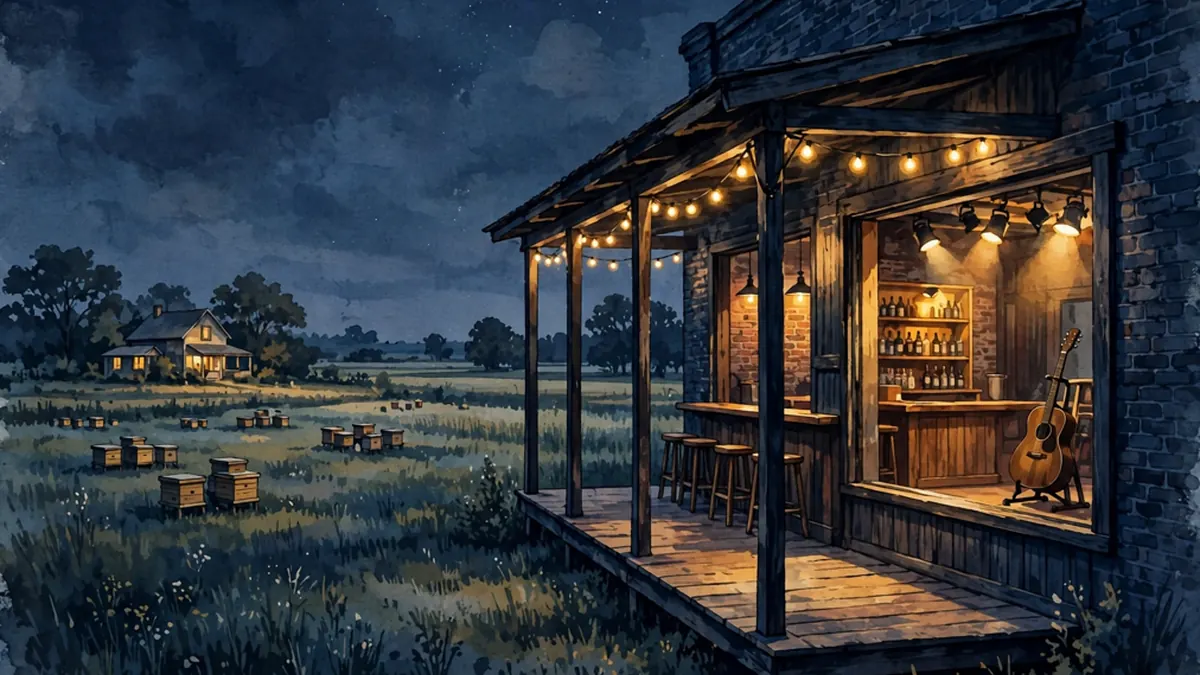
The farm itself is a working place, not a showpiece. Freeman raises horses and other livestock there, keeps a vegetable garden and an orchard, and grows magnolias, lavender, and clover. In 2014, after learning that local bee populations were in steep decline, he turned a large part of the farm into a bee sanctuary, bringing in dozens of hives from an Arkansas conservatory and planting bee-friendly flowers across the property. The story has been told so often that it risks sounding like a publicity line, but the detail is what makes it real: he did not write a cheque to a charity and move on. He changed how his own land was used, and he has kept changing it since.
Freeman’s Mississippi life also includes a quieter act of generosity that says a lot about him. When Charleston High School continued holding separate proms for Black and white students, Freeman offered to pay for a single, integrated prom for the whole school. The offer, first made in the late 1990s and repeated in later years, was eventually taken up, and the school held its first integrated prom in 2008. It is a small story next to an Oscar, but it fits the man: he used money he had earned in Hollywood to fix something small and specific in the town where he grew up.
Personal Life: Marriages, Children and Family
Freeman married Jeanette Adair Bradshaw in 1967, the same year he made his Broadway debut. The marriage ended in divorce in 1979. In 1984 he married Myrna Colley-Lee, a costume designer. They separated in 2007 and their divorce was finalised in 2010, the settlement discussed above. Freeman has four children, including Alfonso Freeman, who has acted in films including The Shawshank Redemption, in which father and son both appeared. He and Colley-Lee also raised his step-granddaughter, E’Dena Hines, who was murdered in 2015 at the age of 33 — a loss Freeman has spoken about rarely and with visible pain.
Freeman has lived most of his adult life between New York and Mississippi, and he has kept his private life private in a way that is rare for an actor of his fame. He earned a private pilot’s licence at the age of 65, and he has flown himself to film sets and to Mississippi for years. In August 2008 he was seriously injured in a car accident near Ruleville, Mississippi, when the car he was driving left the road and flipped. He broke his arm, elbow, and shoulder, and the accident left him with fibromyalgia in his left hand, which is why he is often seen wearing a compression glove. He recovered and returned to work, and the glove has since become a familiar part of his public image — a reminder, for anyone who notices it, that the man on screen has lived a life with real injuries in it.
That privacy has a cost for a biographer: there are no tell-all interviews, no social-media feed, no running commentary on his own life. What exists instead is a record of work — more than a hundred film and television credits — and a small number of interviews in which Freeman talks about craft, about Mississippi, and about getting older. He has said, in different ways over the years, that he does not think about legacy much, and that he would rather be working than being celebrated. At 89, with a new Netflix series behind him and new films still coming, he seems to mean it.
The 2018 Allegations and Freeman’s Response
No honest biography of Morgan Freeman can skip May 2018. On May 24, 2018, CNN published an investigation in which eight women accused Freeman of sexual harassment and inappropriate behaviour, including unwanted touching, comments about women’s bodies, and, in one account, repeatedly trying to lift a woman’s skirt. CNN said it had spoken to 16 people for the report, eight of whom said they were victims and eight of whom said they had witnessed the behaviour, on film sets, at press junkets, and at Revelations Entertainment. The co-author of the piece, CNN entertainment reporter Chloe Melas, said Freeman had made inappropriate remarks to her when she interviewed him while six months pregnant, including telling her “you are ripe” and “I wish I was there.”
Freeman responded the same day. “Anyone who knows me or has worked with me knows I am not someone who would intentionally offend or knowingly make anyone feel uneasy,” he said in a statement. “I apologize to anyone who felt uncomfortable or disrespected — that was never my intent.” A day later, on May 25, he issued a longer statement through his publicist, Stan Rosenfield, in which he said he was “devastated that 80 years of my life is at risk of being undermined, in the blink of an eye, by Thursday’s media reports,” and repeated the apology while drawing a line: “I did not create unsafe work environments. I did not assault women. I did not offer employment or advancement in exchange for sex. Any suggestion that I did so is completely false.”
On May 29, Freeman’s lawyer sent CNN a letter demanding a retraction and an apology, calling the report “the product of malicious intent, falsehoods, sleight-of-hand, an absence of editorial control, and journalistic malpractice.” CNN replied the same day that it stood by its reporting and would respond forcefully to any attempt to intimidate it from covering the story. The dispute was never resolved in court, and no criminal charge was filed in connection with the report. What remains on the public record is the CNN investigation, Freeman’s apology to anyone who felt uncomfortable, his denial of assault and of unsafe work environments, and CNN’s refusal to retract.
The episode changed how some people talk about Freeman, and it is still raised whenever his career is discussed. It did not end his career: he has worked steadily since 2018, including the films and series covered in the next section. A biography that left the story out would be incomplete, and one that treated either side’s account as settled fact would be dishonest. The facts above are what the named sources reported, and the reader can weigh them.
Still Working at 89: 2025 and 2026
Freeman’s recent work shows no sign of slowing down. In 2025 he returned as Thaddeus Bradley in Now You See Me: Now You Don’t, the third film in the magic-heist series, directed by Ruben Fleischer — a decade after the previous instalment, and a reminder that studios still want him in franchises that depend on his presence to hold the ensemble together. The film put him back on screen with a new generation of co-stars, playing the same debunker he first played in 2013.
In 2026 his biggest credit was not a film at all. The Dinosaurs, the four-part Netflix nature series executive-produced by Steven Spielberg, premiered on March 6, 2026, with Freeman narrating all four hour-long episodes — “Rise,” “Conquest,” “Empire,” and “Fall” — covering the dinosaurs from their appearance in the Triassic period to their extinction 66 million years ago. The series, made by Amblin Documentaries and Silverback Films with visual effects by Industrial Light & Magic, was marketed as the successor to Life on Our Planet (2023), which Freeman had also narrated. Reviews singled out the narration as the draw: one critic wrote that the voiceover was “the real draw” of the series, a line that could have been written about almost any Freeman narration of the last twenty years.
He also stayed visible in American life beyond film. In September 2026, Freeman was the celebrity guest picker on ESPN’s College GameDay for the LSU–Ole Miss game in Oxford, Mississippi — a natural booking for a Mississippi native and longtime Ole Miss fan. The University of Mississippi had given him its Honorary Alumni Award in 2025. He was 89, still travelling, still appearing in public, and still being asked to lend his presence to the biggest stages in American culture. The 2026 reporting on his age is consistent: TV Insider lists him as 89, and the arithmetic agrees — born June 1, 1937, he turns 90 on June 1, 2027.
Legacy: Why Morgan Freeman Still Matters
Freeman’s legacy is unusual because it rests on three separate achievements, any one of which would be a career. The first is the acting: five Oscar nominations, one win, and a run of roles — Red, Hoke, Somerset, Scrap, Mandela, Lucius Fox — that are taught in acting classes and quoted by audiences who have never seen a stage play. The second is the voice, which turned narration into a second career and made him the sound of authority for a generation. The third is the life: a man who started late, lost a fortune in a divorce, and kept working into his late eighties on a farm in the town where he grew up.
Put him beside his peers and the shape of that career becomes clearer. Published estimates put Denzel Washington’s fortune at about $300 million and Brad Pitt’s at about $400 million — both men who started younger and earned more from leading-man fees and producing. Freeman’s $250 million, anchored by Celebrity Net Worth, sits below theirs, and the divorce settlement is the main reason why: without it, his fortune would very likely have been larger. What Freeman has that neither of them quite matches is length. His career spans 1964 to 2026 — sixty-two years of continuous work — and his reputation rests as much on endurance as on any single performance.
The endurance is also the point for readers who come to this biography looking for a lesson. Freeman did not have a breakthrough until 50, an Oscar until 67, or a production company until 59. He was rejected for the career he wanted at 18, when the Air Force gave him radar screens instead of a cockpit, and he spent the next decade learning a craft that paid almost nothing. The biography that matters is not the list of awards. It is the patience: the willingness to keep working, in small rooms and on children’s television, until the work itself became undeniable. That is what the next generation of actors can actually copy. The voice cannot be copied. The patience can.
There is one more element that belongs in any honest account of Freeman’s legacy, and it is the part that has nothing to do with Hollywood. He went home. He bought land in Charleston, built a house, opened a blues club in Clarksdale, kept bees, and offered to pay for an integrated prom. Most actors of his stature buy a house in Los Angeles and never look back. Freeman looked back, moved back, and spent money on the place that made him. The films will outlast him. The club and the farm may outlast the films in the Delta, where they are still open, still working, and still his.
Frequently Asked Questions
How old is Morgan Freeman in 2026?
Morgan Freeman is 89 years old in November 2026. He was born on June 1, 1937, in Memphis, Tennessee, and he turns 90 on June 1, 2027.
What is Morgan Freeman’s net worth in 2026?
Celebrity Net Worth estimates Morgan Freeman’s net worth at $250 million, with its figure last updated on September 16, 2026. Parade cited the same figure on January 2, 2026. Other published estimates range from about $178 million to $285 million, so $250 million is the anchored estimate, not an audited balance sheet.
What did Morgan Freeman win an Oscar for?
Freeman won the Academy Award for Best Supporting Actor for playing Eddie “Scrap-Iron” Dupris, a former boxer, in Clint Eastwood’s Million Dollar Baby (2004), at the ceremony in 2005. It was his first win from five nominations, the others coming for Street Smart, Driving Miss Daisy, The Shawshank Redemption, and Invictus.
How did Morgan Freeman become famous?
He became known nationally in the 1970s on the PBS children’s series The Electric Company (1971–1977), then broke through in film with Street Smart in 1987 at age 50, earning his first Oscar nomination. Driving Miss Daisy (1989) and The Shawshank Redemption (1994) made him a household name.
Did Morgan Freeman serve in the military?
Yes. Freeman served in the United States Air Force from 1955 to 1959 as a radar technician, after turning down a partial drama scholarship to Jackson State University because he wanted to be a fighter pilot. He was honourably discharged as an Airman 1st Class.
Is Morgan Freeman still alive and working in 2026?
Yes. In 2026 Freeman narrated the Netflix series The Dinosaurs, which premiered on March 6, 2026, and in 2025 he returned as Thaddeus Bradley in Now You See Me: Now You Don’t. In September 2026 he was the celebrity guest picker on ESPN’s College GameDay for the LSU–Ole Miss game.
What happened in the 2018 allegations against Morgan Freeman?
On May 24, 2018, CNN reported that eight women accused Freeman of sexual harassment and inappropriate behaviour. Freeman apologised to anyone who felt uncomfortable or disrespected, while denying that he assaulted women, created unsafe work environments, or offered career advancement in exchange for sex. His lawyer later demanded a retraction; CNN stood by its reporting. No criminal charge was filed in connection with the report.
Where does Morgan Freeman live now?
Freeman lives on a farm of about 124 acres near Charleston, Mississippi, on land connected to his family, in a house he named SONEDNA. He also co-owns the Ground Zero Blues Club in Clarksdale, Mississippi, which opened on May 11, 2001, and he keeps a bee sanctuary on his farm.
Final Thoughts
Morgan Freeman’s biography is, in the end, a story about time. He was given almost none of the advantages that make a film career easy: no early fame, no leading-man looks in the usual sense, no family money, no fast start. He got a school play at nine, a radar screen at eighteen, a stage in New York at thirty, a children’s show at thirty-four, and a film breakthrough at fifty. Everything after that — the Oscar, the $250 million fortune, the voice that narrates the natural world, the blues club in Clarksdale — was built on work done after most people would have stopped waiting.
That is the honest bottom line for this biography. Freeman is 89, still working, still living in Mississippi, and still adding to a record that began in 1964. The fortune is real but estimated, the allegations are part of the record and so is his denial, and the career is one of the longest and most respected in American film. If there is a single sentence to carry away, it is this: Morgan Freeman did not become a legend by starting early. He became one by refusing to stop.
Sources and How We Estimated
How we estimated: the headline net-worth figure is an attributed estimate, not an audited balance sheet. Celebrity Net Worth publishes $250 million, last updated September 16, 2026; Parade cited the same figure on January 2, 2026. Where sources disagree — the Shawshank salary, the divorce settlement, the total box office — this article shows the range and names the sources on each side, rather than picking the most dramatic number. Film salaries are reported estimates from salary round-ups, not confirmed contracts. No figure in this article was invented, and no quote was fabricated.
Named sources consulted for this biography: Britannica, Wikipedia, EBSCO, Parade, Celebrity Net Worth, CNN, TheWrap, Netflix, Box Office Mojo, and Home & Texture. Source homepages only are linked above; article-level URLs were verified through live search results during research. For the money side of Freeman’s career in full, see our companion profile on this site: Morgan Freeman’s net worth in 2026. More celebrity biographies can be found in the Biography category.