G-Dragon’s net worth in 2026 is estimated at $50 million to $120 million. That wide range is the honest answer, and this article explains why: Celebrity Net Worth updated its figure to $120 million after his record-breaking 2025 world tour, while most other 2026 sources — Kpopbio, iFANN, KpopRadar, JustRichest and IconPolls — put him between $30 million and $75 million. The gap comes down to one year. Before 2025, almost every outlet agreed on roughly $30 million to $50 million. Then the Übermensch world tour, a Galaxy Corporation audit filing and a BIGBANG reunion changed the math, and the top-end estimates jumped. As of November 17, 2026, the figure most often repeated across independent sources is $50 million to $75 million, with Celebrity Net Worth’s $120 million standing as the high outlier.
G-Dragon — born Kwon Ji-yong on August 18, 1988, in Seoul — is the leader of BIGBANG, one of the best-selling boy bands in the world, and the most prolific songwriter in modern K-pop, with more than 170 songs registered with the Korea Music Copyright Association (KOMCA). His money comes from four places that almost no other K-pop idol combines at the same scale: two decades of BIGBANG and solo touring, songwriting royalties that arrive every year whether he performs or not, the fashion label PEACEMINUSONE and its Nike collaborations, and a Seoul property portfolio headlined by a penthouse he bought in cash. In 2025 he had the single biggest year of his career, and in 2026 he reunited with BIGBANG for the group’s 20th anniversary, headlining Coachella in April and launching the XX : COSMOS world tour in August. This page works through every stream, with the source and the date attached to each number, so you can see exactly where the $50 million floor and the $120 million ceiling come from.
Last updated: November 17, 2026. By Celebamerica Editorial Staff.
Quick Facts: G-Dragon Financial Snapshot
| Full Name | Kwon Ji-yong (권지용) |
|---|---|
| Stage Name | G-Dragon (GD) |
| Date of Birth | August 18, 1988 (age 38 in November 2026) |
| Birthplace | Seoul, South Korea (Yongsan District, Itaewon) |
| Estimated Net Worth (2026) | $50 million – $120 million (range; see the adjudication below) |
| Most-Cited Single Figure | $120 million — Celebrity Net Worth, updated 2026 |
| Most Common Independent Range | $50 million – $75 million — Kpopbio ($50M), iFANN ($50M), KpopRadar ($60M–$75M), JustRichest ($53M), IconPolls ($60M–$65M) |
| Peak / Primary Income Sources | World tours (BIGBANG and solo), songwriting royalties (170+ KOMCA songs), PEACEMINUSONE fashion and Nike collaborations, luxury endorsements led by Chanel |
| Key Ventures / Works | BIGBANG (leader, 2006–present); solo albums Heartbreaker (2009), Coup d’Etat (2013), Übermensch (2025); PEACEMINUSONE; JusPeace Foundation (2024) |
| Biggest Single-Year Payday | 2025: analysts estimated his Galaxy Corporation artist settlement alone at more than 65 billion won (about $43 million–$48 million), per Money Today Broadcasting’s April 2026 reading of the company’s audit |
| Best-Known Asset | Nine One Hannam penthouse, Seoul — bought for 16.4 billion won (about $13.1 million) in cash, March 2022 |
| Current Label | Galaxy Corporation (signed December 2023 after 20 years at YG Entertainment) |
| Marital Status | Unmarried, no children (as of 2026) |
In This Article
- Quick Facts: G-Dragon Financial Snapshot
- Early Life: A Child Star Who Chose Hip-Hop
- The BIGBANG Rise: From Trainee to K-Pop Royalty
- Solo Career: Heartbreaker to Übermensch
- The 2025 Übermensch Tour: The Year That Changed the Math
- Net Worth Breakdown: Why Sources Disagree by Tens of Millions
- Songwriting Royalties: The Cheque That Never Stops
- PEACEMINUSONE and Fashion: From Label to Nike History
- Endorsements: Chanel, Luxury Deals and Brand Power
- Real Estate and Assets: The Seoul Property Portfolio
- 2026: The BIGBANG Reunion, Coachella and XX : COSMOS
- Personal Life: Family, Education and Life Off Stage
- Controversies and Legal Issues: What Actually Happened
- Philanthropy: The JusPeace Foundation
- Frequently Asked Questions
- Final Thoughts: The Bottom Line on G-Dragon’s Fortune
- Sources and Reporting: How We Estimated This Figure
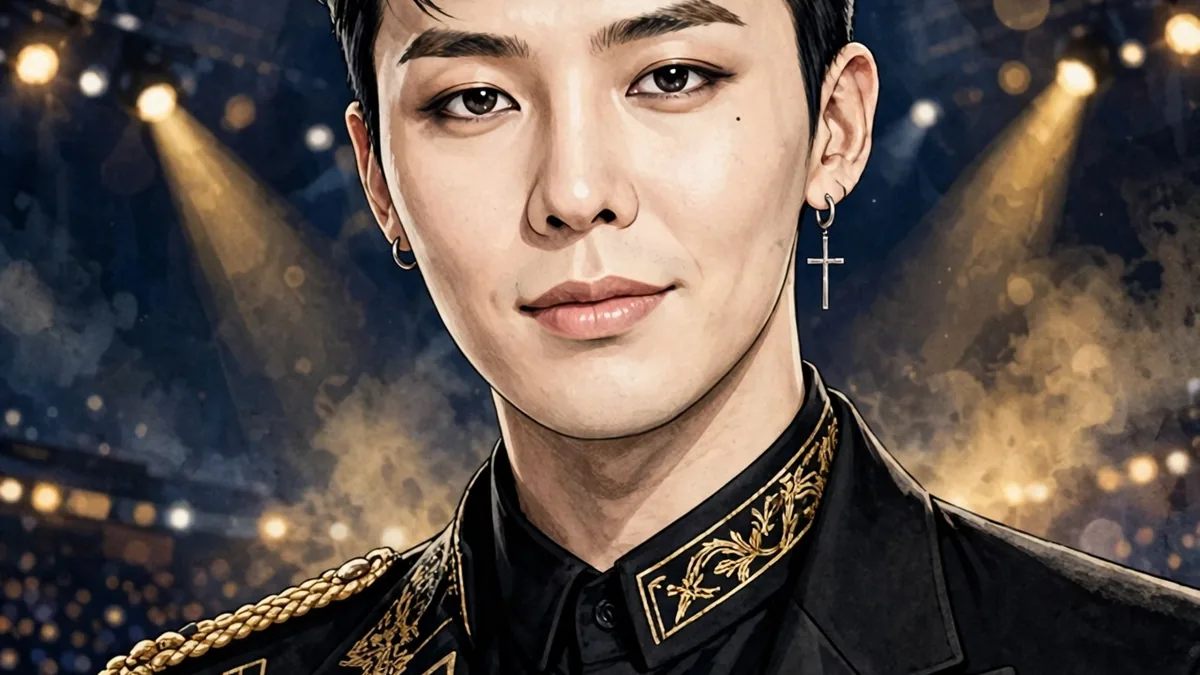
Early Life: A Child Star Who Chose Hip-Hop
Kwon Ji-yong was born on August 18, 1988, in Seoul, and raised in the Itaewon neighbourhood of the Yongsan District. His parents ran a small business, and by his own later accounts the household was comfortable rather than wealthy — a middle-class Seoul upbringing, not a show-business family. What set him apart was how early the stage found him. At five years old he appeared on the MBC children’s show Bbo Bbo Bbo, and at six he debuted as a member of Little Roo’ra, a children’s version of the hip-hop group Roo’ra. Most child performers fade out. He stayed.
At eight, he won first place in a dance competition at a ski resort. The host of that event was Lee Soo-man, the founder of SM Entertainment, who scouted him on the spot. G-Dragon spent five years as an SM trainee, from roughly age eight to thirteen, training in dance before deciding the company’s pop direction did not fit the hip-hop he loved. The Wu-Tang Clan was his early obsession, and he spent his pre-teen years learning to rap and write rather than simply perform other people’s songs. At twelve he took part in the 2001 hip-hop compilation album 2001 Daehanminguk Hip Hop Flex, and that appearance drew the attention of YG Entertainment. He moved to YG at twelve and trained there for six years — eleven years of training in total across the two agencies, one of the longest apprenticeships of any K-pop star of his generation.
That long training period matters to the money story, because it made him a writer before he was a star. While other trainees were learning choreography, G-Dragon was learning composition, and he arrived at his debut already able to write the songs he would perform. His planned debut as the hip-hop duo GDYB, alongside fellow trainee Dong Young-bae — the future Taeyang — was shelved when YG decided to build a boy group instead. The group became BIGBANG, and G-Dragon, at seventeen, was picked as its first member and leader. Education ran alongside the training: he enrolled at Kyung Hee University in 2008 to study post-modern music, later moved to sports technology management at Gukje Cyber University as his schedule made campus attendance impossible, and eventually completed a master’s degree at Sejong University. In 2024 he added an academic post to that list, becoming a visiting professor at KAIST, South Korea’s leading science and technology institute — a role that says plenty about how the country now treats him: less pop star, more cultural figure.
The BIGBANG Rise: From Trainee to K-Pop Royalty
BIGBANG debuted on August 19, 2006, with five members: G-Dragon, T.O.P, Taeyang, Daesung and Seungri. The early years were a slow build. The breakthrough came in 2007, when G-Dragon wrote and composed “Lies” (거짓말), a song that topped the charts and re-set what a K-pop idol group could sound like — an electronic, hip-hop-leaning track written by the group’s own leader rather than bought in from outside writers. “Last Farewell” followed the same year, then “Haru Haru” in 2008, and the group never really looked back. Over the next decade BIGBANG became one of the best-selling boy bands in the world, with “Fantastic Baby” (2012) and “Bang Bang Bang” (2015) becoming the kind of songs that define an era of K-pop, played at festivals and stadiums from Seoul to Los Angeles.
G-Dragon’s role inside the group was the engine of its value. He wrote or co-wrote the hits, produced much of the material, and set the visual direction — the fashion, the staging, the attitude — that made BIGBANG feel different from every other idol group of the second generation. Forbes named him to its 30 Under 30 Asia list in entertainment and sports in 2016, and by then the trade press was already calling him the “King of K-pop”, a title that has stuck because no rival has matched his combination of writing credits, touring power and fashion influence. The group’s touring numbers tell the commercial story: the MADE world tour of 2015–16 drew roughly 1.5 million people, and BIGBANG’s tours were routinely the highest-grossing by a Korean act of their time. Those tours, split five ways and then split again with the agency, built the first layer of his fortune — and, just as importantly, they built the catalogue that still pays him today.
The group went quiet after 2017 as members enlisted for mandatory military service and, later, as Seungri left the group in 2019 and T.O.P departed in 2023. The four-year silence ended in April 2022 with “Still Life”, a reflective single released by the four remaining members that topped charts in Korea and reminded everyone that the BIGBANG name still carried weight without any promotion at all. That single is worth remembering when you look at the 2026 numbers: the reunion that followed did not have to rebuild an audience. The audience had been waiting.
Solo Career: Heartbreaker to Übermensch
G-Dragon’s solo career began in earnest in 2009 with Heartbreaker, his first solo studio album. The title track was a chart-topper, and the album established a pattern that would repeat for the next fifteen years: his solo work sold on his name alone, without the group behind it. One of a Kind (2012) gave him “Crayon” and “That XX”, and Coup d’Etat (2013) — featuring collaborations with Missy Elliott, Diplo, Baauer and Boys Noize — showed an artist who could work with American hip-hop royalty on equal terms. The Kwon Ji Yong EP of 2017, released as a USB stick rather than a CD, sold out its physical run and drew headlines for the format alone; its lead single “Untitled, 2014” was a stripped-back ballad that proved he did not need spectacle to hold a chart.
The solo tours were where the solo career turned into serious money. His first world tour, One of a Kind (2013), and the Act III: M.O.T.T.E tour of 2017 made him the first Korean solo artist to play stadiums at that scale, and the 2017 tour drew more than 600,000 fans across Asia, North America and Oceania. By the end of that run he was, by several Korean industry measures, the highest-paid touring singer-songwriter in the country. Then came the pause: military service from February 2018 to October 2019, a long silence, and — after his YG contract expired — his departure from the agency in December 2023 after twenty years. He signed with Galaxy Corporation, an entertainment-technology company, under his real name, Kwon Ji-yong. The move looked odd at the time. Galaxy was a small agency with an artificial-intelligence and metaverse pitch, not a music powerhouse. In 2025 it became clear why he had chosen it — and how much the choice was worth.
The comeback album, Übermensch, arrived in February 2025, his third full-length solo album and his first in more than seven years. It sold more than 600,000 copies on its first day and passed one million copies for the year, according to Korean chart reporting cited by Koreaboo in April 2026. The title — borrowed from Nietzsche — was typical G-Dragon: a big idea worn lightly, wrapped in songs that ranged from the swaggering “Power” to the reflective “Drama”. The album did not just restart his recording career. It set up the tour that would rewrite his net worth.
The 2025 Übermensch Tour: The Year That Changed the Math
The Übermensch World Tour ran through 2025 with 39 performances across 17 cities in 12 countries, drawing roughly 825,000 fans — the largest attendance ever recorded for a world tour by a Korean solo artist. That single sentence is the reason every net-worth estimate for G-Dragon moved in 2026. Before the tour, the consensus figure had sat near $30 million to $50 million for years. After it, Celebrity Net Worth more than doubled its estimate. The scale of the tour explains the jump, and the numbers behind it are unusually well documented, because Galaxy Corporation is a listed company and its filings became public.
Start with the box office. Billboard Boxscore figures cited by Koreaboo and KpopHit in April 2026 put the first 22 shows at about $71.8 million (nearly 96 billion won) in ticket sales. In the United States, all five shows sold out — 63,000 tickets in total — and three American shows alone earned $9.3 million on the August 2025 Boxscore chart. One stop, in Newark, reportedly generated about $27.1 million. In South Korea, two nights at Goyang Stadium drew 68,000 people, with ticket revenue estimated above 12 billion won. Across the full 39-show run, industry estimates put ticket sales at 180 billion to 190 billion won — about $126 million — and total tour-related revenue, once merchandise and pop-up stores are added, at 150 billion to 200 billion won (about $99 million to $133 million). Those are gross figures, not profit, and not G-Dragon’s personal take. The distinction matters, and the audit filing is what bridges the gap between gross tour revenue and his own pocket.
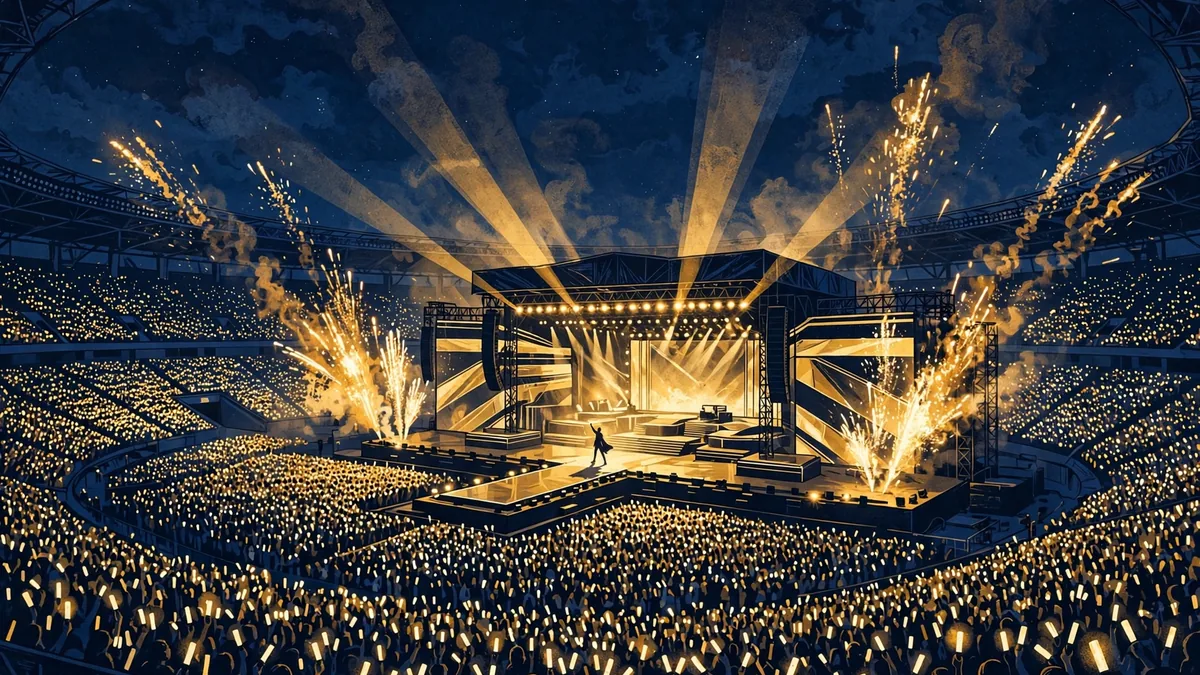
In April 2026, Galaxy Corporation published its audited 2025 accounts, and the Korean business press did the arithmetic in public. Money Today Broadcasting, reporting on the filing, noted that the company’s standalone payment fees — a line made up mostly of artist settlement payments — reached 71.4 billion won (about $47.6 million), a 31-fold increase on the previous year. Analysts who examined the report estimated that, after legal and promotional costs, G-Dragon’s personal settlement could exceed 65 billion won — roughly $43 million to $48 million depending on the exchange rate used, with Celebrity Net Worth putting the figure above $48 million and allkpop, reporting the same filing on April 8, 2026, putting it above 60 billion won (about $40 million). The range between those readings is an exchange-rate and cost-allocation argument, not a disagreement about the scale: in 2025, G-Dragon personally took home something in the region of $40 million to $48 million from his agency settlement alone, before royalties, endorsements and his other income. Zoom TV Entertainment, summarising the same audit, put his total 2025 earnings higher still once royalties and brand deals were added.
The company’s own results show the same story from the other side. Galaxy Corporation’s consolidated revenue hit 298.9 billion won (about $198 million to $220 million, depending on the won-dollar rate applied by different outlets) in 2025, up about 619% year on year, with operating profit of 12.5 billion won — a swing from an 18.8 billion won operating loss the year before. At an April 2026 press conference, Galaxy Corporation chief executive Choi Yong-ho said G-Dragon accounted for between 75% and 80% of the company’s revenue. The company credited his global activities directly for the turnaround. One artist, in one year, pulled a listed company out of the red. That is the context for the $120 million figure: it is not a guess about a catalogue, it is a reaction to a documented, audited, single-year payday of roughly $40 million-plus — the kind of year that, if repeated, compounds fast. It is also the reason the figure must be treated with care, as the next section explains.
For scale, the solo-tour record G-Dragon set in 2025 sits in a class of its own among Korean soloists, and the comparison with the current generation of solo stars shows how far ahead of the field he still is. The younger solo acts who dominate streaming today — including Jungkook, whose own solo rise we profiled — are building the kind of touring careers G-Dragon was already headlining a decade ago, and none has yet matched a 39-show, 825,000-fan solo run.
Net Worth Breakdown: Why Sources Disagree by Tens of Millions
Here is the disagreement, laid out source by source, with dates, so the range in the headline is not a fudge but a map of what each outlet actually says.
| Source | Figure (2026) | Date / Basis |
|---|---|---|
| Celebrity Net Worth | $120 million | Updated 2026; cites the 2025 tour (825,000 fans, 39 shows) and Galaxy Corporation filings suggesting 2025 artist payments above $48 million, plus stock options in Galaxy Corporation |
| KpopRadar | $60 million – $75 million | April 2026; catalogue, PEACEMINUSONE, real estate and the 20th-anniversary run |
| IconPolls | $60 million – $65 million | Updated December 30, 2025; earlier $47.6 million estimate as of 2022 |
| JustRichest | $53 million | Updated October 27, 2026; top-10 richest K-pop idols list |
| Kpopbio | $50 million | 2026 profile; also notes other sources at about $30 million |
| iFANN | $50 million | 2026 estimate; 24 Gaon chart number ones, tours, PEACEMINUSONE, Seoul property |
| Urban Splatter | $50 million | July 28, 2026 |
| BTSAge / PopGolden | $30 million | 2026; older baseline, largely pre-tour |
| NetWorthRankings | $29 million | January 11, 2026; pre-tour baseline |
The pattern is clear once the dates are lined up. The $29 million and $30 million figures are pre-tour baselines — snapshots of a fortune built slowly over eighteen years of group and solo work, before the Übermensch run. The $50 million to $75 million cluster is the post-tour middle ground: outlets that took the tour into account but did not re-value the whole fortune on one year’s earnings. The $120 million figure is the outlier, and it is the only one that treats the 2025 settlement as a re-rating of the entire catalogue and brand rather than a single good year. Celebrity Net Worth is also the only source in the table that mentions stock options in Galaxy Corporation as part of the package — a detail that, if the options are substantial, could genuinely add tens of millions in paper value, but which no other outlet has been able to verify independently. That is why this article’s headline is a range, not a number: $50 million to $120 million, with $50 million to $75 million as the range most independent 2026 sources support, and $120 million as the top-end estimate from the single most widely cited celebrity-wealth outlet.
The honest way to read the number: if you want the figure a careful reader can defend, use $50 million to $75 million — the range where KpopRadar, IconPolls, JustRichest, Kpopbio and iFANN overlap. If you want the highest credible estimate in print, it is $120 million from Celebrity Net Worth, and it rests on the audited 2025 payday plus unconfirmed stock options. Either way, the direction is the same: 2025 made him substantially richer, and the 2026 BIGBANG reunion is set to add more.
The wealth itself breaks into five parts, and each part has a different level of certainty. The table below separates what is documented from what is estimated.
| Wealth Component | What We Know | Confidence |
|---|---|---|
| 2025 tour settlement | Galaxy Corporation payment fees of 71.4 billion won; analysts estimate G-Dragon’s share above 65 billion won (about $43M–$48M) | High — audited filing, April 2026 |
| Songwriting royalties | 170+ KOMCA-registered songs; $700,000 a year in 2015, $1.17 million in 2018; the catalogue has only grown since | High — KOMCA records and Korean industry reporting |
| Touring and music (career to date) | BIGBANG’s MADE tour drew about 1.5 million fans; solo tours in 2013 and 2017 drew hundreds of thousands; album sales above one million for Übermensch in 2025 | Medium-high — reported grosses, split with agency and members unknown |
| PEACEMINUSONE and Nike | Brand founded in the mid-2010s; Para-Noise and Kwondo 1 collaborations sold out; 2026 World Cup collection with Nike and the Korea Football Association | Medium — revenue is private; sell-outs and longevity are public |
| Real estate | Three Seoul properties with a combined reported market value of about 56 billion won (about $47.6 million) in a November 2023 industry report | Medium — purchase prices documented; market values move |
| Galaxy Corporation stock options | Reported by Celebrity Net Worth; no independent confirmation of size or value | Low — single-source, unverified |
One more caution belongs here, because it is the mistake most net-worth pages make. Tour gross is not personal income. The $126 million in estimated ticket sales for the Übermensch tour was split between the promoter, the venues, the agency and the artist, and the agency’s own profit for the whole year was only 12.5 billion won. G-Dragon’s settlement — the $40 million to $48 million range — is the honest personal figure for that tour, and it is already enormous. Anyone who adds the full $126 million to his fortune is double-counting. The same discipline applies to the property portfolio: the 56 billion won market value reported in 2023 is the value of the homes, not cash in hand, and two of the three were bought years ago at far lower prices. Net worth is assets minus debts, and for a private individual the debts are never public. Every figure on this page is an estimate built from public traces, not a bank statement.
Songwriting Royalties: The Cheque That Never Stops
If touring is the part of G-Dragon’s fortune that spikes, songwriting is the part that never sleeps. The Korea Music Copyright Association lists more than 170 songs under his name — some counts, including Wikipedia’s, put the figure above 180, with the difference coming down to registration dates and co-writing credits counted in different years — and he has written or co-written 24 number-one songs on the Circle (formerly Gaon) Digital Chart as of 2025. That catalogue includes BIGBANG’s defining hits, his solo singles and songs written for other artists, and it earns money every time one of those songs is streamed, played on radio, used in a broadcast or performed live, in Korea and abroad.
The royalty numbers that are actually sourced are striking enough without exaggeration. In 2015, his annual earnings from song royalties were estimated at more than $700,000 a year, according to reporting summarised by Wikipedia from Korean industry sources. In 2012 he was the youngest composer, and one of the highest-paid, on the list of South Korean songwriters earning the most from royalties. In 2018 he tied with YG producer Teddy Park for the most earned royalties for lyrics and composition in Korean popular music, with IconPolls reporting $1.17 million from songwriting royalties in that year alone. Those are the documented figures. A larger number — 1.4 billion won a year, sometimes rendered as $14 million — circulates widely on fan-run and low-authority profile pages, but it traces back to no named primary source and the arithmetic does not sit well against the documented $700,000 to $1.17 million range from the years when his catalogue was at its commercial peak. This article does not repeat it as fact. What is safe to say is that a catalogue of 170-plus songs, including some of the most-played Korean songs of the past twenty years, produces a seven-figure annual royalty stream in a normal year, and a bigger one in a reunion year when the old songs are streamed and performed again.
The royalty story also explains why G-Dragon’s wealth is more durable than that of most idols. A touring star who stops touring stops earning. A songwriter with 170 registered songs keeps earning through every quiet year, and G-Dragon has had several quiet years — military service in 2018–19, the pandemic years, the long gap before Übermensch — without his income ever falling to zero. It is the same logic that makes his position different from the younger solo stars now building their own catalogues: J-Hope’s biography shows a solo career still in its accumulation phase, while G-Dragon is collecting on twenty years of writing. When BIGBANG’s old songs surged again around the 2026 reunion, the royalties surged with them — and, unlike tour money, nobody had to split that with a promoter.
PEACEMINUSONE and Fashion: From Label to Nike History
PEACEMINUSONE — the name is a play on “peace” and “minus one”, the idea that a utopian world is always one piece short — began as G-Dragon’s personal fashion label in the mid-2010s and grew into the most commercially serious fashion venture ever built by a K-pop idol. The daisy logo, a flower with a missing petal, became a status symbol in its own right: PEACEMINUSONE pieces are deliberately scarce, sell out fast, and trade at a premium on the resale market. The brand’s revenue is private, so no honest net-worth page can put a number on it. What can be said, from the public record, is that it has lasted a decade, that it has moved from merch-style drops into genuine collaborations with the biggest names in fashion and sport, and that it is the part of his business most likely to keep growing when the touring slows down.
The Nike relationship is the proof. In 2019, fresh out of military service, G-Dragon became the first Asian rapper in Nike’s history to land a collaboration with the brand, built around his own label rather than as a standard endorsement. The PEACEMINUSONE x Nike Air Force 1 “Para-Noise” — a black shoe whose cracked paint peels away with wear to reveal artwork underneath — sold out instantly on its worldwide release in November 2019 and won Best Footwear at the HYPEAWARDS. The concept grew into a series: Para-Noise 2.0, then Para-Noise 3.0 in autumn 2024, with mismatched Swooshes in purple, baby blue, yellow and teal. In December 2021 came the Kwondo 1, a fully original silhouette — a taekwondo-inspired shoe that fused a dress shoe, a sneaker and an athletic boot, with the PEACEMINUSONE daisy at the heel — making G-Dragon one of the very few entertainers in Nike’s history to receive his own silhouette rather than a colourway of an existing model.

The partnership reached its most ambitious point in 2026. PEACEMINUSONE again partnered with Nike on a collection connected to South Korea’s national football team and the FIFA World Cup — the “Tigers of Asia” collection with the Korea Football Association, with G-Dragon taking creative control of the team’s match-day kits, off-field apparel and a special-edition Nike Cryoshot. A K-pop star designing a national team’s World Cup kit is not a normal brand deal. It is a sign of how far the fashion business has travelled from its origins as a fan-merch line, and it is also a commercial fact: World Cup collections sell at a scale that no limited sneaker drop can match. In 2024 he had already tied the label to philanthropy, putting it to work for the JusPeace Foundation, which is covered later in this article. The fashion line is, in short, a real business with real distribution and real partners — and the one part of his fortune that could plausibly be worth more than the music catalogue in another ten years.
Endorsements: Chanel, Luxury Deals and Brand Power
Long before K-pop idols became the default faces of luxury houses, G-Dragon was the test case. He became one of the first K-pop stars to serve as a brand ambassador for a major European luxury house when Chanel brought him into the fold, and he has remained a Chanel ambassador for a decade — front row at the shows, face of campaigns, and the rare male muse for a house built on womenswear. The relationship matters commercially because luxury ambassadorships at that level pay seven-figure annual fees and, just as importantly, keep an artist visible to the wealthy audiences who buy concert tickets and limited sneakers. His endorsement history also includes Hyundai, Samsung, Kappa and a long run of Korean beauty, beverage and technology brands, and his 2025 comeback added a fresh wave of advertising contracts that Zoom TV Entertainment cited as a further layer on top of the tour settlement when tallying his 2025 earnings.
There is a useful comparison to make here, because it shows what “brand power” actually means in won. When Galaxy Corporation’s revenue rose 619% in 2025, the company said the growth came from G-Dragon’s activities as a whole — the tour, the album, the brand work and the IP around them — not from touring alone. His value to a brand is not a face on a poster. It is that a single Instagram post or a single public appearance can move a product from launch to sell-out, and brands pay for that certainty. The Chanel relationship has lasted because it works both ways: the house gets the most influential fashion figure in Korean pop, and he gets a permanent seat at the table where luxury decisions are made. That seat is part of why the Nike deal happened, and why the World Cup collection happened. Endorsements, for G-Dragon, are not a side income. They are the connective tissue between the music, the fashion and the property money.
Real Estate and Assets: The Seoul Property Portfolio
G-Dragon’s property portfolio is the most concrete part of his fortune, because Korean property transactions are a matter of public record. The headline purchase came in March 2022, when he bought a 244-square-metre penthouse at Nine One Hannam in Hannam-dong, Yongsan-gu, Seoul, for 16.4 billion won — about $13.1 million at the exchange rate of the time — and paid for it entirely in cash, according to the court register reported by Korean media on June 3, 2022. At the time it set the record for the most expensive apartment purchase in South Korea that year, passing the previous high of 14.5 billion won for a penthouse at The Penthouse Cheongdam. Nine One Hannam is one of Seoul’s most private luxury complexes — 341 households, with just ten penthouses on the top floor — and its neighbours include BTS members RM and Jimin, which is why the building has become a shorthand for the top tier of Korean celebrity wealth. A 2026 report by Zapzee noted that G-Dragon’s 244.3-square-metre unit there was recorded at an official price of 24.28 billion won for the complex, a reminder that the value of the holding has moved a long way since the purchase.
That penthouse is not his only Seoul property. In 2013 he bought a unit at Galleria Foret in Seongsu-dong for 3.03 billion won. In 2023 he added a property on the 13th floor of Warner Cheongdam, one of Seoul’s most expensive apartment complexes. A real-estate industry report in November 2023, covered by allkpop, put the combined market value of the three properties at about 56 billion won — roughly $47.6 million — and noted that he also owns several luxury cars. The 56 billion won figure is a 2023 market estimate, not a 2026 valuation, and property values in Seoul’s luxury districts have moved since then, in both directions at different moments. It is included here because it is the only published attempt to value the whole portfolio at once, and because it makes an important point: even before the 2025 tour, G-Dragon’s property alone was worth roughly what many outlets put his entire net worth at. That is the quiet base under the flashier numbers — bricks, in the most expensive neighbourhoods of Seoul, bought early and held.
Beyond property, the asset picture is thinner in the public record, which is itself informative. There are no published reports of a stock portfolio, a venture-capital fund or a chain of cafés and restaurants with his name on the door — the kind of side businesses that pad out other celebrities’ net-worth pages, sometimes on thin evidence. What there is, beyond the homes, is the catalogue, the brand, the Galaxy Corporation relationship and the cars. The absence of invented businesses on this page is deliberate: this article reports what the record shows, and the record shows a fortune built from music, touring, fashion and property, not from a list of rumoured investments.
2026: The BIGBANG Reunion, Coachella and XX : COSMOS
If 2025 was G-Dragon’s year, 2026 was BIGBANG’s. The group — now a trio of G-Dragon, Taeyang and Daesung, after T.O.P’s departure in 2023 and Seungri’s exit in 2019 — returned to the live stage at the Coachella Valley Music and Arts Festival in Indio, California, playing the Outdoor Theatre stage on April 12, 2026, for about an hour, and again on April 19. The set opened with dancers in jackets and flags from the group’s Made era, ran through “Bang Bang Bang” and the old hits, and closed with G-Dragon telling the crowd: “This is just the beginning of our 20th anniversary. We’ve got big things coming.” The crowd, as the American outlet SFGATE noted, included fans in their twenties singing along to songs released before some of them were teenagers. It was the group’s first performance together since “Still Life” in April 2022, and their first Coachella appearance — they had been booked for the cancelled 2020 festival. Celebrity Net Worth’s updated profile records the same sequence: the trio reunited for the Coachella performances in April 2026 as part of the 20th-anniversary activities.
The second Coachella set carried the announcement that turned the reunion into a business. On April 19, G-Dragon told the audience that BIGBANG’s 20th-anniversary world tour would begin in August, and the group confirmed that a new album — their first major collective release since 2017 — had been completed. The tour, titled BIGBANG 2026–2027 WORLD TOUR “XX : COSMOS”, is a 19-city stadium run, the group’s first world tour in about nine years, with a 30-song setlist stretching from the 2007 breakthrough “Last Farewell” to the new material. On August 19, the group’s official debut anniversary, they released the digital single “BiiiG”, their first new song in four years and four months since “Still Life” — it hit number one on Melon’s TOP100 within an hour — and the tour opened with three concerts at Goyang Stadium from August 21 to 23. By October 31, the tour had reached Accor Stadium in Sydney, where BIGBANG became the first K-pop act ever to headline the venue, and the tour stood at 39 shows in 19 cities, with a finale booked at SoFi Stadium. Dates in South Korea and the United States sold out immediately on release, according to KpopPost’s September 2026 reporting.
What does the reunion mean for the net worth? Directly, a 19-city stadium tour by a group with BIGBANG’s drawing power is a second major payday arriving a year after the first, and it is shared three ways rather than one — but it also re-activates the catalogue, the streaming, the merchandise and the brand work at the same time. Indirectly, it changes the story the market tells about G-Dragon. The 2025 tour proved he could fill stadiums alone. The 2026 tour proves the group name still fills them too. For a 38-year-old artist twenty years into a career, that is the difference between a legacy act and a working one, and working acts get paid. The tour was still running as this article was written in November 2026, so no final gross is available — but the sell-outs and the stadium scale point in the same direction as 2025. The other solo stars of his generation’s second wave tell the same story from the other side: Jennie’s biography traces a BLACKPINK star building a solo fortune of her own, and Rosé’s biography follows a similar path from group fame to solo success — but neither has yet attempted a reunion tour at the scale BIGBANG is now playing.
Personal Life: Family, Education and Life Off Stage
Off stage, G-Dragon is one of the most private stars in K-pop, and the little that is public is mostly family. His older sister, Kwon Dami, is a fashion entrepreneur in her own right, and her marriage to actor Kim Min-jun in 2019 made G-Dragon a brother-in-law to one of Korea’s best-known character actors; the family connection is often mentioned in Korean coverage because the two siblings’ fashion interests overlap — her label and his share the same Seoul scene. His parents, who supported the childhood performing career from the start, have stayed out of the spotlight. As of 2026 he is unmarried and has no children, a fact that most profile pages state plainly and that he has never contradicted; the rumours that surface every year around his dating life have produced no confirmed relationship, and this article does not repeat them.
The private life that does show in public is the art and the collecting. He is a serious art collector, known for buying work by young Korean artists and for lending pieces to exhibitions, and his home — glimpsed in the rare magazine shoots — is filled with art, design books and the objects of a working designer rather than the trophies of a pop star. The KAIST visiting professorship, taken up in 2024, fits the same pattern: a pop star who wants to be taken seriously as a thinker about creativity and technology, and an institution willing to take him seriously. His height, often searched alongside his wealth, is about 177 cm (5 feet 10 inches), and his blood type — a detail Korean profiles always include — is A. Those are the small facts fans ask for; the bigger fact is that a man who has been famous since he was six has managed to keep a private life at all.
Controversies and Legal Issues: What Actually Happened
No honest profile of G-Dragon can skip the two investigations, and no honest profile should exaggerate them either. The first came in 2011, when he was investigated over marijuana use. Prosecutors suspended the indictment — the Korean legal outcome that means the case was not pursued to a charge — after he said he had smoked a cigarette offered to him at a party in Japan without realising what it contained. He apologised publicly, and his career continued without interruption. The second came in October 2023, when police named him in a drug investigation that dominated Korean headlines for weeks. He denied the allegations, attended questioning voluntarily, and tested negative in drug tests. In November 2023, police cleared him without charge, and the case was closed. The episode cost him weeks of headlines and, by most accounts, a great deal of personal strain, but it ended in a formal clearance, not a conviction — and his comeback, the Galaxy signing and the 2025 tour all followed it. Any profile that presents either episode as a conviction is wrong.
The other controversy that follows him is smaller and more modern: the persistent rumours about his private life, amplified by social media and rarely sourced to anything checkable. The rule applied on this page is the same one applied to the money: if it is not sourced, it is not printed. What is sourced is a twenty-year career with two investigations, one suspended indictment and one clearance, and a reputation that survived both because the work — the songs, the tours, the fashion — kept arriving.
Philanthropy: The JusPeace Foundation
In 2024, G-Dragon put a formal structure around the giving he had done quietly for years, founding the JusPeace Foundation. The name combines “justice” and “peace”, and the foundation’s work focuses on supporting young artists and on mental-health and addiction-recovery programmes — a choice that reads, to Korean observers, as a direct answer to his own 2023 experience. Reporting on the launch noted that 1% of his royalties would fund the foundation’s work, tying the philanthropy to the same catalogue that built his fortune: every stream of a BIGBANG song sends a small share to the cause. He has also made individual donations over the years to disaster relief and to children’s causes, though those gifts were usually disclosed by the receiving organisations rather than by him. The foundation is still young, and its scale is modest next to the fortune described on this page — but it is the part of the story that suggests where the next chapter goes: an artist who spent his twenties building a fortune spending his late thirties deciding what it is for.
Frequently Asked Questions
What is G-Dragon’s net worth in 2026?
G-Dragon’s net worth in 2026 is estimated at $50 million to $120 million. Celebrity Net Worth lists $120 million after his record-breaking 2025 world tour, while most other 2026 sources — Kpopbio ($50 million), iFANN ($50 million), KpopRadar ($60 million–$75 million), JustRichest ($53 million) and IconPolls ($60 million–$65 million) — put him between $50 million and $75 million. The range most independent sources support is $50 million to $75 million, with $120 million as the high-end outlier.
How much did G-Dragon earn from his 2025 world tour?
The Übermensch World Tour drew about 825,000 fans across 39 shows, with estimated ticket sales of 180–190 billion won (about $126 million). G-Dragon’s personal share was far smaller than the gross: Galaxy Corporation’s audited 2025 accounts showed payment fees of 71.4 billion won, and analysts estimated his artist settlement at more than 65 billion won — roughly $43 million to $48 million, with Celebrity Net Worth putting it above $48 million. Royalties and endorsements added more on top.
How does G-Dragon make his money?
Four streams: touring (BIGBANG and solo, including the 2025 Übermensch tour and the 2026 XX : COSMOS reunion tour), songwriting royalties from more than 170 KOMCA-registered songs, the PEACEMINUSONE fashion label and its Nike collaborations, and luxury endorsements led by Chanel. He also owns a Seoul property portfolio headlined by a Nine One Hannam penthouse bought for 16.4 billion won in cash in 2022.
How many songs has G-Dragon written?
More than 170 songs are registered under his name with the Korea Music Copyright Association (KOMCA), with some counts putting the figure above 180 depending on registration dates. He has written or co-written 24 number-one songs on the Circle Digital Chart as of 2025, including BIGBANG hits such as “Lies”, “Haru Haru” and “Fantastic Baby”. His documented royalty earnings were more than $700,000 in 2015 and $1.17 million in 2018.
What is PEACEMINUSONE?
PEACEMINUSONE is G-Dragon’s fashion label, founded in the mid-2010s and named for the idea that a perfect world is always one piece short — hence the daisy logo with a missing petal. It became the vehicle for his Nike collaborations, including the Para-Noise Air Force 1 series and the Kwondo 1 original silhouette, and in 2026 it designed the Korea national football team’s World Cup collection with Nike.
How much is G-Dragon’s Seoul penthouse worth?
He bought the 244-square-metre Nine One Hannam penthouse in Seoul for 16.4 billion won (about $13.1 million) in cash in March 2022, a record price for a Korean apartment that year. He also owns a Galleria Foret unit bought for 3.03 billion won in 2013 and a Warner Cheongdam property acquired in 2023. A November 2023 industry report valued the three properties together at about 56 billion won (about $47.6 million).
Is G-Dragon still in BIGBANG in 2026?
Yes. BIGBANG returned in 2026 as a trio — G-Dragon, Taeyang and Daesung — for the group’s 20th anniversary, playing Coachella on April 12 and 19, 2026, releasing the single “BiiiG” on August 19, and launching the 19-city XX : COSMOS world tour in August 2026. T.O.P departed in 2023 and Seungri left in 2019, so neither is part of the reunion.
What is G-Dragon’s real name and how old is he?
His real name is Kwon Ji-yong, born August 18, 1988, in Seoul, South Korea — he turned 38 in August 2026. He debuted as the leader of BIGBANG on August 19, 2006, after eleven years of training at SM Entertainment and YG Entertainment, and he left YG after twenty years in December 2023 to sign with Galaxy Corporation.
Final Thoughts: The Bottom Line on G-Dragon’s Fortune
G-Dragon’s fortune is the most interesting one in K-pop to value, because it is the one where the honest answer is a range and the range itself tells the story. At $50 million to $75 million — where most independent 2026 sources land — he is already one of the richest solo artists Korean pop has produced, on the strength of twenty years of writing, touring and fashion. At $120 million — Celebrity Net Worth’s updated figure — he is something else again: an artist whose single best year was worth nearly as much as his whole career before it, and whose brand now reaches from a stadium stage to a national football team’s World Cup kit. Both readings agree on the direction. The 2025 tour paid him roughly $40 million to $48 million in one settlement, the 2026 reunion tour is selling out stadiums, and the catalogue that pays him in quiet years is about to have its loudest year in a decade.
For readers weighing the number, the takeaway is simple: trust the range, not the headline. A fortune built on a listed company’s audited filing, a 170-song catalogue and three Seoul properties is real whether you count it at $50 million or $120 million — and the difference between those figures is mostly a disagreement about how much one extraordinary year should re-value the twenty years before it. If the XX : COSMOS tour closes as strongly as it opened, expect the middle of the range to move up, and expect the $120 million figure to look less like an outlier and more like a preview. You can browse more celebrity fortunes in our Net Worth section, and for a closer look at the solo stars of the current generation, Jimin’s biography traces a BTS star building a fortune of his own on a very different timeline.
Sources and Reporting: How We Estimated This Figure
Every figure on this page is tied to a named source, and where sources disagree the disagreement is shown rather than hidden. The headline range rests on Celebrity Net Worth ($120 million, updated 2026), KpopRadar ($60 million–$75 million, April 2026), IconPolls ($60 million–$65 million, updated December 30, 2025), JustRichest ($53 million, updated October 27, 2026), Kpopbio ($50 million, 2026), iFANN ($50 million, 2026) and Urban Splatter ($50 million, July 28, 2026). Tour figures and the Galaxy Corporation audit come from reporting by Koreaboo and allkpop (April 7–8, 2026), Zoom TV Entertainment (April 8, 2026) and KpopHit, all drawing on Money Today Broadcasting’s reading of Galaxy Corporation’s audited 2025 accounts and Billboard Boxscore data. Biographical facts, the KOMCA song count and the royalty figures follow Wikipedia’s G-Dragon profile and the Kpopbio profile, cross-checked against IconPolls. Property figures follow allkpop’s June 3, 2022 penthouse report and its November 17, 2023 portfolio report, and Zapzee’s July 2026 apartment survey. The 2026 reunion, Coachella sets and XX : COSMOS tour follow the Korea Herald’s September 2025 lineup reporting, Music News (April 2026), KpopPost (September 20, 2026) and SeolNotes (November 7, 2026). The Nike and PEACEMINUSONE history follows KpopWorld.
How we estimated: we collected every published 2026 estimate, dated each one, and kept the full spread instead of picking a favourite. The low end ($29 million–$30 million) is a pre-tour baseline and is shown for context, not used in the headline. The headline range ($50 million–$120 million) runs from the lowest post-tour figure among major outlets to the highest, and the article names $50 million–$75 million as the range most independent sources support. Tour grosses are never treated as personal income: the personal figure used is the analyst estimate of the Galaxy Corporation settlement ($43 million–$48 million). Property values are purchase prices from public records plus one published 2023 market valuation, labelled as such. Stock options reported by a single outlet are flagged as unverified. Net worth is an estimate built from public traces; the private reality — debts, taxes, private holdings — is not public, and the true figure may sit anywhere inside the stated range.