By Celebamerica Editorial Staff — Last updated: November 10, 2026
Bobby Flay’s net worth is estimated at $60 million as of November 2026. The Food Network star, Iron Chef and restaurateur built that fortune over more than three decades — from a busboy job in his father’s friend’s restaurant to Mesa Grill, a burger chain, a shelf of cookbooks, and one of the longest television runs in food media. Parade, which published its 2026 profile of Flay in January and updated it in August 2026, puts the figure at $60 million, and Celebrity Net Worth agrees. A second strand of reporting, led by ThrillNG, stretches the range to $60–80 million, while a lone lower outlier of $45 million comes from a smaller tracker last updated in April 2025. On the weight of the evidence, $60 million is the honest anchor, with $60–80 million the fair range.
What makes Flay’s money story different from most celebrity chefs is how many separate engines feed it at once. He is still on television in 2026 — his newest Food Network series, The Line, premiered on September 8, 2026 — under a multiyear deal he signed in 2024. He still owns restaurants, including Amalfi and Brasserie B in Las Vegas and the Bobby’s Burgers chain. He sells books, fronts endorsement campaigns, owns a pet-food brand named after his cat, and races thoroughbred horses. This article works through every one of those income streams, the real-estate sales that moved millions in and out of his accounts, the contract talks that nearly took him off Food Network in 2021, and the peer comparison that puts his $60 million next to Gordon Ramsay and Guy Fieri.
Quick Facts: Bobby Flay Financial Snapshot
| Full Name | Robert William Flay |
|---|---|
| Date of Birth | December 10, 1964 (age 61 as of November 2026) |
| Birthplace | New York City, New York, USA |
| Estimated Net Worth | $60 million (range $60–80 million; anchored by Parade, January 2026, updated August 2026, and Celebrity Net Worth) |
| Primary Income Sources | Food Network television contracts, restaurant ownership, Bobby’s Burgers franchise, cookbook royalties, endorsements |
| Key Ventures / Works | Mesa Grill, Amalfi, Brasserie B, Bobby’s Burgers, Beat Bobby Flay, Iron Chef America, Bobby’s Triple Threat, The Line, Made by Nacho pet food |
| Known For | Southwestern cuisine, grilling, Iron Chef America, Beat Bobby Flay |
| Marriages | Debra Ponzek (1991–1993), Kate Connelly (1995–1998), Stephanie March (2005–2015) |
| Children | Sophie Flay (born 1996) |
| Major Honours | James Beard Rising Star Chef of the Year (1993); Hollywood Walk of Fame star (2015) — the first chef to receive one |
Table of Contents
- Quick Facts: Bobby Flay Financial Snapshot
- Early Life: From Busboy to the French Culinary Institute
- Mesa Grill: The Restaurant That Made Him
- Food Network Stardom: Iron Chef to Beat Bobby Flay
- How the Net Worth Breaks Down
- Income Streams: Where the Money Comes From
- The Restaurant Empire Today
- Cookbooks, Endorsements and Side Ventures
- Real Estate and Assets
- Net Worth Growth: Year by Year
- Bobby Flay vs. Gordon Ramsay and Guy Fieri
- Personal Life: Marriages, Daughter and Relationships
- Contract Talks and Public Disputes
- Frequently Asked Questions
- Bottom Line
- Sources and How We Estimated

Early Life: From Busboy to the French Culinary Institute
Robert William Flay was born on December 10, 1964, in New York City, to Bill and Dorothy Flay. Food was the family business in a loose sense: his father was a partner at Joe Allen, the well-known theater-district restaurant, and the young Flay grew up around dining rooms rather than dreaming about them from a distance. At eight years old he asked for an Easy-Bake Oven for Christmas — a small detail he has told interviewers more than once, and one that now reads like a signpost for everything that followed.
School was not where Flay shone. He dropped out of high school at 17 and went to work at Joe Allen, starting as a busboy. It was not a glamorous entry into cooking, but it put him inside a working restaurant while his classmates were still in classrooms. His father saw the spark and paid for him to attend the French Culinary Institute in New York, where Flay graduated in 1984 as part of the school’s first graduating class. The formal training gave structure to instincts he had picked up on the job, and it set him on a path that would move fast.
After culinary school, Flay worked under Jonathan Waxman at Bud and Jams, one of the restaurants that shaped modern American cooking in the 1980s. Waxman’s kitchen taught him a style built on bold flavours, open-fire cooking and Southwestern ingredients — chiles, corn, black beans, mesquite smoke — that would become Flay’s signature for the rest of his career. He was still in his early twenties, but the chefs around him already knew he was going somewhere. The next step came from a restaurateur named Jerome Kretchmer, who was looking for a young chef with a point of view to run a new restaurant on Fifth Avenue. Flay took the job.
Mesa Grill: The Restaurant That Made Him
Mesa Grill opened on January 15, 1991, with Flay, aged 26, as executive chef. The restaurant served bold Southwestern food in a fine-dining room in Manhattan’s Flatiron District, and it worked from the start. New York Magazine named it Best Restaurant in 1992, and in 1993 Flay won the James Beard Foundation’s Rising Star Chef of the Year award. For a chef who had dropped out of high school less than a decade earlier, it was a fast climb, and it gave him something most television chefs never get: real credibility as a restaurant cook before the cameras arrived.
Mesa Grill also gave Flay his first taste of ownership economics. He became a partner in the restaurant, which meant he was no longer just earning a chef’s salary — he held a stake in a profitable business. That shift from employee to owner is the thread that runs through his whole fortune. Over the following years he kept adding rooms of his own: Bolo Bar and Restaurant opened in 1993, Bar Americain followed, and a second Mesa Grill opened at Caesars Palace in Las Vegas in 2004. The original New York Mesa Grill closed in 2013, and the Las Vegas location was later remodeled into Amalfi, but the brand had already done its work. It made Flay a name that restaurant investors and television executives both wanted.
The Mesa Grill years also built the style that television would later sell. Flay cooked over live fire, leaned on chiles and citrus, and presented food with a swagger that read well on camera. When Food Network came calling in the mid-1990s, he did not have to invent a television persona. He already had one, honed in a dining room full of paying customers.
Food Network Stardom: Iron Chef to Beat Bobby Flay
Flay’s television career began in the mid-1990s, when Food Network was still a young channel finding its voice. He hosted early shows built around grilling, the subject he knew best, and the audience responded to a chef who cooked the way a lot of Americans actually cooked at home — over fire, outdoors, with big flavours. But the role that turned him into a household name came in 2005, when he joined Iron Chef America as one of the original Iron Chefs. For more than a decade he defended Kitchen Stadium against challengers, and the battles with Masaharu Morimoto became some of the most talked-about moments in food television. His first meeting with Morimoto, back in 2000 on the original Japanese Iron Chef, had already made headlines; the American version gave the rivalry a weekly stage.
The television work kept compounding. Throwdown! with Bobby Flay ran for years, Beat Bobby Flay premiered in 2013 and became one of the network’s signature shows, and Bobby’s Triple Threat arrived in 2022 with Flay as both host and judge. In 2026 he added a new series, The Line, which premiered on September 8, 2026. That is more than thirty years of near-continuous presence on a single network — a run that few television personalities of any kind can match, and one that pays in a way a single hit show never could. Longevity, not one big payday, is the engine of his television income.
Flay’s Food Network circle overlaps with the other chefs who defined the channel. Emeril Lagasse’s biography traces a parallel path from restaurant kitchens to television stardom, and Rachael Ray’s biography covers another Food Network star who turned a cooking show into a wide business empire. Flay worked alongside both of them for years, and the three of them — along with a handful of others — built the version of Food Network that viewers still think of first.
The money behind the television run is deliberately hard to pin down, because Food Network does not publish its talent contracts. The best public markers are these: Forbes put Flay’s yearly earnings at about $9 million back in 2012, when the network’s top earner, Gordon Ramsay, was listed at $38 million. By 2021, Flay was reportedly seeking a deal worth $100 million, according to reporting cited by Parade. He signed a new three-year agreement after those talks, and then a fresh multiyear deal in 2024 to stay on the network. Parade’s 2026 reporting suggests his current annual pay from Food Network alone runs into strong eight figures. That is an estimate built on the shape of the deal, not a leaked contract, and it should be read that way — but it explains why the net worth figure keeps climbing rather than flattening in his sixties.
How the Net Worth Breaks Down
No public filing lists Bobby Flay’s assets, debts, or bank balances, so any net worth number is an estimate assembled from public reporting. Here is how the $60 million figure breaks down across the parts of his career that can actually be traced, with each piece tied to what is known about it.
| Wealth Component | Estimated Share of the Fortune |
|---|---|
| Television contracts and appearance fees | The largest single driver. More than 30 years on Food Network, including Iron Chef America, Beat Bobby Flay, Bobby’s Triple Threat and The Line, plus a multiyear deal signed in 2024. Forbes recorded yearly earnings of about $9 million as far back as 2012; later deals were reported to be larger. |
| Restaurant ownership and equity | Stakes in Amalfi and Brasserie B in Las Vegas, the Bobby’s Burgers chain, and the proceeds from earlier ventures including Mesa Grill, Bar Americain, Bolo and Gato. Restaurant equity is the second-biggest pillar, though private restaurant valuations are never published. |
| Bobby’s Burgers franchise and licensing | The burger concept that grew out of Bobby’s Burger Palace, now operating as Bobby’s Burgers in casinos, stadiums and airports. Franchise and licensing income is recurring rather than one-off, which matters for a long-term fortune. |
| Cookbooks and publishing | More than a dozen cookbooks over three decades, including Bobby Flay’s Bold American Food and a string of grilling titles. Royalties are modest next to television money but steady. |
| Endorsements and brand deals | Pepsi’s 2024 “Grills Night Out” campaign, built around Flay, is the most visible recent example. Kitchenware, food products and appliance partnerships have run through his career. |
| Made by Nacho and racehorses | His cat-food brand, launched in 2021 and named after his cat Nacho, plus thoroughbred racehorse ownership. Both are real businesses rather than vanity projects, though neither has a published valuation. |
| Real estate | Two headline sales: the Chelsea duplex in New York sold for $5.6 million in 2022, and the Los Angeles Bird Streets home listed in 2024 and sold for $8.3 million. Property has been a store of wealth for Flay rather than his main money-maker. |
The honest caveat: the $60 million figure is a media estimate, not a verified balance sheet. Parade (January 2026, updated August 2026) and Celebrity Net Worth both anchor on $60 million. ThrillNG’s range of $60–80 million is the only serious higher reading, and the $45 million figure from themost10 (April 2025) sits well below the consensus and reads as stale. Nothing in the public record supports a figure above $80 million, and nothing supports one below $45 million.
Income Streams: Where the Money Comes From
Television is the first stream and the deepest. Flay’s Food Network pay has grown across four decades of deals, from early hosting fees to the kind of multiyear exclusive contract he signed in 2024. The structure of those deals matters: a long exclusive deal pays a guaranteed base, plus fees for each show, plus a share of the formats he creates. Beat Bobby Flay alone has run for more than a decade, and a show that runs that long pays its host many times over — in salary, in reruns, and in the brand value that feeds everything else.
Restaurants are the second stream, and they work differently. A restaurant stake does not pay a salary; it pays a share of profits, and it can also pay when the business is sold or remodelled. Flay has opened, run, closed and remade restaurants across three decades, and each cycle taught him something about the business side. Mesa Grill made him a partner. Bobby’s Burger Palace taught him scale — at its peak the chain ran 19 locations across 11 states. The current Las Vegas rooms, Amalfi and Brasserie B, sit inside Caesars Palace, where foot traffic is built in. The burger chain, now Bobby’s Burgers, operates in casinos, stadiums including Yankee Stadium, and airports — locations where rent is high but volume is higher.
Publishing is the third stream. Flay has written more than a dozen cookbooks, starting with Bobby Flay’s Bold American Food in 1994 and running through grilling guides, barbecue books and home-cooking titles such as Bobby at Home. Cookbook advances for a celebrity chef of his standing run into six figures per book, and backlist royalties keep paying for years. The books also do quiet work for the rest of the business: every cookbook sold is an advertisement for the restaurants and the shows.
Endorsements are the fourth stream. The most recent big one is Pepsi’s 2024 “Grills Night Out” campaign, which PepsiCo built around Flay as the face of summer grilling. Earlier in his career he fronted kitchenware lines and food products, and his name has appeared on everything from grills to pantry goods. These deals pay for the use of a reputation he spent thirty years building, and they cost him almost nothing in time compared with running a restaurant.
Then there are the two ventures that show Flay thinking like a business owner rather than a television chef. Made by Nacho, the cat-food brand he launched in 2021 and named after his cat, sells premium pet food in a market where pet spending keeps growing. And his thoroughbred racehorses are a genuine investment as well as a passion — racehorse ownership can lose money fast, but a good horse pays, and Flay has stayed in the game for years. Neither venture has a published valuation, so neither is given a dollar figure in the breakdown above. They count as real assets with real revenue, and as evidence that his income does not depend on any single employer.
The Restaurant Empire Today
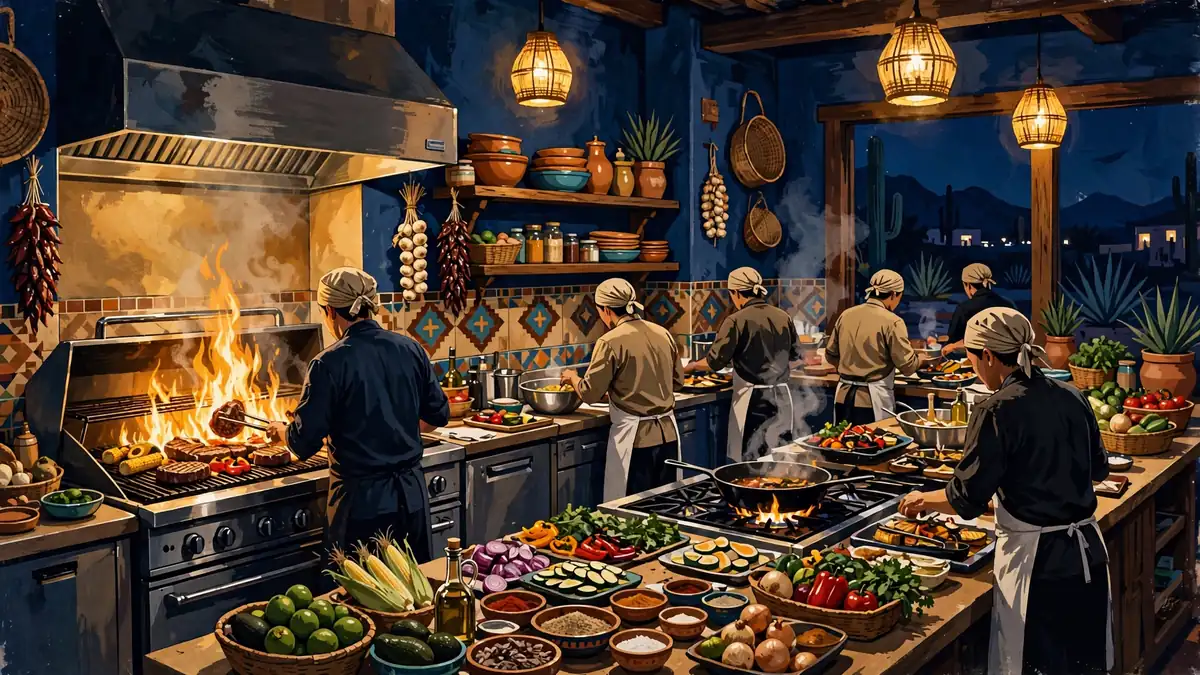
Flay’s current restaurant list is shorter than it was at its widest, and that is a deliberate choice rather than a retreat. The rooms operating today are Amalfi, a coastal Italian restaurant in Las Vegas that grew out of the old Mesa Grill space at Caesars Palace; Brasserie B, a Parisian steakhouse also at Caesars Palace; and Bobby’s Burgers, the fast-casual burger chain with locations in Las Vegas casinos, at Yankee Stadium in New York, in Charlotte, North Carolina, and elsewhere. Bobby’s Burger Palace, the earlier version of the burger concept, still operates in a few spots including Uncasville, Connecticut, and Atlanta, Georgia.
The closed rooms tell their own story. Mesa Grill in New York ran from 1991 to 2013. Bolo ran from 1993 to 2007. Bar Americain closed, Gato ran from 2014 to 2021, and Bobby Flay Steak in Atlantic City ran from 2006 to 2021. A chef who keeps every restaurant he ever opened is a chef who never takes a risk; Flay’s record shows a willingness to close a room that has run its course and put the energy somewhere new. The Las Vegas footprint is the clearest example — the Mesa Grill space became Amalfi, and the steakhouse concept moved into Brasserie B, both inside the same casino complex where the customers are already walking past the door.
What the restaurant business gives Flay that television cannot is ownership of something that outlives a contract. A television deal ends; a restaurant stake can be sold, franchised or passed on. The burger chain is the best example of that logic at work: a single burger recipe, repeated across dozens of high-traffic locations, with franchise fees flowing back to the brand. It is a smaller version of the model that made other celebrity chefs far richer than Flay, and it is the part of his empire with the most room left to grow.
Cookbooks, Endorsements and Side Ventures
Flay’s publishing career started early and never stopped. His first book, Bobby Flay’s Bold American Food, arrived in 1994, three years after Mesa Grill opened, and it set the pattern: bold Southwestern flavours, grilling, and recipes a home cook could actually follow. The books that followed — Grill It!, Bobby Flay’s Barbecue Addiction, Grilling For Life, Bobby at Home and others — kept him on bookstore shelves through every phase of his television career. More than a dozen titles in, the backlist is a slow, steady income stream that needs no new effort to keep paying.
The endorsement work follows the same logic. Brands pay Flay because his name means something specific to shoppers: fire, grilling, summer cooking, food that tastes bold. Pepsi’s 2024 “Grills Night Out” campaign put him at the centre of a summer grilling push, and it is the kind of deal that pays well precisely because it fits. He has also lent his name to kitchenware and food products over the years. None of these deals is individually worth tens of millions, but stacked across a career they add up to a meaningful share of the fortune.
Made by Nacho deserves a closer look because it shows where Flay’s head is in his sixties. The brand, launched in 2021 and named after his cat Nacho, sells premium cat food — a market that has grown fast as pet owners spend more on what they feed their animals. Flay co-founded it with his daughter Sophie involved in the brand’s story, and it sits in grocery and pet-store aisles rather than on television. It is a real consumer-goods business with manufacturing, distribution and retail shelf space, and it diversifies him away from the food-media world entirely.
His racehorses are the other long-running side venture. Flay has owned thoroughbreds for years, and horse racing is a world where a single good horse can return many times its purchase price — and where most horses do not. He has had winners, and he has stayed in the sport through its ups and downs, which suggests the horses are a genuine interest rather than a one-off splurge. No reliable figure exists for what the stable is worth, so it is not assigned a dollar value here. It counts as an asset class in his portfolio and as a reminder that his money is spread wider than restaurants and television.
Real Estate and Assets
Real estate has been a store of wealth for Flay rather than a profit engine, and the public record of his property deals is unusually clear because the sales were covered in detail. The two headline transactions are both in the past few years, and both show the same pattern: buy well, hold, sell for millions.
The Los Angeles home came first. In February 2021, Flay bought a newly renovated house in the Hollywood Hills’ Bird Streets neighbourhood for $7.6 million, according to People magazine’s reporting at the time. The house, at nearly 5,800 square feet with four bedrooms and five bathrooms, had been listed for close to $9 million before price cuts brought it within reach. Flay listed it for $9.25 million in 2024, then again for $9 million in 2025, and eventually sold it for $8.3 million after almost two years on the market. On the raw numbers that is a gain of about $700,000 over the purchase price, before the costs of holding and selling — a solid result rather than a windfall, and a reminder that even celebrity homes do not always sell at the asking price.
The New York sale took longer. Flay’s Chelsea duplex at 252 Seventh Avenue — a 3,256-square-foot, three-bedroom apartment in the Chelsea Mercantile building, with a professional-grade kitchen designed with and for a chef — was listed for $7.95 million in 2015 after his divorce from Stephanie March. It sat on the market for years, was offered for rent at $22,500 a month in 2016, and finally sold in January 2022 for $5.6 million, according to the New York Post. Seven years on the market and a sale well below the original asking price is a cautionary tale about luxury property, but it also freed up millions in capital at a time when Flay was shifting his life toward Los Angeles, where his daughter Sophie lives.
Flay also held an Amagansett home in the Hamptons, which he received as part of the divorce settlement with March. Beyond property, his assets include the restaurant equity and brand stakes described above, the cookbook backlist, and the racehorses. He is not known for a flashy car collection or a string of luxury purchases in the press, and this article does not invent one. The money story here is a working fortune — television pay, business equity and property — rather than a display of spending.
Net Worth Growth: Year by Year
Because Flay has never published his finances, the growth of his fortune has to be traced through the public markers: the deals, the openings, the sales, and the estimates that trackers published along the way. The picture that emerges is steady growth with one clear acceleration in the 2010s, when television money and restaurant scale arrived together.
| Period | What Happened |
|---|---|
| 1991–1993 | Mesa Grill opens; Best Restaurant from New York Magazine in 1992; James Beard Rising Star Chef of the Year in 1993. Flay becomes a partner, not just an employee — the first equity he ever holds. |
| 1994–2004 | First cookbook in 1994; Food Network hosting begins; Bolo, Bar Americain and the Las Vegas Mesa Grill open. Wealth grows steadily but modestly — a working chef’s fortune, built on salaries and restaurant stakes. |
| 2005–2012 | Iron Chef America makes him a national name. Forbes records yearly earnings of about $9 million in 2012. The burger chain scales toward 19 locations. This is the period when the fortune moves from single-digit millions into the tens of millions. |
| 2013–2019 | Beat Bobby Flay becomes a long-running hit; Hollywood Walk of Fame star in 2015; Chelsea duplex listed in 2015; Gato opens and closes. Public estimates of his net worth settle around $30 million by the end of the decade, per Wikipedia’s figure as of September 2019. |
| 2020–2021 | Los Angeles home bought for $7.6 million; Made by Nacho launches; contract talks with Food Network turn tense as Flay reportedly seeks a $100 million deal. A new three-year agreement follows. |
| 2022–2024 | Chelsea duplex finally sells for $5.6 million; Bobby’s Triple Threat premieres; LA home listed; a fresh multiyear Food Network deal signed in 2024. Estimates climb toward $60 million. |
| 2025–2026 | LA home sells for $8.3 million; The Line premieres September 8, 2026; relationship with chef Brooke Williamson reported. Parade (January 2026, updated August 2026) and Celebrity Net Worth anchor the fortune at $60 million. |
The jump from roughly $30 million in 2019 to $60 million in 2026 is the part of the story that deserves a careful look. It is not explained by a single deal. It is the combined effect of a bigger television contract, a burger chain that kept expanding, property sales that converted bricks into cash, and the simple fact that a man earning eight figures a year from television keeps most of it when his lifestyle is not extravagant. The $60–80 million range from ThrillNG is best read as the optimistic end of that same story: if the burger chain and Made by Nacho keep growing, the upper end of the range is reachable. The $45 million outlier from themost10, dated April 2025, looks like an older number that was never updated for the 2024 deal and the 2026 reporting.
Bobby Flay vs. Gordon Ramsay and Guy Fieri

Flay’s fortune looks different once it sits next to the two chefs he is most often compared with. Gordon Ramsay, the British chef with a global restaurant empire of more than 58 restaurants, is estimated at about $220 million — more than three times Flay’s figure. Ramsay’s scale is the difference: restaurants on four continents, a production company, and a television presence in multiple countries. Flay’s empire is American, focused, and smaller by design. Readers who want the full picture of the other side of that rivalry can read Gordon Ramsay’s age profile on this site.
Guy Fieri sits on the other side of Flay. Parade puts Fieri at an estimated $130 million — more than double Flay’s $60 million — and the gap comes mostly from one deal: Fieri signed an $80 million three-year Food Network contract in 2021, months before Flay’s own contract talks. Fieri also has a wider licensing business, with restaurants, sauces and merchandise carrying his name into grocery aisles across America. Flay’s deal, whatever its final size, was reported to be smaller, and his licensing footprint is narrower. The full story of Fieri’s rise is covered in Guy Fieri’s biography on this site.
| Chef | Estimated Net Worth (2026) |
|---|---|
| Gordon Ramsay | About $220 million (eathealthy365 comparison, early 2026) |
| Guy Fieri | About $130 million (Parade, 2026) |
| Bobby Flay | $60 million (Parade, January 2026, updated August 2026; Celebrity Net Worth) |
| Emeril Lagasse | About $70 million (widely cited 2025–2026 estimates) |
The comparison is not a ranking of talent. It is a ranking of business models. Ramsay built a global restaurant group. Fieri built a licensing machine and signed the biggest talent deal in Food Network history. Flay built a durable, diversified career — television, restaurants, books, brands — without ever betting everything on one expansion. His $60 million is smaller than theirs, but it is also less exposed to any single failure. For a reader weighing the three, the lesson is that the same channel produced three very different fortunes, and Flay’s is the one built most on longevity.
Personal Life: Marriages, Daughter and Relationships
Flay has been married three times, and each marriage is part of the public record. He married fellow chef Debra Ponzek on May 11, 1991 — the same year Mesa Grill opened — and they divorced in 1993. In 1995 he married television host Kate Connelly, whom he had met when he appeared as a guest on her Food Network show; their daughter Sophie was born on April 16, 1996, and the couple divorced in 1998. His third marriage, to actress Stephanie March, began on February 20, 2005, and ended in a divorce finalised on July 17, 2015, after the couple separated in March of that year. The divorce was widely covered, and Flay received the Chelsea apartment and the Amagansett home as part of the settlement.
Sophie Flay has built a media career of her own as a journalist and on-air personality, and she has worked with her father on television and on the Made by Nacho brand. Flay’s move to Los Angeles in 2021 was tied to her living there, and the father-daughter relationship is one of the warmer threads in his public life. For the full story of his life beyond the money — his age, his early years, his marriages and his restaurants in one place — readers can see Bobby Flay’s full biography on GuideNetWorth, our sister site.
Since the divorce from March, Flay’s relationships have been covered in the press without ever becoming a circus. He dated actress Heléne Yorke from 2016, and later writer and lifestyle editor Christina Pérez, a relationship reported from 2021. In 2025 he began dating chef Brooke Williamson, and the two hosted cooking demonstrations together at the 2026 Food & Wine Classic in Aspen. The Williamson relationship is the current one in reporting as of late 2026, though Flay keeps his private life quieter than most celebrities of his standing, and this article does not speculate beyond what reputable outlets have reported.
Contract Talks and Public Disputes
Flay’s career has had its share of friction, and the most consequential episode came in 2021, when his contract talks with Food Network turned into a public standoff. Reports at the time said Flay was seeking a deal worth $100 million, and that the two sides had failed to agree on terms. For a few weeks it looked as though the network’s longest-serving star might walk away. In the end he signed a new three-year agreement, and then the multiyear deal of 2024 that keeps him on the channel today. The episode matters for the money story because it showed Flay negotiating from strength — he knew what he was worth to the network, and the network eventually paid something close to it. It also set the pattern for the Guy Fieri comparison above: Fieri’s $80 million deal, signed months earlier, had reset the market for Food Network stars, and Flay’s ask was a response to that new reality.
An earlier flashpoint came in 2000, on the original Japanese Iron Chef, when Flay faced Masaharu Morimoto and, after winning, stood on his cutting board in celebration. Japanese viewers and Morimoto saw the gesture as disrespectful; Flay later said he had not understood the offence and apologised. The moment followed him for years, but it also built the rivalry that Iron Chef America later turned into appointment television. It is a reminder that the same competitive edge that made Flay a star also made him enemies — and that television knew how to sell both.
His divorce from Stephanie March in 2015 was the third public split of his life, and it played out in the press with the usual round of claims about property and money. The settlement gave Flay the Chelsea duplex and the Amagansett house, and the long, slow sale of the Chelsea apartment — seven years, from a $7.95 million listing to a $5.6 million sale — is a matter of public record. None of these episodes damaged his career in a lasting way. The television work continued, the restaurants kept opening, and the fortune kept growing. That resilience is part of why the $60 million figure is credible: it was built across setbacks, not in a single lucky run.
Frequently Asked Questions
What is Bobby Flay’s net worth in 2026?
Bobby Flay’s net worth is estimated at $60 million as of November 2026. Parade, in a profile published in January 2026 and updated in August 2026, puts the figure at $60 million, and Celebrity Net Worth agrees. ThrillNG gives a wider range of $60–80 million. A lower outlier of $45 million from themost10 (April 2025) sits well below the consensus and appears stale. The honest anchor is $60 million, with $60–80 million the fair range.
How much does Bobby Flay make from Food Network?
His exact salary has never been disclosed. The best public markers are Forbes, which put his yearly earnings at about $9 million in 2012, and the reporting around his later deals — he reportedly sought a $100 million deal in 2021, signed a new three-year agreement, and then a fresh multiyear deal in 2024. Parade’s 2026 reporting suggests his current annual pay from the network runs into strong eight figures, but that is an estimate based on the shape of the deal, not a leaked contract.
What restaurants does Bobby Flay own in 2026?
His current restaurants are Amalfi and Brasserie B, both at Caesars Palace in Las Vegas, and the Bobby’s Burgers fast-casual chain, with locations in Las Vegas casinos, at Yankee Stadium in New York, in Charlotte, North Carolina, and elsewhere. His earlier restaurants include Mesa Grill (New York 1991–2013 and Las Vegas), Bolo, Bar Americain, Gato, and Bobby Flay Steak in Atlantic City.
Is Bobby Flay still on Food Network in 2026?
Yes. He signed a multiyear deal with Food Network in 2024, and his newest series, The Line, premiered on September 8, 2026. He also continues with Beat Bobby Flay and Bobby’s Triple Threat, giving him more than thirty years of near-continuous presence on the network.
Who is Bobby Flay dating now?
As of late 2026, Bobby Flay is reported to be dating chef Brooke Williamson, a relationship that began in 2025. The two hosted cooking demonstrations together at the 2026 Food & Wine Classic in Aspen. Before Williamson, he was reported to be in a relationship with writer and lifestyle editor Christina Pérez from 2021.
How many times has Bobby Flay been married?
Three times. He married chef Debra Ponzek in 1991 (divorced 1993), television host Kate Connelly in 1995 (divorced 1998), and actress Stephanie March in 2005 (divorce finalised in 2015). He has one daughter, Sophie Flay, born in 1996 during his marriage to Kate Connelly.
What is Bobby Flay’s most famous show?
Beat Bobby Flay, which premiered in 2013 and became one of Food Network’s signature shows, is his most famous format as a host. His longest-running claim to fame, though, is Iron Chef America, where he served as one of the original Iron Chefs from 2005 for more than a decade.
How did Bobby Flay get rich?
Through four streams at once: more than thirty years of Food Network television contracts, restaurant ownership and the Bobby’s Burgers chain, more than a dozen cookbooks, and endorsements such as Pepsi’s 2024 “Grills Night Out” campaign — plus side ventures including the Made by Nacho pet-food brand and thoroughbred racehorses, and two multimillion-dollar property sales in New York and Los Angeles.
Bottom Line
Bobby Flay’s net worth of $60 million in 2026 is the fortune of a chef who never stopped working and never bet everything on one thing. The television money is the biggest piece, built on thirty-plus years at Food Network and a 2024 multiyear deal that still pays. The restaurants are the second piece, with Amalfi, Brasserie B and Bobby’s Burgers carrying the name forward. The books, the endorsements, the pet-food brand and the racehorses fill in the rest, and the property sales in New York and Los Angeles turned bricks into cash along the way.
He is not the richest chef on television — Gordon Ramsay’s global empire and Guy Fieri’s record deal both sit well above $60 million — but his fortune is the most durable of the three, because no single contract or restaurant carries it. If the burger chain keeps expanding and Made by Nacho keeps growing, the $80 million end of the range is within reach. For now, $60 million is the figure the evidence supports, and it is a fair price for a career that began with a busboy’s job at Joe Allen and ended with a star on the Hollywood Walk of Fame. Browse more chef fortunes in our Net Worth section.
Sources and How We Estimated
How we estimated: Bobby Flay has never published his finances, and no public filing lists his assets or debts. The $60 million figure is an estimate assembled from named sources: Parade’s 2026 profile (published January 2, 2026, updated August 7, 2026) anchors the number at $60 million, and Celebrity Net Worth, cited by The List, agrees. ThrillNG’s range of $60–80 million is reported as the upper reading, and themost10’s $45 million (April 2025) is noted as a low outlier that sits below the consensus. Salary and contract figures come from Forbes (2012 yearly earnings of about $9 million) and Parade’s reporting on the 2021 talks and the 2024 deal. Property figures come from People (Los Angeles purchase, 2021), the New York Post via Mashed and Dan’s Papers (Chelsea sale, 2022), and Homes of Celebs (Los Angeles sale, $8.3 million). Biographical facts were checked against Wikipedia and the outlets below. Where sources disagreed, this article publishes the range and says which source anchors it. Estimates may differ from private reality.
Sources consulted: Parade, Celebrity Net Worth, The List, ThrillNG, Forbes, Wikipedia, Food Network, Mashed, People, EatHealthy365.