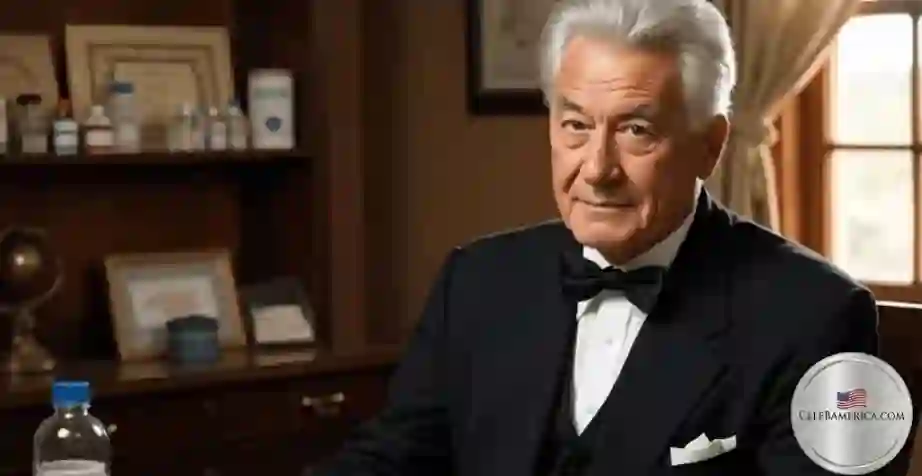
Milburn Stone, best known to generations of television viewers as the sharp-tongued yet deeply compassionate Dr. Galen “Doc” Adams on CBS’s iconic Western series Gunsmoke, had an estimated net worth between $300,000 and $600,000 at the time of his death in June 1980. Adjusted for cumulative inflation to modern values, that estate equals approximately $2.3 million to $2.5 million.
While many internet entertainment pages casually assign Stone a flat “$2 million net worth,” that figure represents a modern, inflation-adjusted retrospective valuation rather than the liquid cash he held in 1980. Stone built his financial standing over a five-decade acting career spanning vaudeville, Broadway, more than 150 feature films, and an unbroken 20-season run on one of the most successful primetime dramas in television history.
Net-worth figures are estimates based on publicly available historical records, published contract reporting, and contemporary estate filings, and may not reflect private family trusts, liabilities, or undisclosed financial arrangements.
Milburn Stone: Quick Financial & Career Summary
| Biographical & Financial Metric | Details & Verified Data |
|---|---|
| Full Name | Hugh Milburn Stone |
| Born | July 5, 1904 (Burrton, Kansas) |
| Died | June 12, 1980 (Age 75, La Jolla, California) |
| Primary Claim to Fame | Dr. Galen “Doc” Adams on Gunsmoke (1955–1975) |
| Total Gunsmoke Episodes | 604 episodes (20 seasons) |
| Estimated Net Worth at Death (1980) | $300,000 – $600,000 |
| Inflation-Adjusted Value (Modern Purchasing Power) | $2.3 Million – $2.5 Million |
| Early Gunsmoke Episodic Pay | Approx. $500 – $750 per episode (1950s) |
| Peak Gunsmoke Episodic Pay | Estimated $2,500 – $5,000+ per episode (1970s) |
| Major Industry Award | Primetime Emmy Award for Outstanding Supporting Actor (1968) |
| Key Real Estate Asset | Custom ranch residence in Rancho Santa Fe, California |
Early Career: From Vaudeville to Universal Pictures
Before donning the frock coat and stethoscope in Dodge City, Milburn Stone had already completed decades of rigorous professional stage and screen work. Raised in Burrton, Kansas, Stone began touring in traveling tent shows and vaudeville acts during the 1920s alongside his partner in the troupe “Stone and Strain.”
By the mid-1930s, Stone transitioned to Hollywood as a dependable contract player, primarily at Universal Pictures. Between 1935 and 1955, he appeared in roughly 150 motion pictures, ranging from major studio releases like Young Mr. Lincoln (1939) and Alfred Hitchcock’s Sherlock Holmes Faces Death (1943) to popular serials such as Tailspin Tommy in The Great Air Mystery (1935).
During Hollywood’s Golden Age studio system, supporting players generally earned weekly studio salaries rather than profit participations. While this studio model provided steady employment through the Great Depression and World War II, it generated modest, regular income rather than generational wealth.
The Gunsmoke Years (1955–1975): Salary and Contract Growth
Stone’s financial breakthrough arrived in 1955 when CBS cast him as Dr. Galen Adams in the television adaptation of Gunsmoke. Alongside star James Arness (Marshal Matt Dillon), Stone remained an anchor of the production for its entire 20-season run, ultimately appearing in 604 episodes.
Early Seasons Episodic Rates
When Gunsmoke premiered in half-hour black-and-white installments in 1955, television budgets were relatively conservative. Supporting stars Milburn Stone, Amanda Blake (Miss Kitty Russell), and Dennis Weaver (Chester Goode) earned base salaries reported between $500 and $750 per episode. While respectable for the mid-1950s, these figures represented standard contract rates for network character actors.
Contract Renegotiations and Syndication Realities
As Gunsmoke climbed to the number-one rating spot in America between 1957 and 1961, the cast leveraged their popularity for substantial raises. By the late 1960s and early 1970s, as the series transitioned to hour-long color episodes, Stone’s episodic compensation rose significantly, reaching an estimated $2,500 to $5,000 or more per episode.
Unlike contemporary television contracts that grant primary stars perpetual, lucrative syndication percentages, Screen Actors Guild (SAG) agreements in the 1950s and 1960s generally placed caps on residual payments after a fixed number of reruns. Although Stone fought assertively in contract negotiations to secure fair residual compensation for supporting character actors, the multi-million-dollar rerun windfalls enjoyed by modern television stars did not exist under network formulas of that era.
Real Estate & Retirement Assets in Rancho Santa Fe
Stone invested his television earnings conservatively, prioritizing high-value real estate over speculative market ventures. Following his retirement when CBS concluded Gunsmoke in 1975, Stone and his wife, Jane Morrison Stone, settled in the affluent enclave of Rancho Santa Fe in San Diego County, California.
Stone designed and built a custom single-story, U-shaped “horseshoe” ranch home on the property, complete with a private office and panoramic views of the surrounding valley. The Rancho Santa Fe residence represented a substantial portion of Stone’s overall personal wealth and served as the family home until his passing, with his widow Jane continuing to reside there until her death in 2002.
Estate Valuation at Death and Modern Inflation Context
When Milburn Stone passed away from a heart attack at Scripps Memorial Hospital in La Jolla on June 12, 1980, contemporary probate and estate estimates valued his assets between $300,000 and $600,000. This estate comprised his Rancho Santa Fe real estate holdings, accumulated savings, life insurance policies, and SAG retirement pension benefits.
To put this historical estate figure into perspective, consumer price index (CPI) calculations demonstrate substantial purchasing power changes:
- 1980 Baseline Valuation: $300,000 to $600,000
- Cumulative Inflation Multiplier (1980 to Present): Approximately 3.8x to 4.0x
- Modern Value Equivalent: Approximately $1.15 million to $2.4 million
This economic reality explains why modern online databases frequently estimate his net worth at “$2 million.” While technically accurate as an inflation-adjusted metric, describing Stone as having had a “$2 million fortune” during his lifetime misrepresents the financial landscape of 1970s television actors.
Philanthropic Legacy: The Milburn Stone Theatre
Stone’s wealth extended into a tangible cultural legacy. In the years following his death, his estate and his widow Jane Stone contributed funding, personal artifacts, and memorabilia to establish a permanent performing arts center.
In 1992, Cecil College in North East, Maryland, dedicated the Milburn Stone Theatre in his honor. The 450-seat venue serves as a regional cultural cornerstone, hosting community stage productions, concerts, and arts education programs funded in part through memorial gifts originating from Stone’s estate.
Frequently Asked Questions About Milburn Stone’s Net Worth
What was Milburn Stone’s net worth when he died?
At the time of his death in June 1980, Milburn Stone’s net worth was estimated between $300,000 and $600,000. In today’s purchasing power, that estate is equivalent to roughly $2.3 million to $2.5 million.
How much did Milburn Stone make per episode of Gunsmoke?
In the early seasons of Gunsmoke during the late 1950s, Stone earned approximately $500 to $750 per episode. By the show’s final seasons in the 1970s, his compensation had increased to an estimated $2,500 to $5,000 or more per episode.
Did Milburn Stone receive rerun royalties from Gunsmoke?
Stone received television residuals under the standard SAG contracts of his era, but early television agreements typically capped rerun payments after a fixed number of broadcasts. Unlike modern actors who earn lifetime percentages from cable and streaming syndication, 1960s character actors did not receive perpetual profit shares.
Who inherited Milburn Stone’s estate?
The primary beneficiary of Milburn Stone’s estate was his wife of 41 years, Jane Morrison Stone, who maintained their Rancho Santa Fe residence and later helped fund the Milburn Stone Memorial Theatre at Cecil College.