Lana Del Rey’s net worth in 2026 sits somewhere between $30 million and $60 million, and the honest answer is that nobody outside her own circle knows the exact number. Celebrity Net Worth puts her at $60 million, a figure Parade repeated in its November 4, 2026 update, while Far Out Magazine and NetWorthSpot both land near $30 million. Other trackers fall in between, with one $40 million estimate in the mix. This page uses the full $30 million to $60 million range, anchored at the top by Celebrity Net Worth’s $60 million, and explains why two serious-looking sources can disagree by a factor of two about the same singer.
What is not in dispute is the scale of the career behind the money. Born Elizabeth Woolridge Grant on June 21, 1985, in Manhattan, New York, Lana Del Rey has released nine studio albums, sold more than 47 million records, draws over 62 million monthly listeners on Spotify, and has collected 11 Grammy nominations without a single win as of September 2026. She headlined Coachella in 2024, played stadiums through 2025, and in September 2024 married Louisiana airboat captain Jeremy Dufrene in a small ceremony on the bayou where he works. Her tenth album, a country-leaning record now called Stove, has been delayed so often that its shifting titles have become a story of their own. Last updated November 18, 2026.
By Celebamerica Editorial Staff
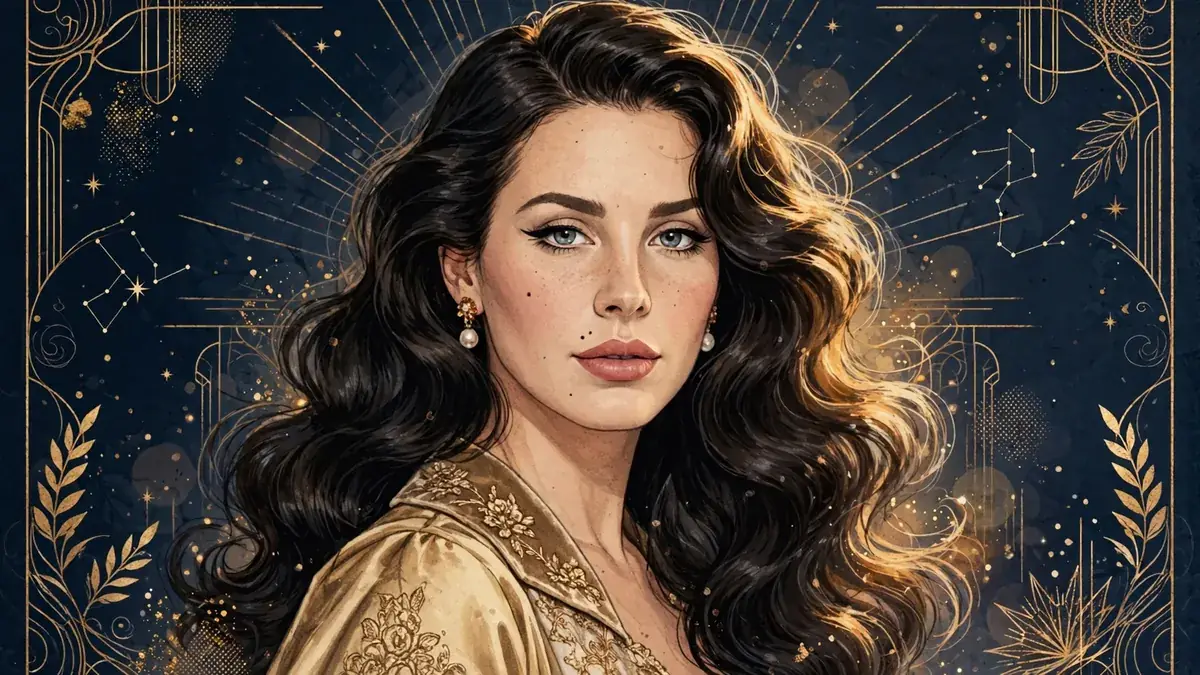
Lana Del Rey at a Glance
| Full Name | Elizabeth Woolridge Grant |
|---|---|
| Date of Birth | June 21, 1985 |
| Birthplace | Manhattan, New York City, United States |
| Estimated Net Worth (2026) | $30 million – $60 million (Celebrity Net Worth: $60 million; Far Out Magazine and NetWorthSpot: about $30 million) |
| Primary Income Sources | Music streaming and royalties, album sales, touring and festival fees, songwriting and publishing, film and television licensing, fashion and brand work |
| Key Works | Born to Die (2012), Ultraviolence (2014), Norman Fucking Rockwell! (2019), Did You Know That There’s a Tunnel Under Ocean Blvd (2023); singles “Video Games”, “Summertime Sadness”, “Young and Beautiful” |
| Records Sold | More than 47 million worldwide across nine studio albums |
| Monthly Spotify Listeners | More than 62 million |
| Grammy Nominations | 11 nominations, no wins as of September 2026 |
| Spouse | Jeremy Dufrene, Louisiana airboat captain and alligator tour guide (married September 26, 2024) |
| Height | 5 feet 7 inches |
Table of Contents
- Lana Del Rey at a Glance
- Who Is Lana Del Rey?
- Early Life and Family Background
- The Long Climb: From Lizzy Grant to Video Games
- Nine Albums and a Catalog That Keeps Paying
- How Lana Del Rey Makes Her Money
- Touring: The Slow Build to Stadium Money
- Fashion, Film and Brand Work
- Real Estate and Assets
- Net Worth Growth Over the Years
- How She Compares With Her Peers
- Personal Life and Marriage to Jeremy Dufrene
- Stove: The Country Album That Keeps Moving
- Public Scrutiny and Controversies
- Frequently Asked Questions
- Final Thoughts: The Bottom Line
- Sources and How We Estimated
Who Is Lana Del Rey?
Lana Del Rey is an American singer-songwriter whose music built a whole mood before it built a fortune. Her sound — slow, cinematic songs about old Hollywood, American romance, bad decisions and beautiful sadness — has never chased the radio trends of the moment, and that refusal is exactly why her catalog still earns. A Lana Del Rey song recorded in 2012 can find a new audience on TikTok in 2025, and the streaming cheques follow. That slow-burn catalog is the financial spine of her wealth: nine albums, a deep bench of beloved songs, and a fan base that streams her work year after year rather than for a single chart week.
She is also one of the rare pop stars whose fame grew without a constant churn of hit singles. She has never had a number-one single on the Billboard Hot 100, yet she sells out stadiums, headlines Coachella, and holds more than 62 million monthly listeners on Spotify. Her career is proof that in the streaming era, a devoted audience can be worth more than a casual one. Her fans do not just hear her songs; they memorise them, tattoo the lyrics, and buy the vinyl. That kind of loyalty turns into steady royalty income, and steady royalty income, collected over fourteen years, turns into tens of millions.
The public first met her as a mystery. When “Video Games” appeared on YouTube in the summer of 2011, the homemade video and the smoky voice felt like they came from another decade. The mystery was deliberate: Elizabeth Woolridge Grant had spent years trying on names and sounds — Lizzy Grant, May Jailer — before the Lana Del Rey persona clicked. What looked like an overnight arrival was really the end of a long apprenticeship, and the money followed the same pattern. There was no single payday that made her rich. There was a catalog, built album by album, that kept paying while she kept working.
Early Life and Family Background
Elizabeth Woolridge Grant was born on June 21, 1985, in Manhattan, New York, and raised largely in Lake Placid, in upstate New York. Her father, Rob Grant, is a real estate broker and the president and CEO of Web Media Properties, and Parade has noted that she comes from a millionaire family whose backing did not hurt her early career. Her mother, Patricia Ann Hill, worked as an advertising account executive before becoming a schoolteacher. She grew up with a younger sister, Caroline — known as Chuck — who became a photographer and has worked closely with her, and a younger brother, Charlie.
The Lake Placid childhood sounds ordinary on the surface and anything but ordinary underneath. She has spoken about being sent to boarding school in Connecticut at fourteen, at Kent School, after struggles with drinking as a teenager — an experience she later folded into her songwriting. She has been open about getting sober young, and that early reckoning with herself shaped the confessional streak that runs through her lyrics. The songs are full of girls who make bad choices and know it, and the candour started at home.
After school she studied philosophy at Fordham University in the Bronx, graduating in 2008 with a degree that centred on metaphysics. The philosophy degree is not a footnote; it shows up in the writing. Her lyrics are thick with references to religion, fate, American myth and the gap between what people want and what they get. While she was still a student she was already writing songs and playing small shows in New York clubs, trying out the folk-leaning material that would later harden into her signature sound. She has said the philosophy degree could have led her toward teaching, and the alternate-universe version of her life — the academic — still peeks through the songs.
Money was never absent from the story, and that matters for an honest net worth picture. Her father’s real estate work meant the family was comfortable, and that comfort bought her something most young musicians do not get: time. She could spend years writing, recording and failing in public without needing a day job to survive. That is not a criticism — plenty of wealthy kids never make a record anyone remembers — but it is part of how the fortune was built. The family money funded the apprenticeship; the talent turned the apprenticeship into a career.
The Long Climb: From Lizzy Grant to Video Games
Before Lana Del Rey existed, there was Lizzy Grant. In 2008 she recorded an EP under that name, and in 2010 a full album, Lana Del Ray A.K.A. Lizzy Grant, was briefly released and then pulled from sale. The record did not sell, the deal fizzled, and by most measures the project was a failure. But the failure taught her what she did not want to be: a straightforward folk singer with a guitar and a coffeehouse voice. She went back to the drawing board, took the name from actress Lana Turner and a Ford Del Rey car, and rebuilt the sound from scratch — slower, sadder, more cinematic, with strings and hip-hop drums under a voice that sounded like it was singing from the back seat of a convertible at dusk.
The rebuild worked with shocking speed. In July 2011 she uploaded a self-made video for “Video Games” to YouTube — old film clips, webcam footage of herself singing, nothing expensive — and the internet did the rest. The song spread through blogs and social feeds until it was impossible to ignore. By the end of the year she had signed with Interscope and Polydor, and in January 2012 Born to Die arrived. The album went to number two in the UK and number two in the US, and it has stayed on the charts in one form or another ever since. Forbes has noted that it became only the second album by a solo female musician to pass 550 weeks on the Billboard 200 — a chart run that keeps generating royalties more than a decade after release.
The early fame came with a bruising. Her January 2012 performance on Saturday Night Live was widely panned as stiff and nervous, and for a while the conversation about her was less about the songs than about whether she was “real” — an authenticity debate that followed her for years. She answered it the only way that works: she kept releasing records. Paradise, an EP of eight more songs, arrived later in 2012. The Cedric Gervais remix of “Summertime Sadness” became a genuine hit in 2013, reaching the top ten of the Billboard Hot 100, and “Young and Beautiful”, written for Baz Luhrmann’s The Great Gatsby, gave her a Grammy nomination and a song that still earns from film and television licensing.
By 2014 the question had changed. Ultraviolence, produced with Dan Auerbach of the Black Keys, debuted at number one in the US and showed a harder, guitar-driven edge. The critics who had doubted her started writing about her as a serious album artist, and the audience that had found her through one viral video stayed for the records. That shift — from viral curiosity to album artist with a loyal base — is the moment her finances changed too. Album artists earn differently from singles artists: the whole catalog sells, the tours grow, and the publishing income compounds.
Nine Albums and a Catalog That Keeps Paying
Counting the records is the fastest way to understand the money. Lana Del Rey has released nine studio albums, and almost none of them behaved like a normal pop album — released, promoted for three months, then forgotten. Her albums have long tails. Fans return to them, new listeners discover them years late, and streaming services keep paying for every play. That is why the catalog matters more to her net worth than any single release.
The run goes like this. Lana Del Ray A.K.A. Lizzy Grant (2010) was the shelved debut that barely counted at the time and counts now. Born to Die (2012) made her a star and remains her best-selling album, with its songs still racking up streams. Ultraviolence (2014) gave her a first US number one and a rock edge. Honeymoon (2015) was a quieter, jazzier record that her fans treat as a favourite. Lust for Life (2017) brought collaborations with The Weeknd, Stevie Nicks and Sean Lennon, and another US number one. Then came Norman Fucking Rockwell! in 2019, the record most critics call her best — a Grammy Album of the Year nominee that cemented her as one of the defining album artists of her generation. She followed it with two albums in a single year, Chemtrails Over the Country Club and Blue Banisters (both 2021), and then Did You Know That There’s a Tunnel Under Ocean Blvd in 2023, which earned another Album of the Year nomination.
Two things about that run matter financially. First, she writes or co-writes nearly everything she records, which means she holds a songwriter’s share of the publishing income on top of the performer’s share — a double stream that adds up across hundreds of songs. Second, she has never sold her catalog. In an era when legacy artists have sold their publishing rights for nine-figure sums, her catalog still belongs to her, and every stream, sync placement and vinyl repress flows through rights she still controls. That ownership is a large part of why the top-end $60 million estimate is plausible, and why the low-end $30 million estimate looks too small to some observers: a catalog of this depth, still owned by the artist, is worth a great deal even before you count touring.
The numbers behind the catalog are striking. More than 47 million records sold worldwide. Over 62 million monthly listeners on Spotify, a figure that puts her among the most-streamed artists on the platform despite releasing music far less often than her peers. Eleven Grammy nominations, including two for Album of the Year, and no wins as of September 2026 — a stat her fans bring up constantly, and one that has arguably helped her: the “never won a Grammy” story keeps her in the conversation every awards season. She has also published poetry — Violet Bent Backwards Over the Grass (2020), released as both a book and a spoken-word album — which adds a small but real extra income stream and underlines that she is a writer first, a pop star second.

How Lana Del Rey Makes Her Money
Her income comes from the classic singer-songwriter stack, and the proportions are different from a typical pop star’s. Touring and streaming do the heavy lifting, publishing adds a steady second layer, and fashion and film work fill in the gaps. Parade has reported that she earns approximately $3 million to $5 million a year — a believable run-rate for an artist of her size in a normal year, before a big tour or album cycle pushes it higher.
| Income Stream | What It Looks Like for Lana Del Rey |
|---|---|
| Streaming and Royalties | More than 62 million monthly Spotify listeners across nine albums; a catalog that streams steadily year-round rather than spiking and fading. The Born to Die catalog alone has spent 550-plus weeks on the Billboard 200. |
| Album and Vinyl Sales | More than 47 million records sold worldwide; her albums are strong vinyl sellers, and vinyl carries far better margins than streaming. |
| Touring and Festivals | Tour grosses have grown every cycle: $6 million (Endless Summer, 2015), $22.5 million (LA to the Moon, 2018), $8 million across 20 shows (Norman Fucking Rockwell tour, 2019), then a 2024 Coachella headline set and 2025 stadium dates. |
| Songwriting and Publishing | She writes or co-writes nearly all her material, so she collects a songwriter’s share alongside the performer’s share — and she still owns her catalog. |
| Film and TV Licensing | “Young and Beautiful” for The Great Gatsby, “Once Upon a Dream” for Maleficent, “Big Eyes” for Tim Burton’s film of the same name; her songs are licensed constantly for film, television and advertising. |
| Fashion and Brand Work | Early H&M campaign (2012), the Mulberry bag named after her, a Jaguar F-Type campaign; more recent fashion work has been selective rather than constant. |
| Books and Poetry | Violet Bent Backwards Over the Grass (2020) as a book and spoken-word album — a smaller stream, but one she owns outright. |
Streaming deserves a closer look, because it is the engine that never stops. A singer with 62 million monthly listeners earns every month whether or not she releases anything. Her catalog is unusually well suited to streaming: the songs are atmospheric and repeatable, fans play whole albums rather than single tracks, and older songs keep finding new listeners through TikTok and film placements. “Summertime Sadness” had a second life years after release; “Video Games” still streams heavily fourteen years on. That durability is what separates her from artists who earn big in a release year and then fade. Her income does not depend on staying on the charts — it depends on a catalog that people never stop playing.
Publishing is the quieter money, and it may be the most important. Because she writes her own songs, she earns as a songwriter every time one of her tracks is streamed, played on the radio, covered by another artist, or licensed for a film. Fellow hit songwriter Ed Sheeran built a large part of his own fortune the same way, on songs he wrote himself. Songwriters who also perform collect both sides of the royalty split, and across a catalog of hundreds of songs that difference is enormous. It is also the reason her net worth estimates vary so much: the value of a songwriter’s catalog is genuinely hard to pin down from the outside, since the splits, the advances and the private deals are never public. Sources that weight the catalog heavily land near $60 million; sources that count only the visible income land near $30 million.
The film work is worth a paragraph of its own. “Young and Beautiful”, written for The Great Gatsby in 2013, remains one of her most-licensed songs — it plays in trailers, television dramas and wedding videos, and every use pays. She recorded “Once Upon a Dream” for Disney’s Maleficent (2014) and the title song for Tim Burton’s Big Eyes (2014), which earned her a Golden Globe nomination for Best Original Song. These are not one-off paydays; a song placed in a major film earns for years through streaming, licensing and performance royalties. It is the kind of income that does not show up in a tour gross but quietly builds a fortune.
Touring: The Slow Build to Stadium Money
Her touring career is a case study in patience. For years she was known as a studio artist who toured modestly, and the early numbers show it: her 2015 Endless Summer Tour grossed about $6 million. That is real money, but it is a long way from the nine-figure grosses of the biggest pop tours. The growth came gradually. The 2018 LA to the Moon Tour grossed $22.5 million, nearly four times the previous run, as she moved into larger venues and longer runs. The 2019 Norman Fucking Rockwell tour grossed about $8 million across just 20 shows — fewer dates, but bigger rooms and higher prices, a sign that scarcity was working in her favour.
The real step change came in 2024 and 2025. Her Coachella headline set in 2024 — a Friday-night closing slot, the biggest stage in American festival culture — put her in front of a global audience and confirmed her as a top-tier live draw. Top festival headliners command seven-figure fees for a single weekend, and the Coachella slot was followed by a 2025 run of stadium dates, the largest live shows of her career. Pollstar has tracked her live business growing with every cycle, which is not guaranteed: plenty of artists peak early on the road and never get bigger. She did the opposite, getting bigger slowly and then all at once.
Why did it take so long? Partly because she toured less than her peers, and partly because her show is not a spectacle in the usual pop sense — no army of dancers, no flying rigs, just her voice, a band, and a mood. That limits the size of the rooms she can fill until the audience is big enough to come for the songs alone. By 2024 the audience was big enough. The stadium run also matters for the net worth math: touring is the highest-margin income a singer has, because the artist keeps a far larger share of a ticket than of a stream. A single stadium summer can add millions to a fortune in a way that a year of streaming cannot match. If the $60 million top-end estimate is right, the 2024–2025 live run is a big reason why.
There is also a lesson in the touring numbers for anyone reading the $30 million low-end figure. That figure looks backwards: it reflects the artist who toured theatres and mid-size arenas, not the artist who now headlines festivals and stadiums. Net worth trackers update slowly, and the ones still showing $30 million appear to be pricing the Lana Del Rey of 2019, not the one who played Coachella and stadiums in 2024 and 2025. That lag is a large part of the $30 million gap between sources.
Fashion, Film and Brand Work
Fashion found her before the music business fully did. In 2012, at the height of the Born to Die moment, she fronted a campaign for H&M, and Mulberry named a handbag after her — the Del Rey bag — a rare honour for a singer barely a year into fame. She also appeared in a campaign for the Jaguar F-Type sports car. These were not the endless endorsement deals of a celebrity-for-hire; they were style partnerships that fit the image she had built, and they paid well at a time when her music income was still growing.
Since then the brand work has been selective. She has never become a full-time influencer with a new deal every month, and that restraint is consistent with everything else about her career: she protects the image, and the image is the asset. A singer whose brand is vintage Americana and old-Hollywood sadness cannot sell fast fashion every week without breaking the spell. The fashion income is therefore smaller than it could have been, but the brand itself is worth more for the restraint. Her Instagram following — more than 25 million followers — gives her a platform she barely uses for commerce, which is itself a kind of statement.
The film work has been steadier and more lucrative. Beyond the songs already mentioned, her music has become a go-to choice for directors who want a particular mood, and sync licensing — the business of placing songs in films, television shows and adverts — pays every time a track is used. A single placement in a hit show or a global advertising campaign can pay more than a month of streaming. Her songs turn up in prestige television, in film trailers, and in fashion films, and each placement is both a cheque and an advertisement for the catalog. The reported 2026 appearance as radio host Delta Dawne in Grand Theft Auto VI, the year’s biggest video game release, fits the same pattern: a cultural placement that pays and keeps her name in front of a new audience.
Real Estate and Assets
Property is the part of her wealth that leaves a paper trail, and the trail is a familiar Los Angeles story. Variety has reported that she owns several homes in some of Los Angeles’s most expensive neighbourhoods, and Film Daily, citing Variety, reported that she bought a Malibu beachfront home in 2015 for about $3 million and later sold it in a quiet off-market deal for about $3.2 million. A small profit on a beach house is not what made her rich, but the pattern matters: she buys property in prime areas, holds it, and sells without fanfare. That is how working musicians store wealth outside the music business.
What she does not do, at least not publicly, is flash the wealth. There are no social media posts showing off car collections, no interviews about watches or private jets. The assets that can be verified are the homes, the catalog, and the business itself. The rest — investments, savings, private holdings — is private, and any net worth figure that claims precision about those is guessing. That is worth remembering when you see a single number quoted as fact: the real estate can be checked, the touring grosses are reported, and the streaming income can be estimated, but the private accounts cannot be seen. The $30 million to $60 million range is honest precisely because it leaves room for what cannot be known.
Her father Rob Grant’s real estate career is a useful piece of context here. She grew up around property as a business, with a father who ran a real estate brokerage and a media company, and it would be surprising if she had not picked up some of that instinct. The Malibu purchase in 2015, made when she was thirty and only three years into fame, looks like the move of someone who understood that a house on the beach in Malibu is a better store of value than a sports car. The fortune is not just in the songs; it is in the decisions made with the money the songs earned.
Net Worth Growth Over the Years
The honest version of her net worth history is not a smooth upward line with a precise number for every year. No public source tracked her wealth year by year, and anyone who publishes a neat table of annual figures is inventing them. What can be tracked is the career, and the career tells the money story clearly enough. Here is how the fortune grew, milestone by milestone, with the money context for each stage.
| Year | Milestone and Money Context |
|---|---|
| 2011 | “Video Games” goes viral; she signs with Interscope and Polydor. Income is still small — advances and a first record deal — but the platform is built. |
| 2012 | Born to Die sells millions worldwide; H&M and Mulberry deals arrive. First real money, and the album begins its decade-long chart run. |
| 2013–2014 | “Summertime Sadness” remix becomes a top-ten hit; “Young and Beautiful” earns from The Great Gatsby; Ultraviolence hits number one in the US. Touring and licensing income grows. |
| 2015 | Endless Summer Tour grosses about $6 million; Malibu beachfront home bought for about $3 million. The fortune starts to include property. |
| 2017–2019 | Lust for Life tops the US chart; the LA to the Moon Tour grosses $22.5 million; Norman Fucking Rockwell! earns an Album of the Year Grammy nomination and the Norman Fucking Rockwell tour grosses about $8 million in 20 shows. |
| 2020–2021 | Poetry book Violet Bent Backwards Over the Grass is published; two albums in one year (Chemtrails Over the Country Club, Blue Banisters) keep the catalog growing while touring pauses. |
| 2023 | Did You Know That There’s a Tunnel Under Ocean Blvd earns another Album of the Year nomination; streaming income keeps climbing as the catalog ages well. |
| 2024 | Coachella headline set; marriage to Jeremy Dufrene in Louisiana. Festival-headliner fees and a bigger live profile lift earnings sharply. |
| 2025 | Stadium dates — the largest live shows of her career — plus new singles “Henry, Come On” and “Bluebird” ahead of the country album. |
| 2026 | New single “White Feather Hawk Tail Deer Hunter” (February 17, 2026), co-written with her husband; tenth album Stove still pending; estimates now span $30 million to $60 million. |
The pattern in that table is the whole story: a slow, steady build for a decade, then a sharp step up when the live business caught up with the catalog. Most pop fortunes are made in a spike — a huge tour, a huge album, a huge deal — and then they fade. Hers was made the other way: a little at a time, year after year, from a catalog that never stopped earning, until the touring finally matched the size of the audience. That is why the range is wide and why the top of the range is the more current number. The $30 million estimates are pricing the artist of 2019. The $60 million estimates are pricing the artist of 2026, after Coachella, after the stadiums, and after fourteen years of royalties.
Why sources disagree by $30 million: Celebrity Net Worth ($60 million, repeated by Parade in November 2026) weights the catalog, the publishing rights she still owns, and the 2024–2025 live step-up. Far Out Magazine (about $30 million) and NetWorthSpot (about $30 million, November 1, 2026) appear to weight visible income more conservatively and update more slowly. FamousPeopleToday splits the difference at $40 million. None of them can see her private accounts, her tax position, or her investment portfolio — so the honest published figure is a range, not a single number.
How She Compares With Her Peers
Put next to the biggest names in pop, her fortune looks modest — and that contrast is the point. Lana Del Rey is one of the most influential singers of her generation and nowhere near the richest, because she built her career on albums and atmosphere rather than on the empire-building that turns singers into billionaires. The comparison shows how different the money can be even at the very top of the same industry. Readers looking for more celebrity fortunes in the same world can browse our net worth profiles for the full set.
| Artist | Estimated Net Worth (2026) | How the Fortune Was Built |
|---|---|---|
| Lana Del Rey | $30 million – $60 million | Nine albums, streaming catalog, touring, publishing she still owns |
| Taylor Swift | About $2 billion (Forbes, 2026) | Eras Tour, catalog value, royalties — the richest female musician in the world |
| Beyoncé | About $1 billion (Forbes, 2026) | Three decades of music, Renaissance and Cowboy Carter tours, business ventures |
| Ariana Grande | About $250 million (Celebrity Net Worth, August 2026) | Music, acting, fragrance and beauty lines |
| Billie Eilish | About $100 million (Celebrity Net Worth, August 2026) | Three albums, arena touring, film work — a younger catalog still growing |
The gaps have clear causes. Taylor Swift’s fortune rests on the Eras Tour, one of the highest-grossing tours in history, plus a catalog Forbes values at about $600 million; she also re-recorded her early albums, turning a business dispute into a second fortune. Beyoncé’s billionaire fortune comes from a thirty-year career, two enormous recent tours, and business interests beyond music. Ariana Grande, whose height and profile we have covered, built her wealth across music, acting and a beauty line. Billie Eilish, younger and earlier in her career, sits at about $100 million — ahead of Lana on the low-end estimate, behind her on the high-end one.
What the table hides is influence. Lana Del Rey’s sound shaped a generation of singers — Billie Eilish, Lorde, Halsey and many others have named her as an influence — and her aesthetic rewired pop music’s idea of what a female star could sound like. None of that shows up in a net worth figure. She also chose a different path: no beauty empire, no fashion label, no catalog sale, no stadium tour every two years. She kept the music small and personal and let the money follow slowly. The $30 million to $60 million range is the price of that choice — a fortune, but a musician’s fortune rather than a mogul’s.
The comparison also explains why the range matters. If she ever sold her publishing catalog, the way many legacy artists have, the number would jump overnight — catalog sales of this depth routinely run into eight figures. She has not sold, and there is no sign she plans to. The fortune stays tied to the work, which means it keeps growing a little every month as the streams come in, rather than arriving in one lump sum. For a reader asking “how rich is she, really?”, the fair answer is: rich enough to never work again, not rich enough to join the billionaire list, and richer every year her catalog keeps playing.

Personal Life and Marriage to Jeremy Dufrene
For a decade, her personal life was the subject of endless speculation and very little confirmed fact. She dated photographers, musicians and a police officer — relationships that surfaced in songs more than in interviews — and she rarely discussed them in public. That changed in September 2024, when she married Jeremy Dufrene, a Louisiana airboat captain and alligator tour guide, in a small ceremony in Des Allemands, Louisiana, on the bayou where he works. They had first met in 2019, when she took one of his swamp tours, and reconnected years later. The wedding was private, with her siblings Caroline and Charlie present, and the news broke only after the ceremony had happened.
The marriage surprised almost everyone, including much of her fan base, and it has since become the defining fact of her personal life. Dufrene is not a celebrity; he runs swamp tours, and his life is about as far from the music industry as it is possible to get. That distance seems to be the point. In September 2026 she marked their second wedding anniversary by sharing previously unseen photos and videos from the Louisiana wedding, including the first public image of her with all three of Dufrene’s children, calling them “our lil fam”. Dufrene posted his own tribute the same weekend. The glimpses are rare and deliberate: the private life stays private, and the public gets a photograph a year, not a reality show.
The relationship has also crossed into the music. She co-wrote the February 2026 single “White Feather Hawk Tail Deer Hunter” with Dufrene, alongside her sister Chuck and her brother-in-law Jason Pickens, and the song was produced with longtime collaborator Jack Antonoff and Drew Erickson. A love song written with a husband who works on the bayou, for a country album shaped by life in Louisiana, is about as far from the Hollywood sadness of her early records as she has ever travelled — and it is also the most personal music she has made in years. The marriage has not just changed her address; it has changed the sound of the next record.
She has no children of her own, and she has spoken in the past about wanting a family. Dufrene’s three children are now part of her life, and the anniversary posts suggest a settled domestic picture that would have been hard to imagine during the Born to Die years. She still keeps a home in Los Angeles, but Louisiana is now part of the story — the place she married, the place the new album is about, and the place her husband’s work is. For a singer whose whole early image was built on California dreaming, the move toward the bayou is the most interesting turn of her career.
Stove: The Country Album That Keeps Moving
Her tenth album has become a running story in its own right. Announced as Lasso in January 2024, a country-influenced record produced with Jack Antonoff and Luke Laird, it was renamed The Right Person Will Stay that November, given a release date of May 21, 2025, and then withdrawn. In August 2025 it was renamed again — Stove — and pencilled in for early 2026, after she added six more autobiographical songs. Singles have trickled out along the way: “Henry, Come On” and “Bluebird” in April 2025, then “White Feather Hawk Tail Deer Hunter” on February 17, 2026. As of November 2026 the album still has no confirmed release date, and she has said the extra material has grown into a separate companion album, also without a confirmed title.
The delays are frustrating for fans and, in the short term, for the bank balance: a new album is the biggest single trigger for streaming spikes, touring and merchandise. But the pattern is familiar. She has delayed records before, and the delays have usually made the records better — Norman Fucking Rockwell! was worth the wait, and so was Ocean Blvd. The country turn itself is the bigger story. A singer who built her name on torch songs about California is now making a record shaped by Louisiana, by her marriage, and by the American South she has been circling in her lyrics for years. If Stove lands well, it could open a whole new audience — country listeners who never bought a Lana Del Rey record — and give the catalog a second act. If it lands badly, the catalog still earns. That is the luxury of a fortune built on nine albums rather than one.
Her working method explains the slowness. She writes constantly and edits ruthlessly, and she has described adding six new songs to the record because the earlier versions did not feel real enough. That instinct — the record is done when it is true, not when the schedule says so — is the same instinct that made her career. It is also, from a money point of view, a risk: every year without a new album is a year without the streaming spike and the tour that follows it. But it is a risk she can afford, because the existing catalog pays the bills. Few artists can delay an album for two years without financial pressure; she can, and the range of her net worth — $30 million to $60 million — is wide enough to absorb it either way.
Public Scrutiny and Controversies
No honest profile can skip the rough patches, and hers have been public and sometimes ugly. The first came in January 2012, when her Saturday Night Live performance was widely criticised as nervous and flat. The backlash was intense — commentators questioned whether she was a manufactured act, whether the voice was real, whether the whole persona was a put-on. She was twenty-six, a few months into fame, and the internet decided she was a fraud. She survived it by doing the unglamorous thing: releasing more music, touring, and letting the records answer. Within two years the conversation had moved on, and the SNL night is now remembered as a rough debut rather than a verdict.
The second round came in 2020, when she posted an Instagram message titled “question for the culture” that many readers saw as dismissive of other female artists, particularly Black women. She pushed back, insisting the post had been misread, but the criticism stuck and the episode is still cited in profiles of her. A year later, the cover of Chemtrails Over the Country Club drew criticism for its lack of diversity, and she responded with a long, defensive statement that only extended the argument. These episodes share a pattern: she posts something unguarded, the reaction is sharper than she expected, and she defends herself in public rather than letting it pass. It is a very human pattern, and it has cost her goodwill at times — but it has never cost her the audience.
More recently, the scrutiny has turned to her body. Tabloid coverage and social media commentary about her weight and appearance have followed her since 2023, and the discourse around it has been harsh enough that whole essays have been written about it. She has not engaged with it directly, and the anniversary posts of 2026 — happy, unguarded, domestic — read as a quiet answer: she is living her life and not auditioning for approval. The marriage itself drew a round of gossip when it was announced, much of it unkind about the gap between a global pop star and a bayou tour guide, and that too has faded as the relationship has plainly lasted. None of these episodes has had a visible effect on her earnings; if anything, the attention keeps her name in circulation between albums. The fortune was built on the music, and the music has never depended on being liked by everyone.
Frequently Asked Questions
What is Lana Del Rey’s net worth in 2026?
Lana Del Rey’s net worth in 2026 is estimated at $30 million to $60 million. Celebrity Net Worth puts her at $60 million, a figure Parade repeated in its November 4, 2026 update, while Far Out Magazine and NetWorthSpot both estimate about $30 million. The honest figure is the range: no public source can see her private accounts, taxes or investments, so any single number is a guess dressed up as a fact.
How does Lana Del Rey make her money?
She earns from streaming and royalties on nine studio albums, album and vinyl sales, touring and festival fees, songwriting and publishing (she writes or co-writes nearly everything and still owns her catalog), film and television licensing, fashion and brand work, and her poetry book. Parade has reported annual earnings of roughly $3 million to $5 million a year. Touring is the highest-margin piece: her tour grosses grew from $6 million in 2015 to $22.5 million in 2018, then to a Coachella headline set in 2024 and stadium dates in 2025.
Who is Lana Del Rey married to?
She is married to Jeremy Dufrene, a Louisiana airboat captain and alligator tour guide. They first met in 2019 when she took one of his swamp tours in Des Allemands, Louisiana, reconnected years later, and married there on September 26, 2024, in a small private ceremony. They marked their second wedding anniversary in September 2026 by sharing previously unseen wedding photos. Dufrene has three children, and she co-wrote the 2026 single “White Feather Hawk Tail Deer Hunter” with him.
What is Lana Del Rey’s real name and age?
Her real name is Elizabeth Woolridge Grant. She was born on June 21, 1985, in Manhattan, New York, which makes her 41 years old as of November 2026. She grew up largely in Lake Placid, New York, studied philosophy at Fordham University, and performed under the names Lizzy Grant and May Jailer before adopting the stage name Lana Del Rey in 2011.
How many albums has Lana Del Rey released?
Nine studio albums: Lana Del Ray A.K.A. Lizzy Grant (2010), Born to Die (2012), Ultraviolence (2014), Honeymoon (2015), Lust for Life (2017), Norman Fucking Rockwell! (2019), Chemtrails Over the Country Club (2021), Blue Banisters (2021), and Did You Know That There’s a Tunnel Under Ocean Blvd (2023). Her tenth album, a country-influenced record now called Stove, was announced as Lasso in January 2024 and has been delayed several times; as of November 2026 it has no confirmed release date. She has sold more than 47 million records worldwide.
Has Lana Del Rey ever won a Grammy?
No. She has received 11 Grammy nominations across her career and has not won one as of September 2026. Her nominations include two for Album of the Year — for Norman Fucking Rockwell! and for Did You Know That There’s a Tunnel Under Ocean Blvd — plus nominations for Song of the Year and Best Pop Vocal Album. The lack of a win has become a running story among her fans, but it has not slowed her streaming numbers or her touring growth.
When is Lana Del Rey’s new album Stove coming out?
There is no confirmed release date as of November 2026. The album was announced as Lasso in January 2024, renamed The Right Person Will Stay in November 2024 with a May 21, 2025 date that was withdrawn, then renamed Stove in August 2025 and pencilled in for early 2026 after she added six more autobiographical songs. Singles released so far are “Henry, Come On” and “Bluebird” (April 2025) and “White Feather Hawk Tail Deer Hunter” (February 17, 2026). She has also said the extra material has grown into a separate companion album.
Is Lana Del Rey a billionaire?
No. Her estimated net worth of $30 million to $60 million is a large musician’s fortune, but it is far from the billionaire tier. For scale, Forbes estimated Taylor Swift at about $2 billion and Beyoncé at about $1 billion in 2026, while Celebrity Net Worth estimated Ariana Grande at about $250 million and Billie Eilish at about $100 million. Lana Del Rey built her wealth from albums, streaming and touring rather than from business empires or a catalog sale, which is why her figure is smaller than those of her richest peers.
Final Thoughts: The Bottom Line
Lana Del Rey’s net worth in 2026 is best stated as a range: $30 million to $60 million, with Celebrity Net Worth’s $60 million as the top anchor and Far Out Magazine and NetWorthSpot’s $30 million at the bottom. The range is not a failure of research; it is the honest answer when a fortune is built on a privately owned song catalog, fourteen years of royalties, and a live business that only recently reached stadium scale. The $60 million end is the more current reading — it prices the artist who headlined Coachella in 2024, played stadiums in 2025, and still owns every song she wrote. The $30 million end is the older reading, and it is falling behind.
What the numbers miss is the shape of the career. She never had a number-one single, never won a Grammy, and never built a business empire — and she still ended up with a fortune most people would call life-changing, built the slow way: nine albums, a catalog that streams forever, and an audience that never left. She married a bayou tour guide, moved toward country music, and kept delaying an album until it felt true. That is not the career of someone optimising for money. It is the career of someone who trusted the work to pay, and the work did.
Sources and How We Estimated
How we estimated: Lana Del Rey’s net worth is an estimate, not a verified financial statement. No public document shows her full income, taxes, investments or private holdings. We compared the published estimates — Celebrity Net Worth ($60 million), Parade ($60 million, updated November 4, 2026), Far Out Magazine (about $30 million), NetWorthSpot (about $30 million, November 1, 2026) and FamousPeopleToday ($40 million) — and published the range they describe, anchored at the top by Celebrity Net Worth. Tour grosses, record sales and streaming figures come from the named outlets below and are reported as their figures, not ours. Where sources disagree, we say so. The figure will change as new albums, tours and estimates arrive, and this page will be updated when they do.
Named sources consulted for this article:
- Celebrity Net Worth — net worth estimate of $60 million
- Parade — net worth profile, updated November 4, 2026; annual earnings of $3 million to $5 million; family background
- Far Out Magazine — net worth estimate of about $30 million; biography and career details
- NetWorthSpot — net worth estimate of about $30 million, November 1, 2026
- Forbes — Born to Die chart longevity; 2026 celebrity billionaire figures for Taylor Swift and Beyoncé
- Billboard — chart history, Grammy nominations and touring coverage
- Variety — Los Angeles real estate reporting
- Pollstar — live touring business growth across cycles
- American Songwriter — “White Feather Hawk Tail Deer Hunter” single, February 17, 2026, and the Stove album timeline
- Spotify — more than 62 million monthly listeners
Figures in this article are estimates based on public reporting. Private contracts, tax records and investment portfolios are not public, and different outlets weigh the same public facts differently — which is why this article reports a range rather than a single figure.